
MEET THE ARTISANS | The Artisans Crafting our Olive Wood Kitchen Utensils from Palestine
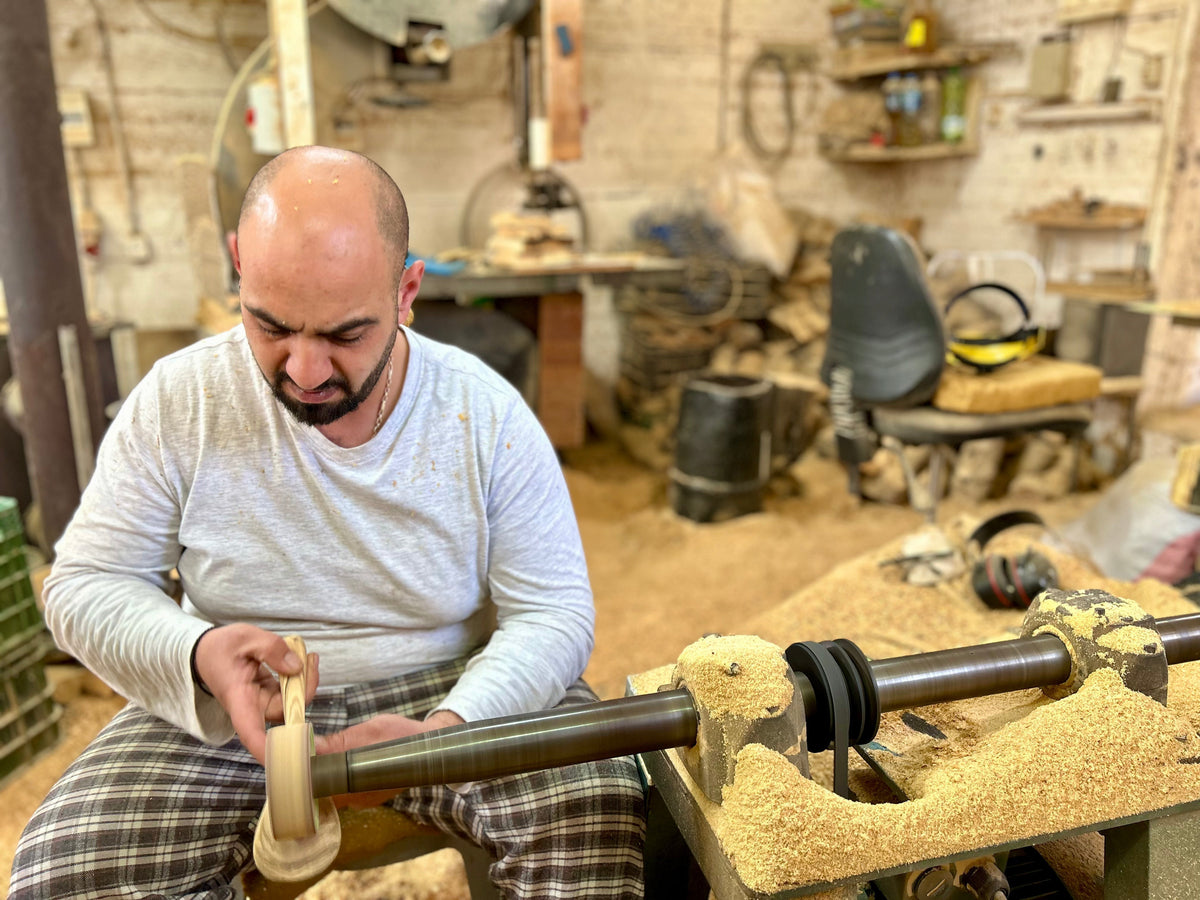
Meet The Nasrallah Workshop and Holy Land Handicraft Cooperative
Olive wood has been carved in and around Bethlehem for more than a thousand years. The trees themselves — ancient, deeply rooted, producing fruit and wood across generations — are inseparable from Palestinian identity and from the landscape of the holy land. Every piece of olive wood from a Bethlehem workshop is carved from pruned branches. No trees are felled for production. The workshops use what the trees shed, and in doing so, connect their craft to the living landscape around them.
The olive wood kitchen utensils we carry come primarily from the workshop of Jack Nasrallah, based in Beit Jala, where Jack works alongside a team of artisans in a workshop he has recently expanded. His range covers the everyday objects of a Palestinian kitchen — lemon reamers, honey dippers, bottle openers, and utensils crafted with the quiet precision of someone who has spent a lifetime understanding this wood.
We also carry kitchen pieces from Holy Land Handicraft Cooperative — one of Bethlehem's oldest WFTO-certified workshops, running on a cooperative model where the artisans have a genuine stake in the business, not just a wage.
About the Wood
Olive wood is a hardwood with a tight, unpredictable grain — honey, caramel, deep brown and sometimes all white, running differently through every piece. It does not come from trees cut down for timber. What the pruning leaves behind becomes what you hold in your kitchen. No two pieces are identical.
How to Care for Olive Wood
Hand wash only. Dry immediately after washing. Oil often with food-grade mineral oil or olive oil to prevent cracking. Do not put in the dishwasher. Treated well, these pieces last decades.
→ Shop Our Home & Kitchen collection here.
Written by Morgan Totah
Visit author's website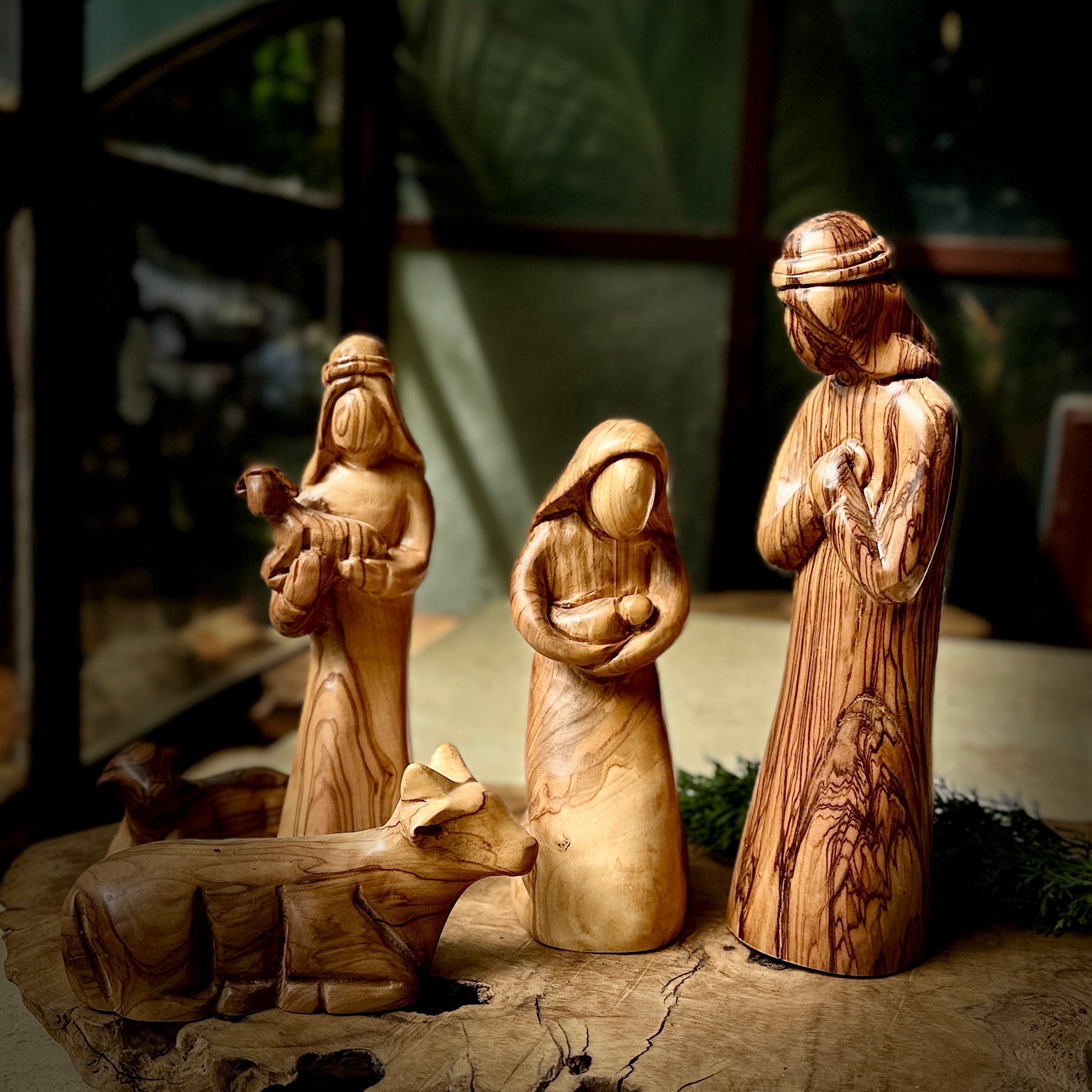


Leave a comment
This site is protected by hCaptcha and the hCaptcha Privacy Policy and Terms of Service apply.