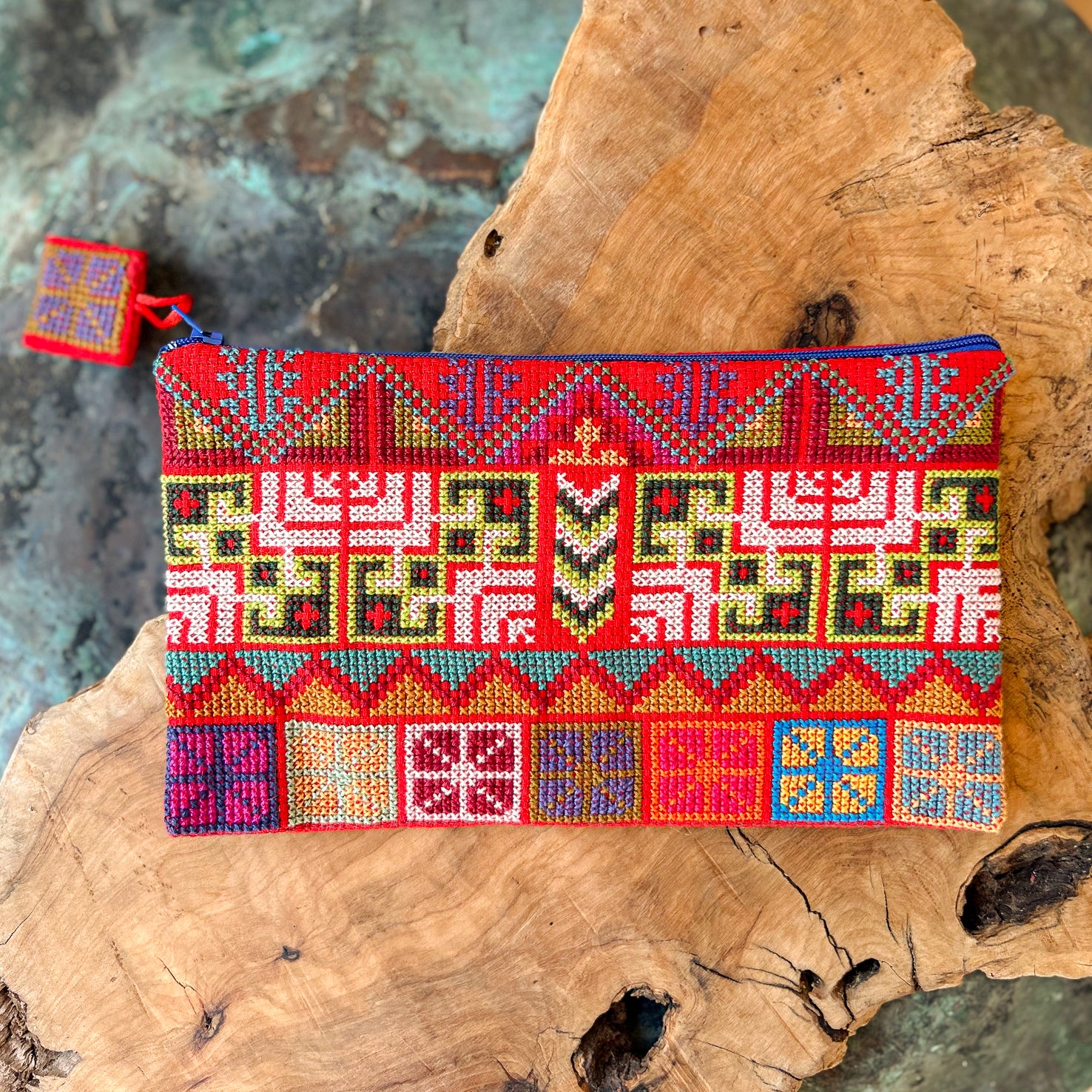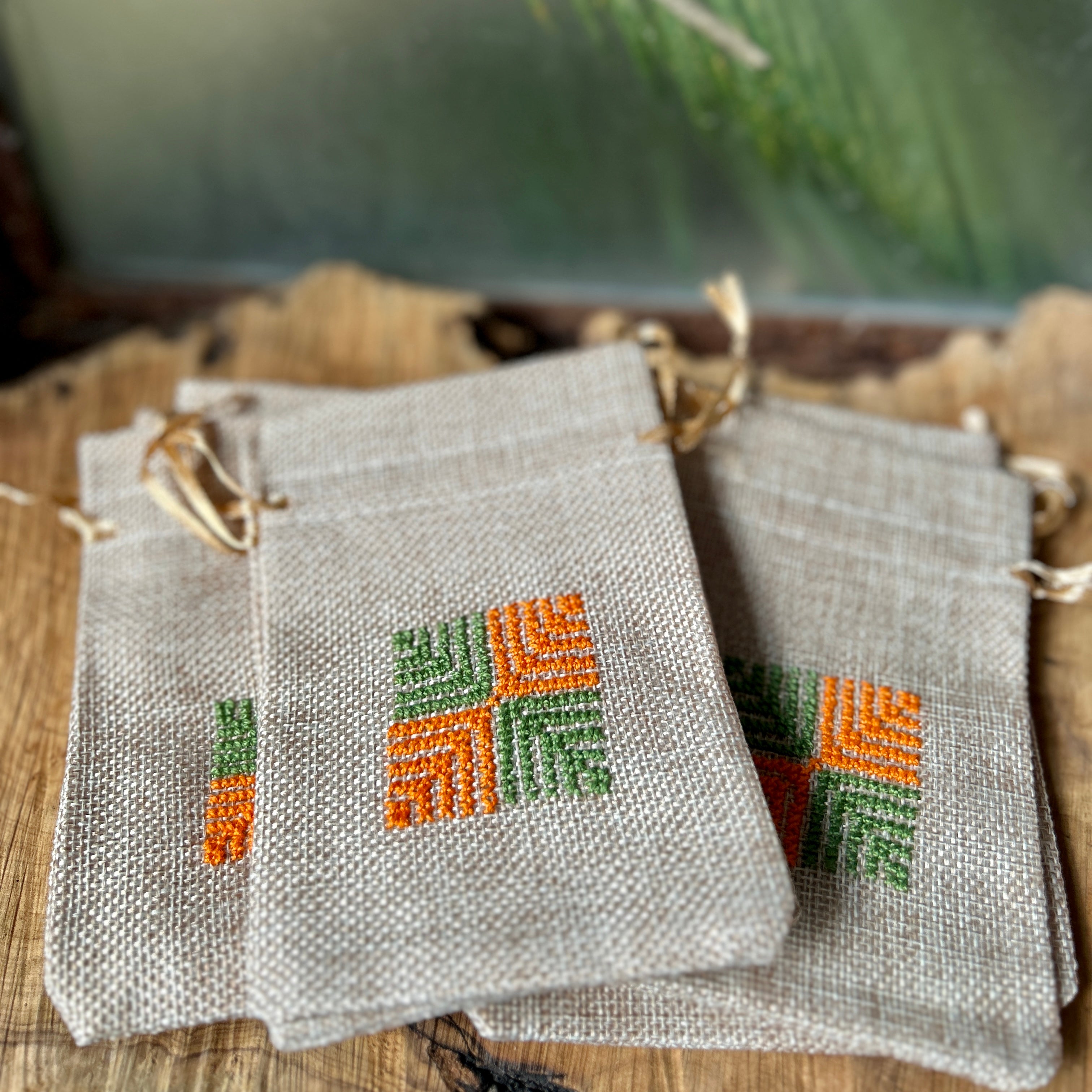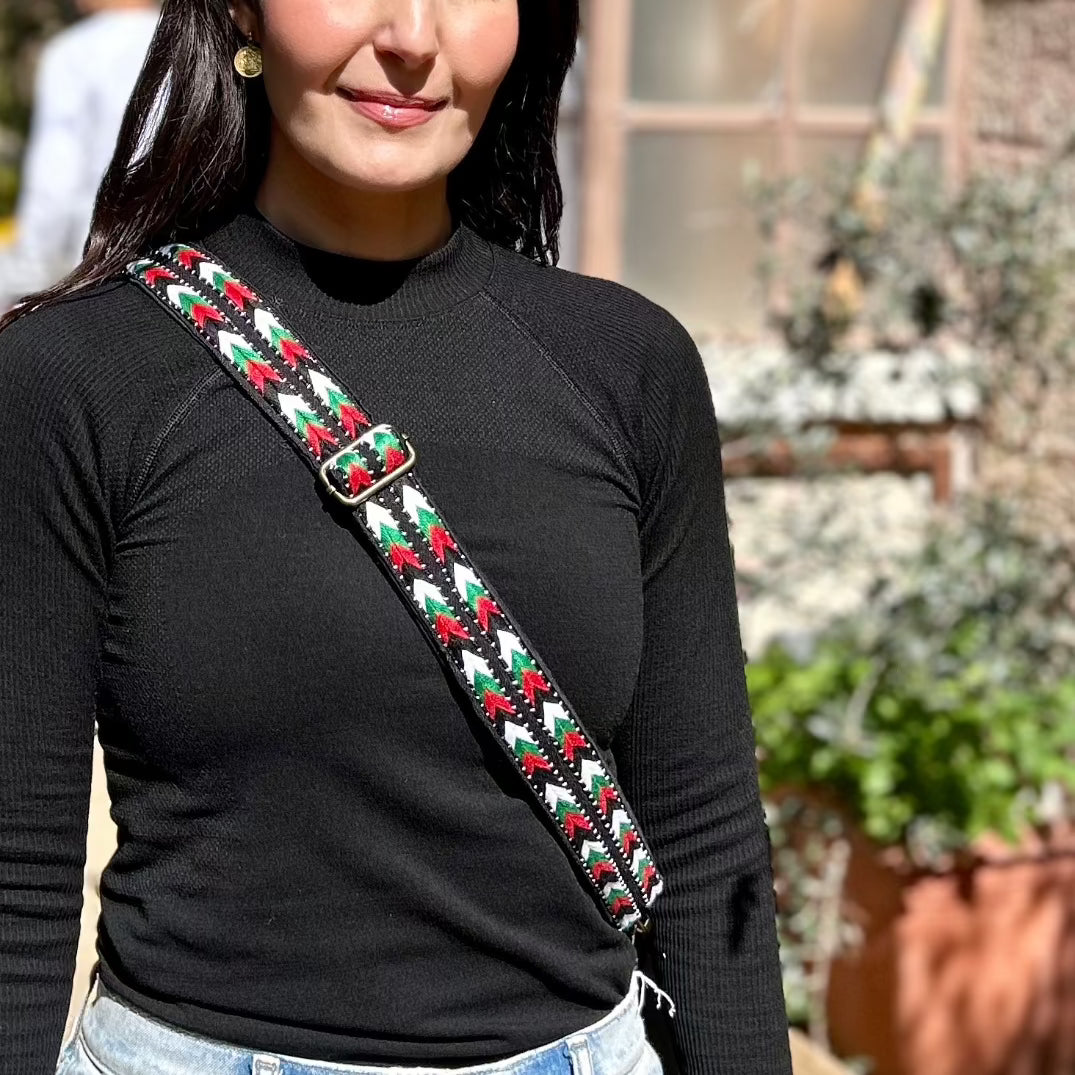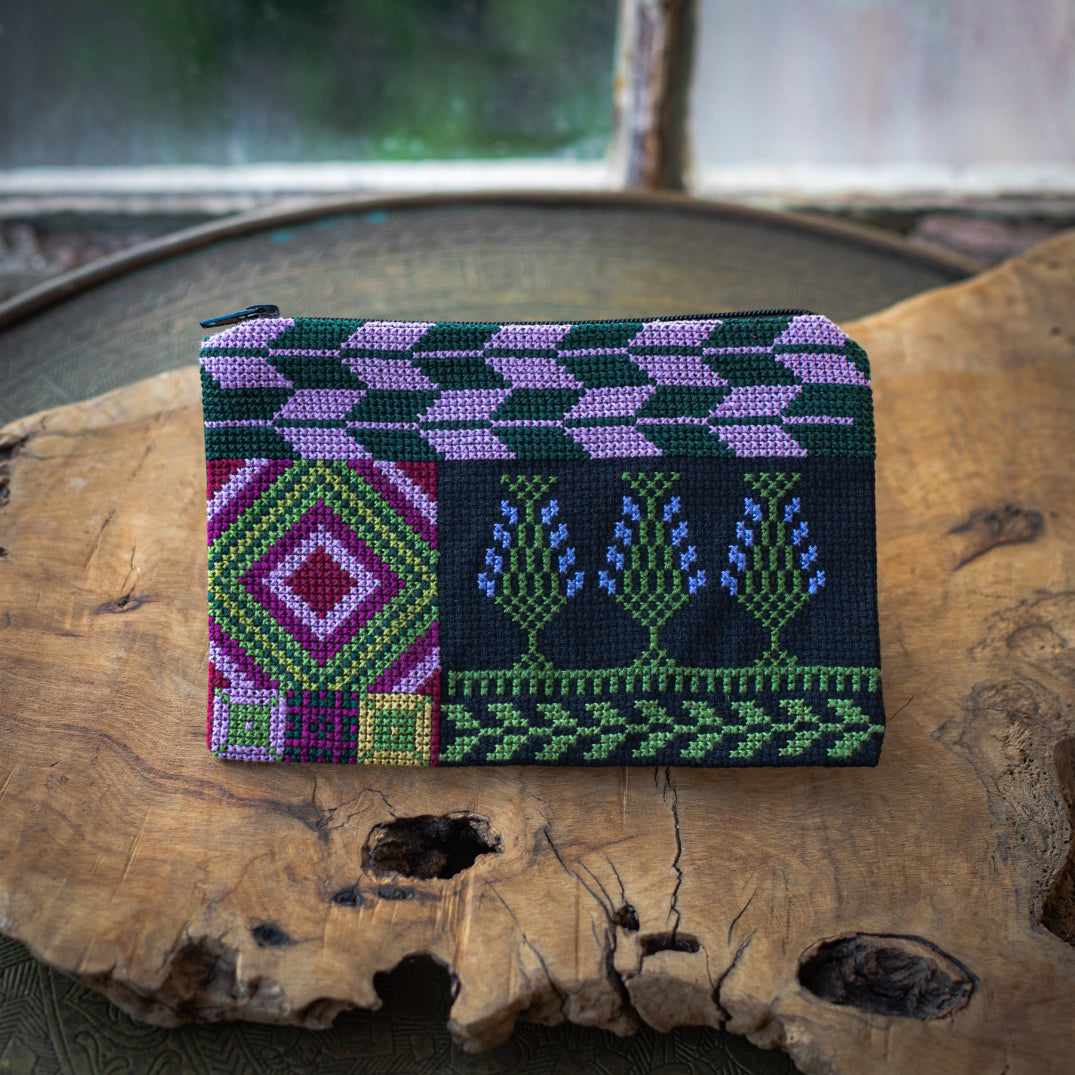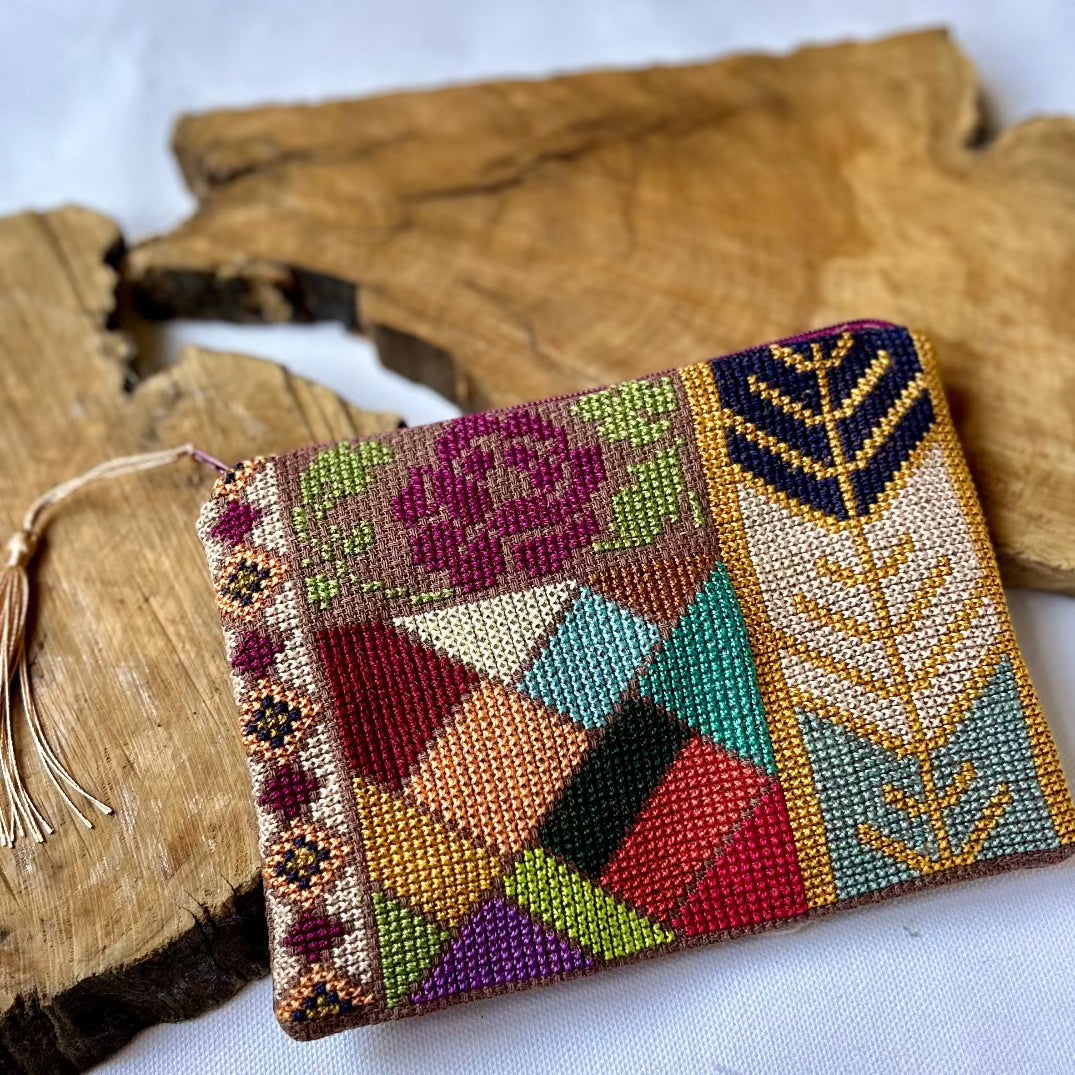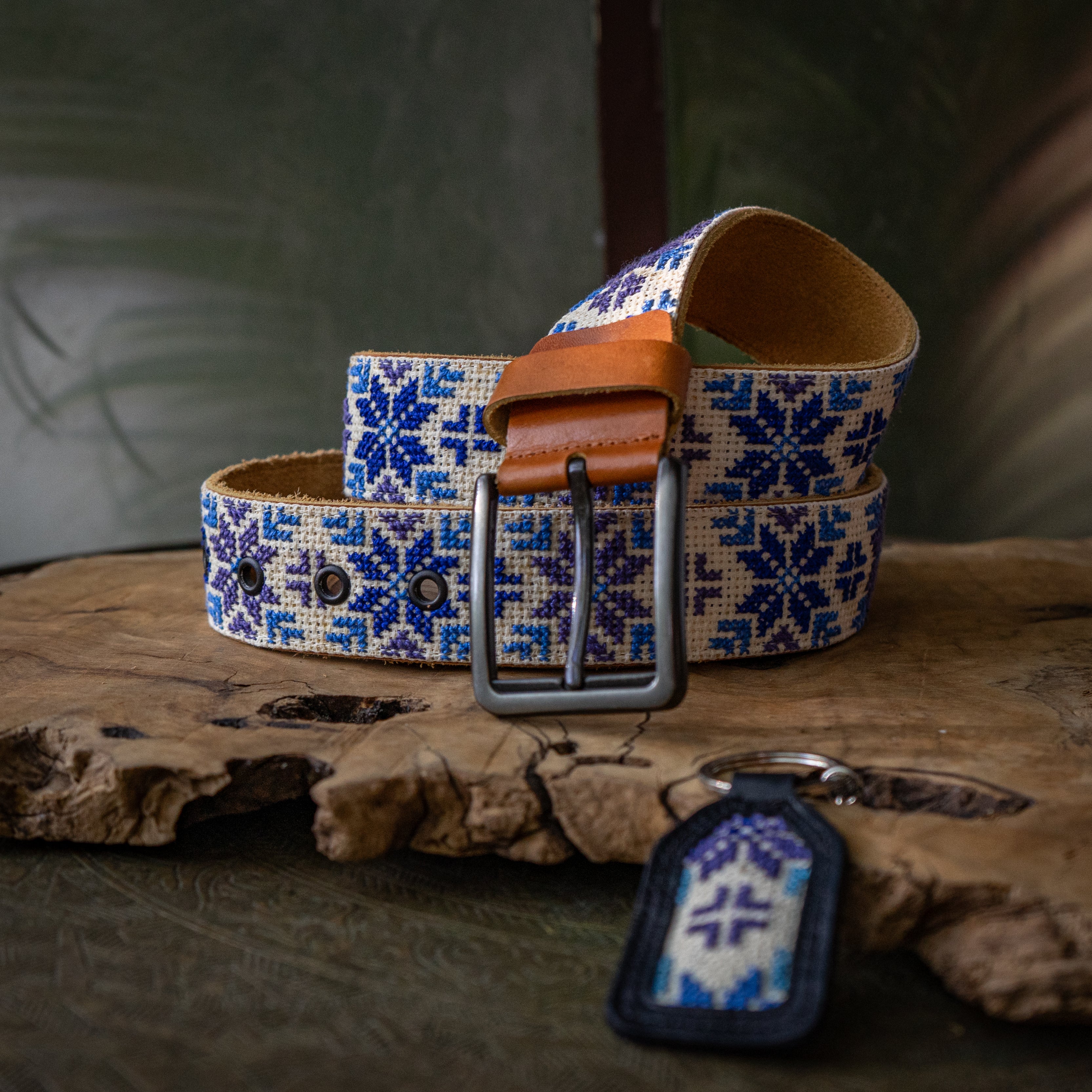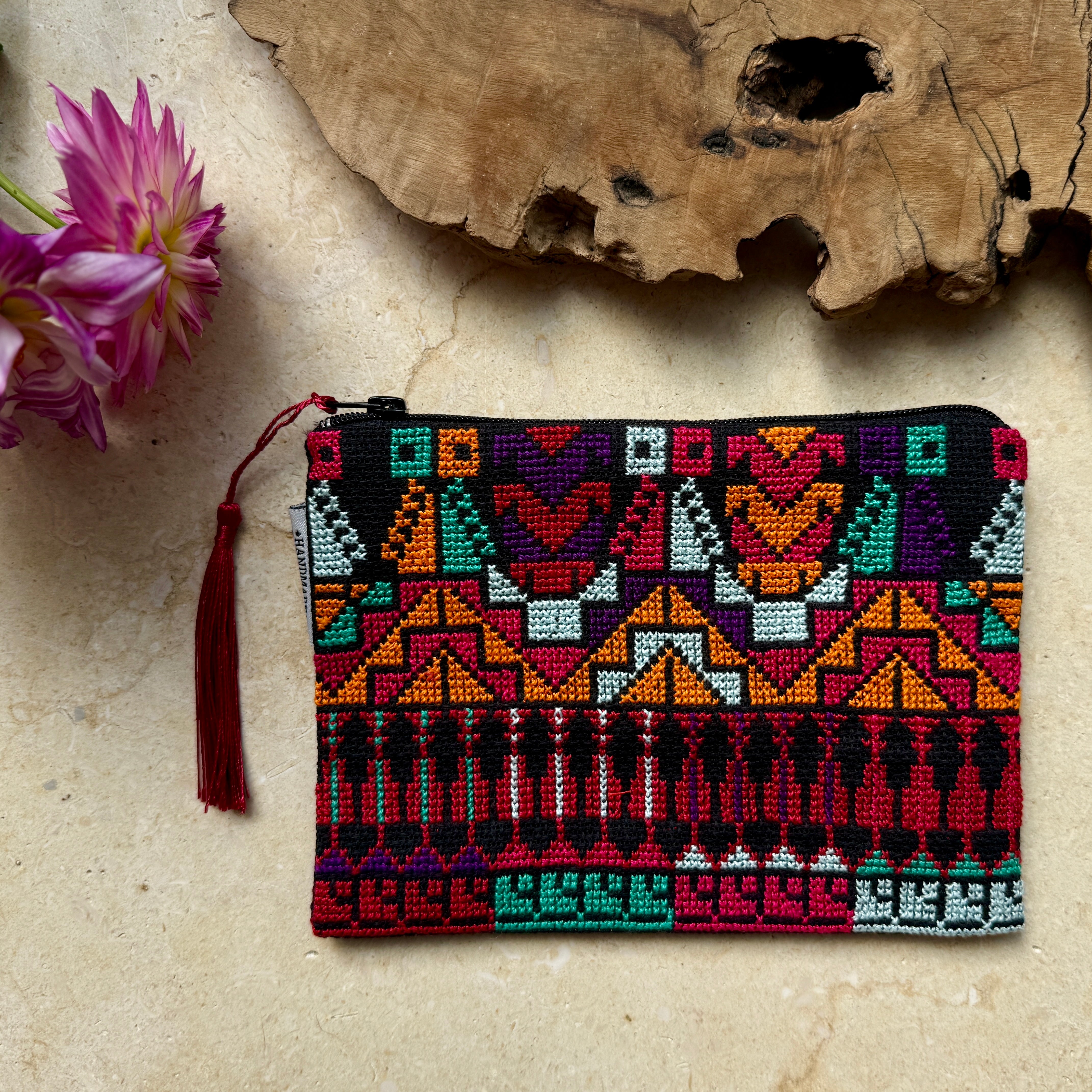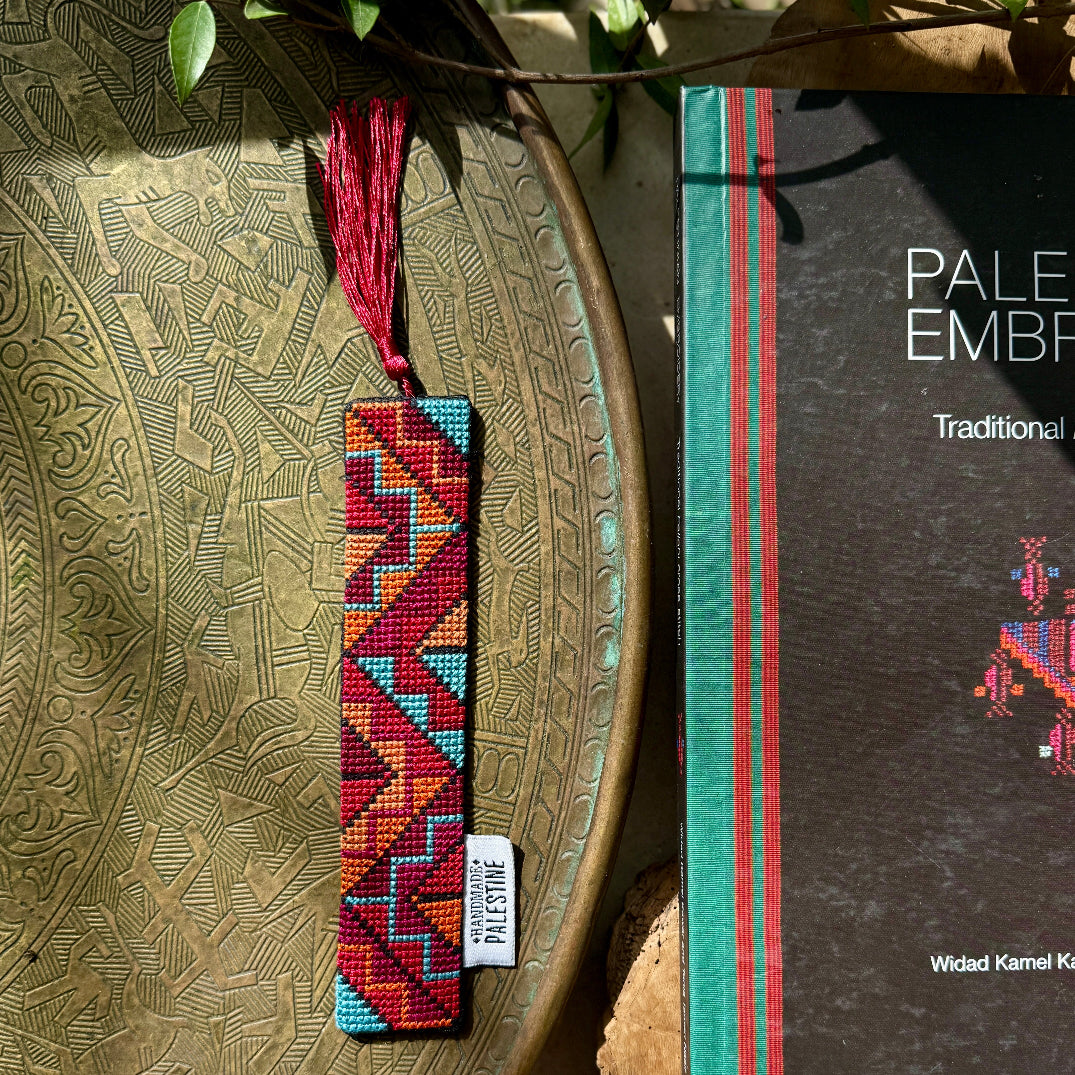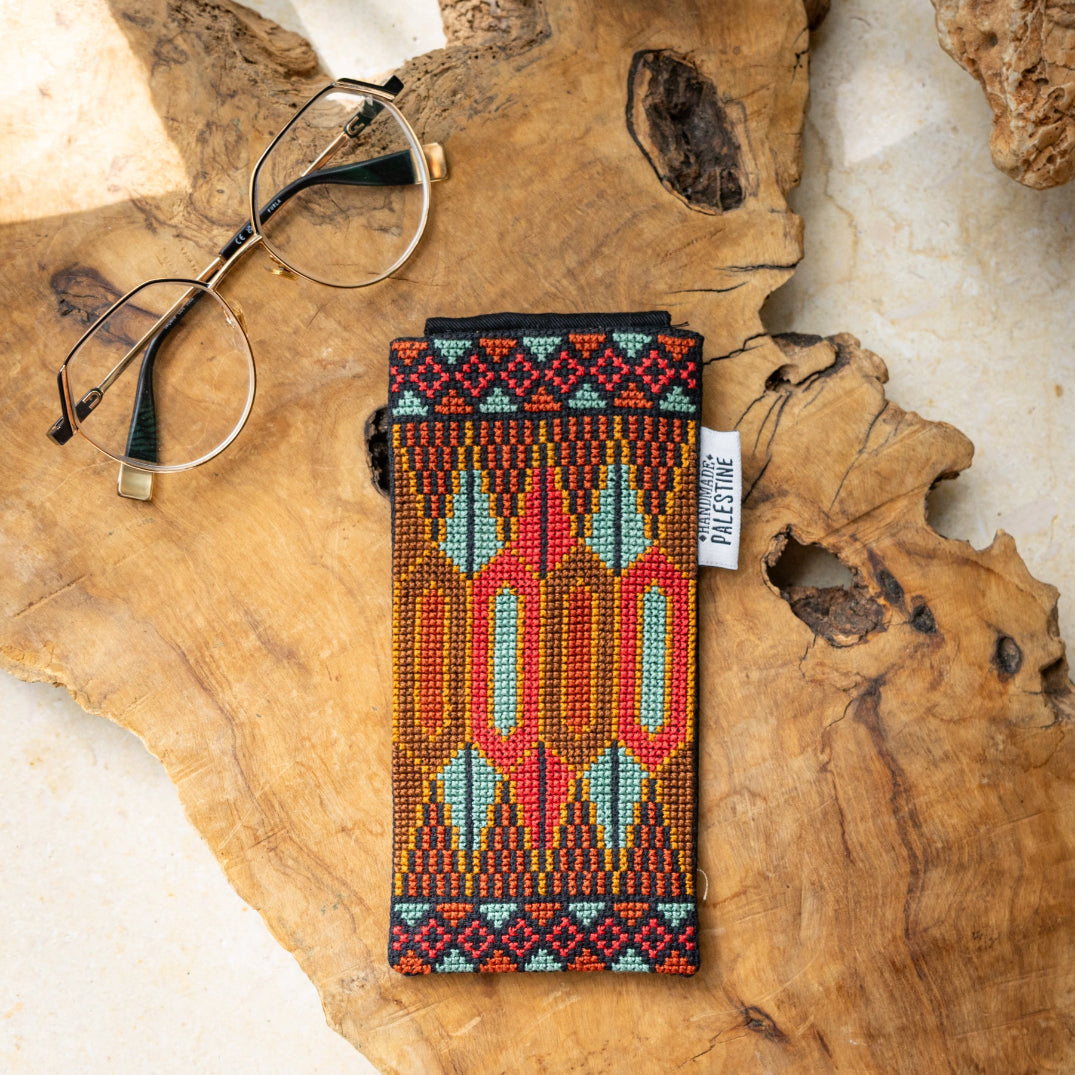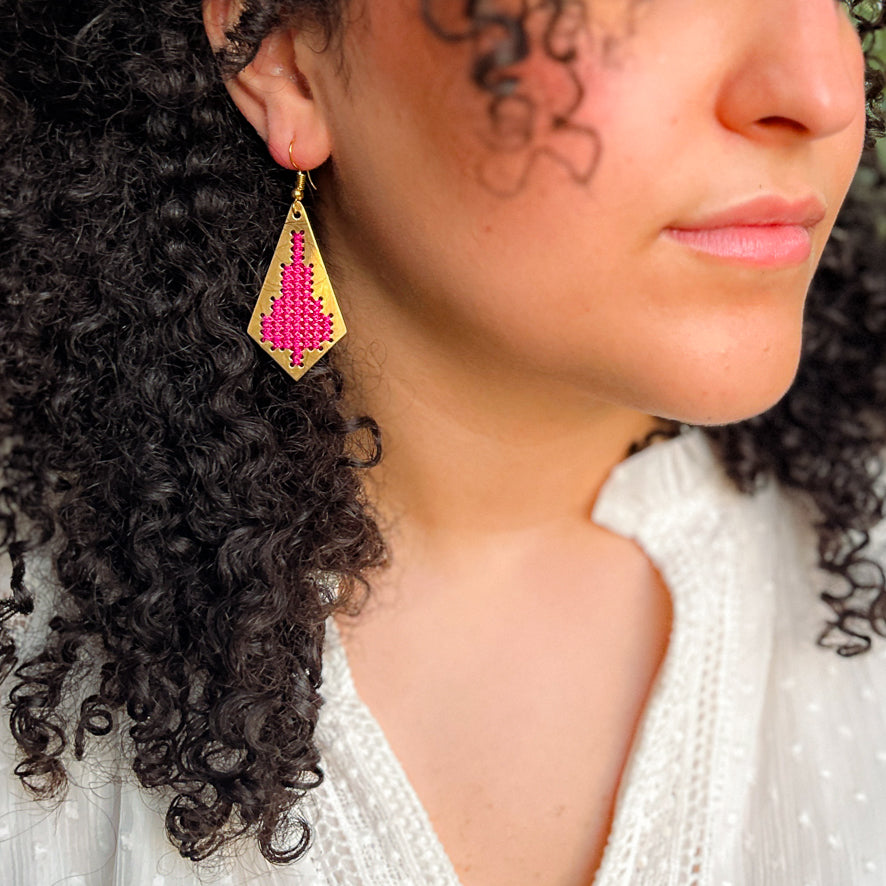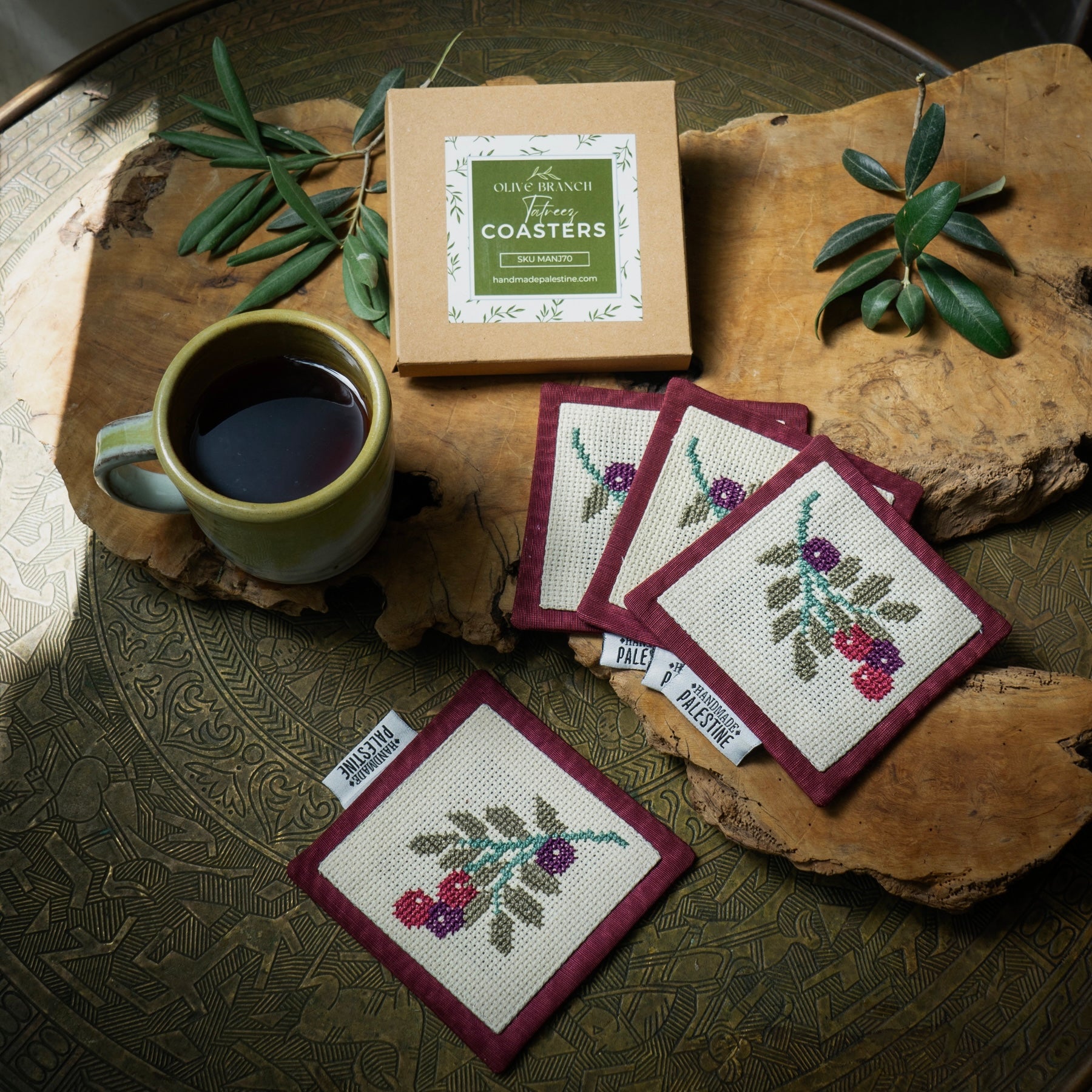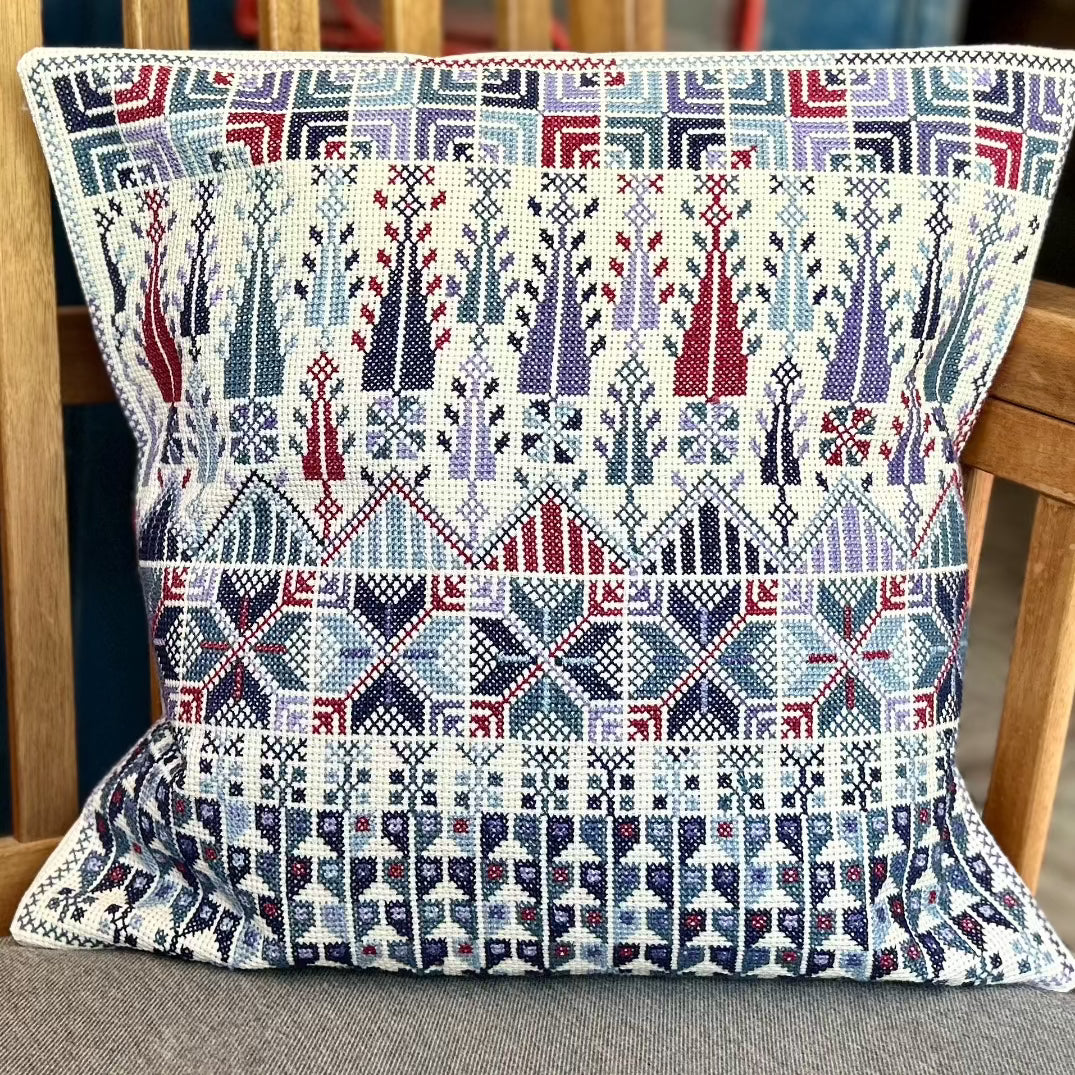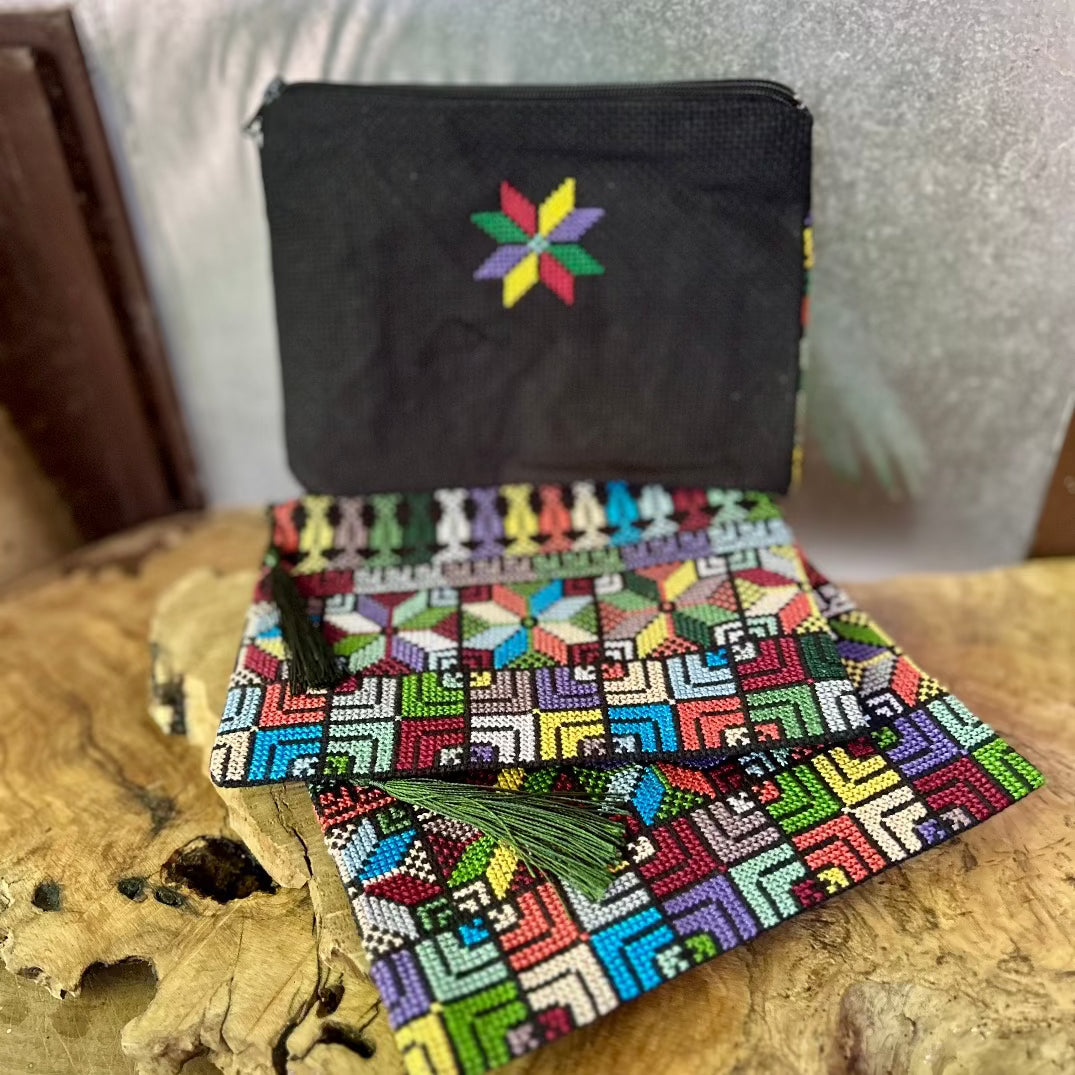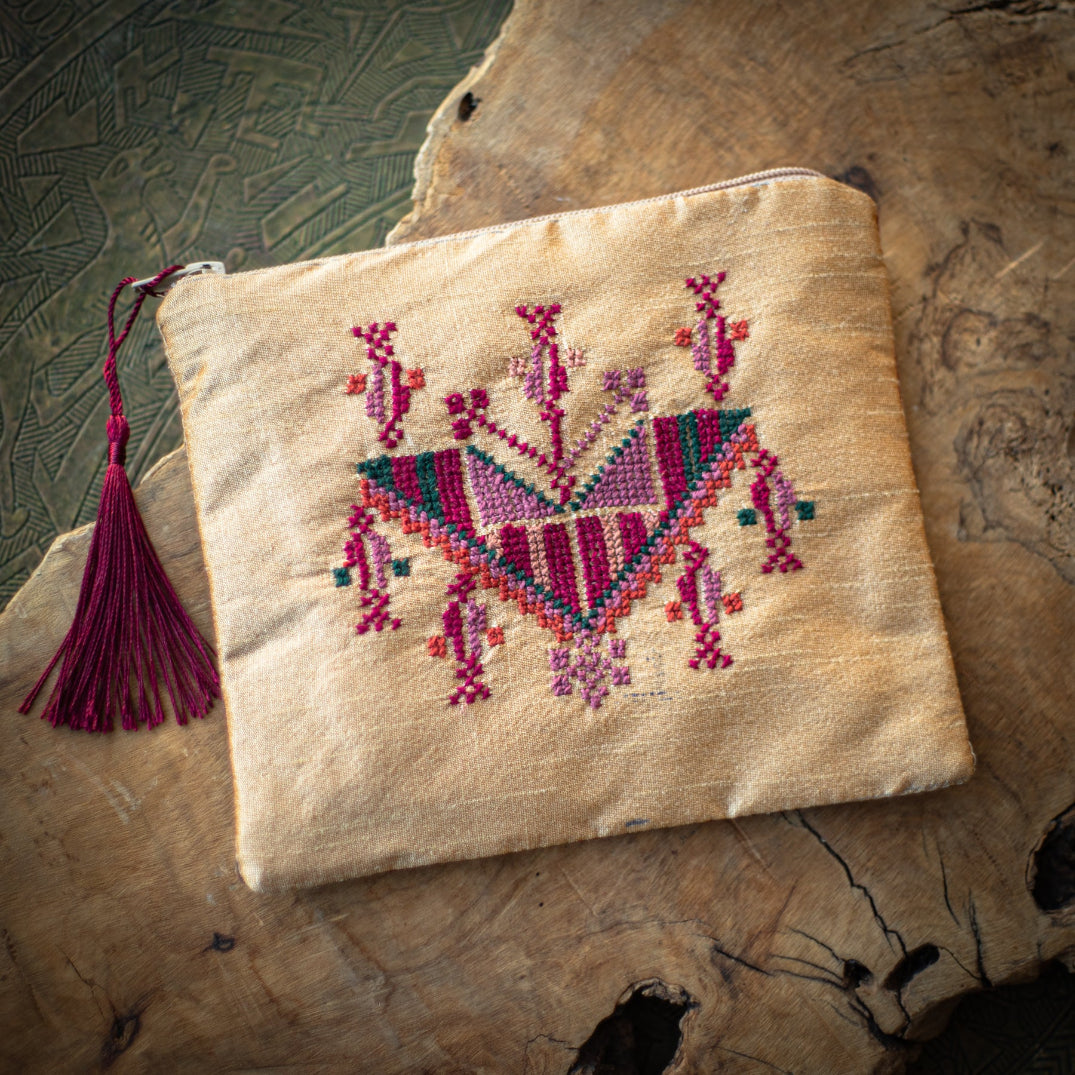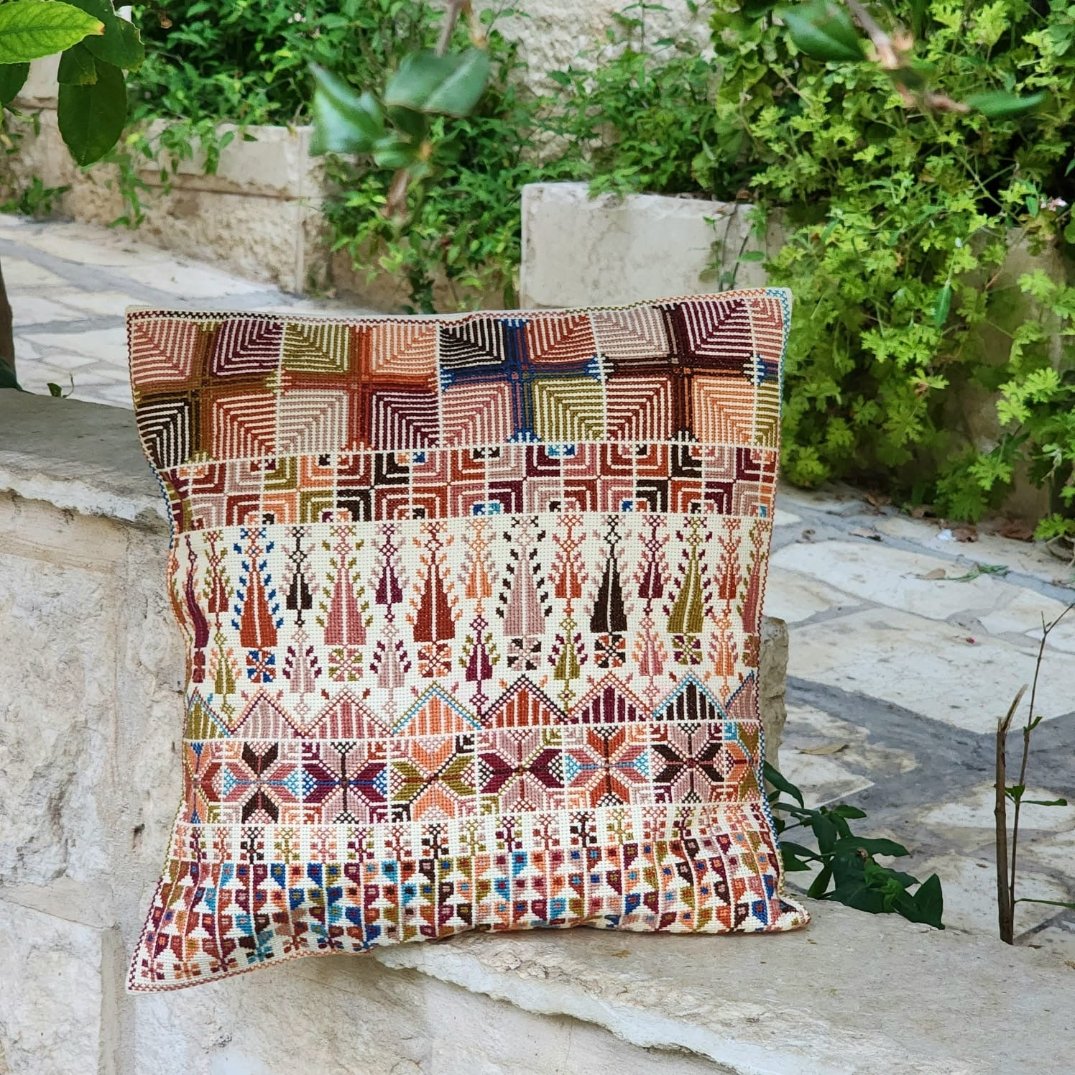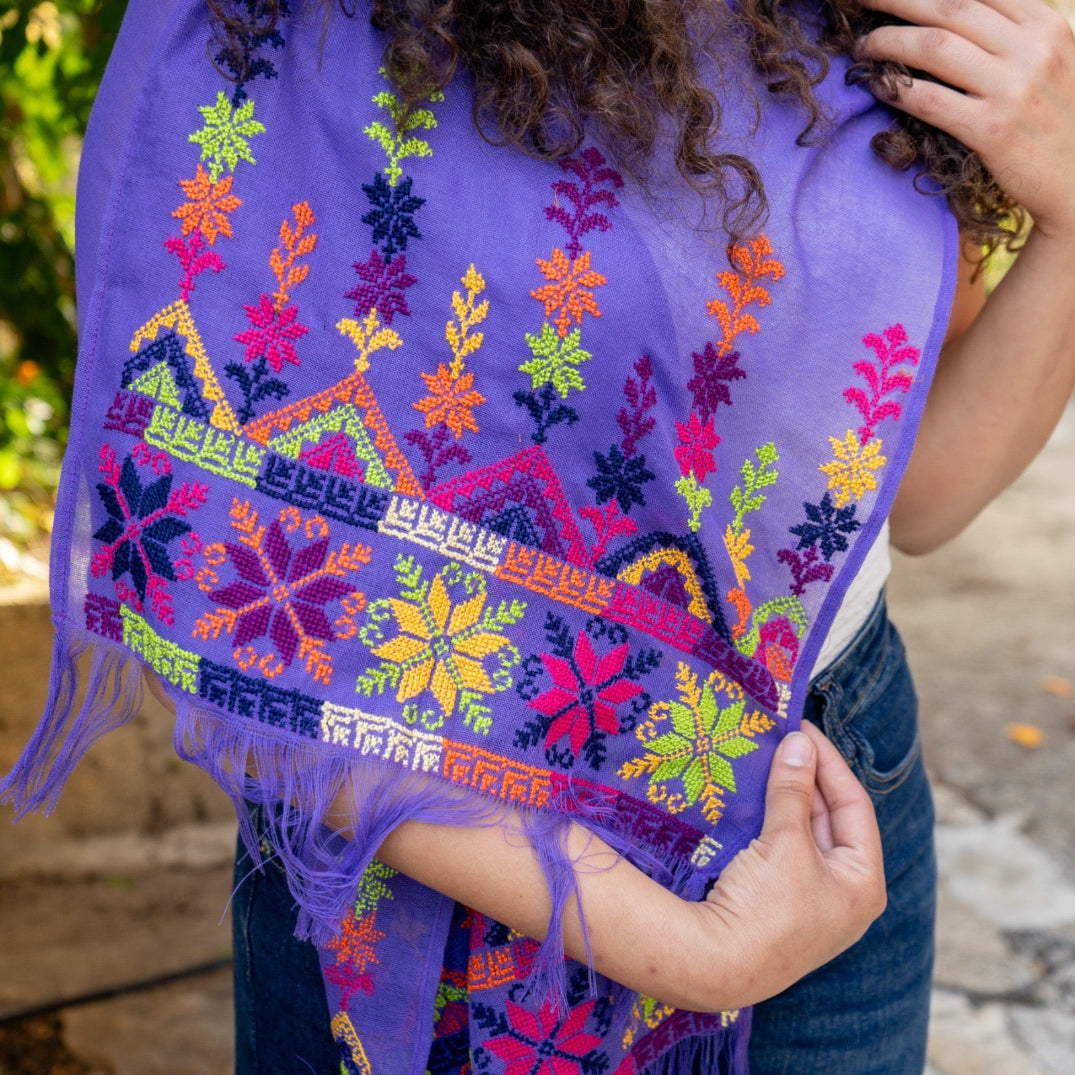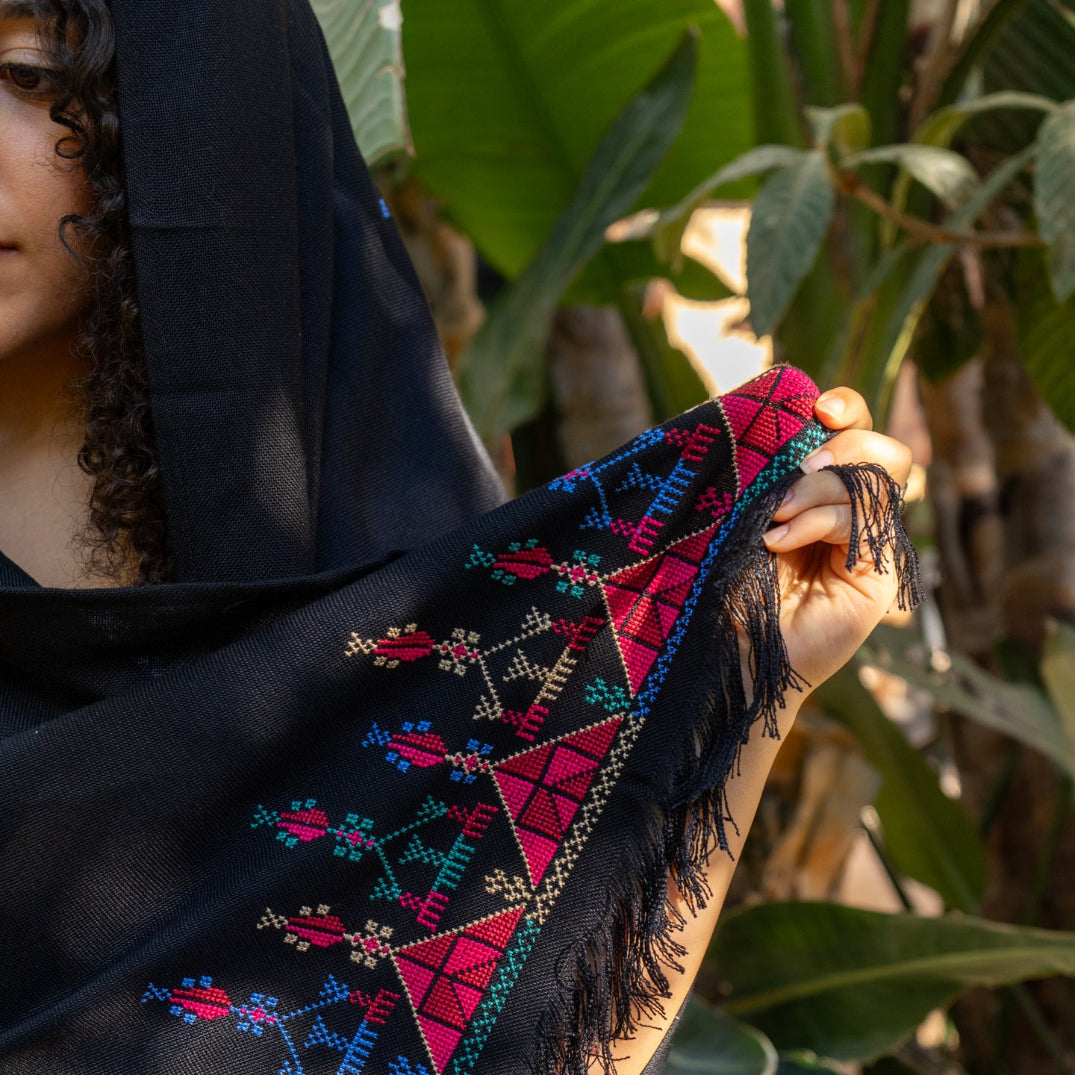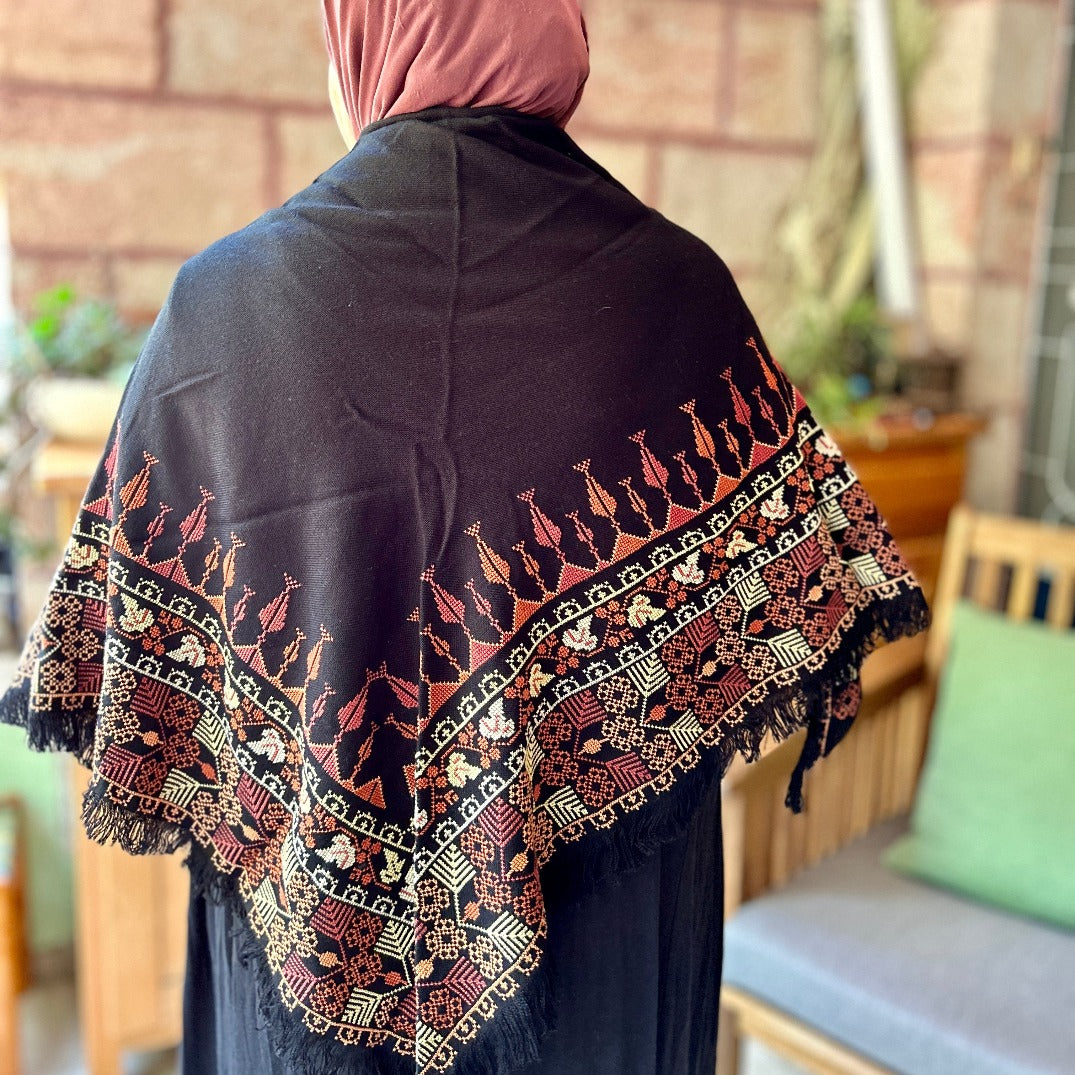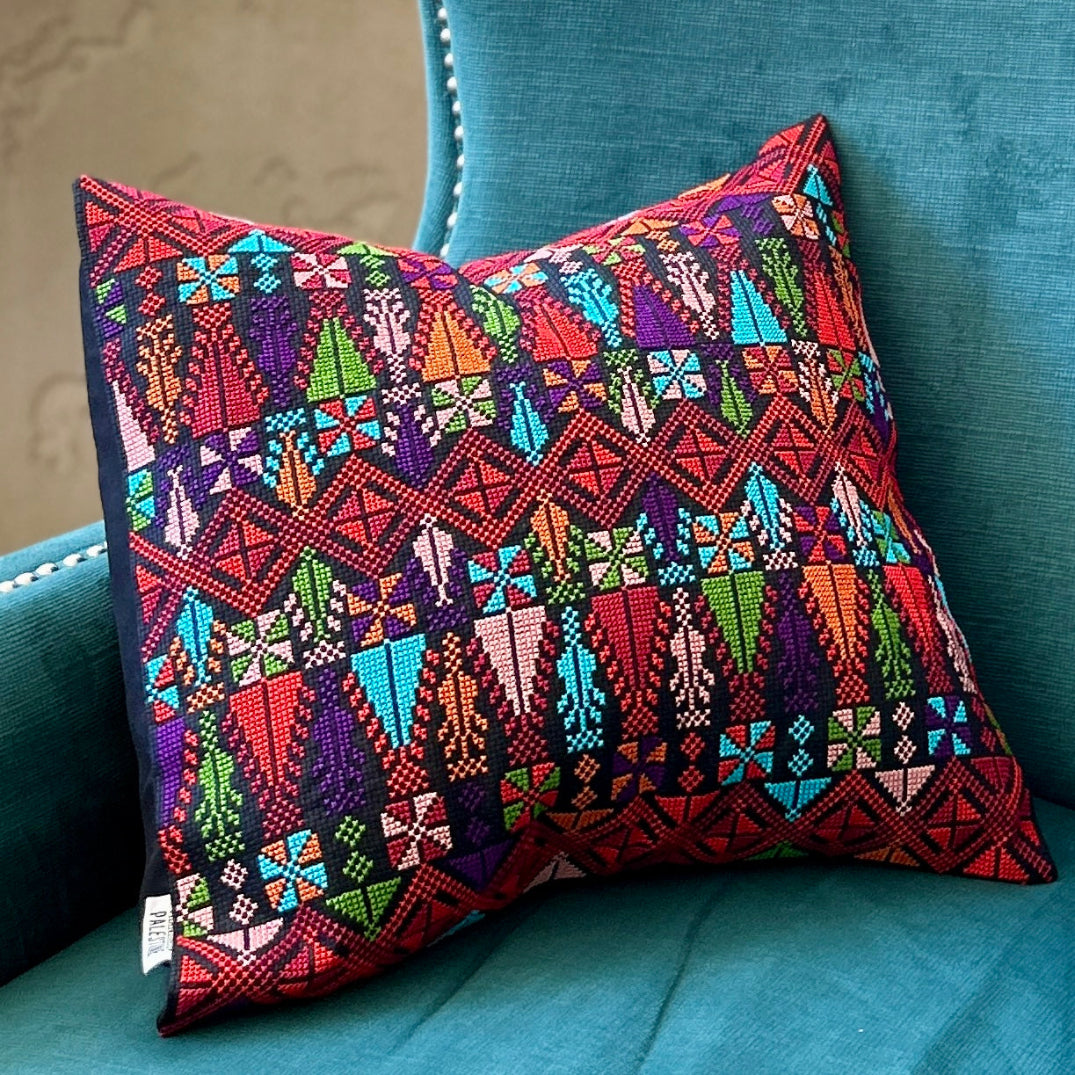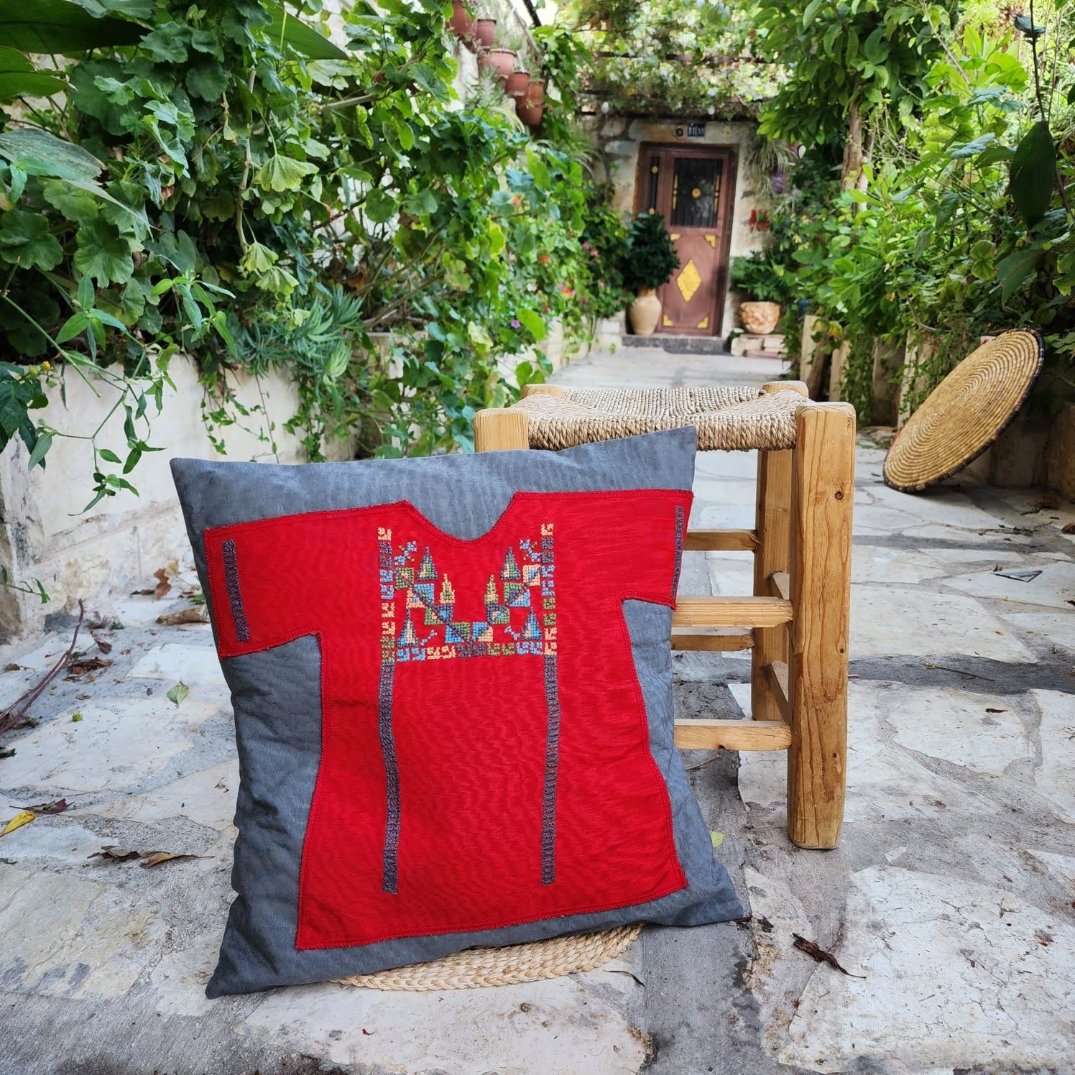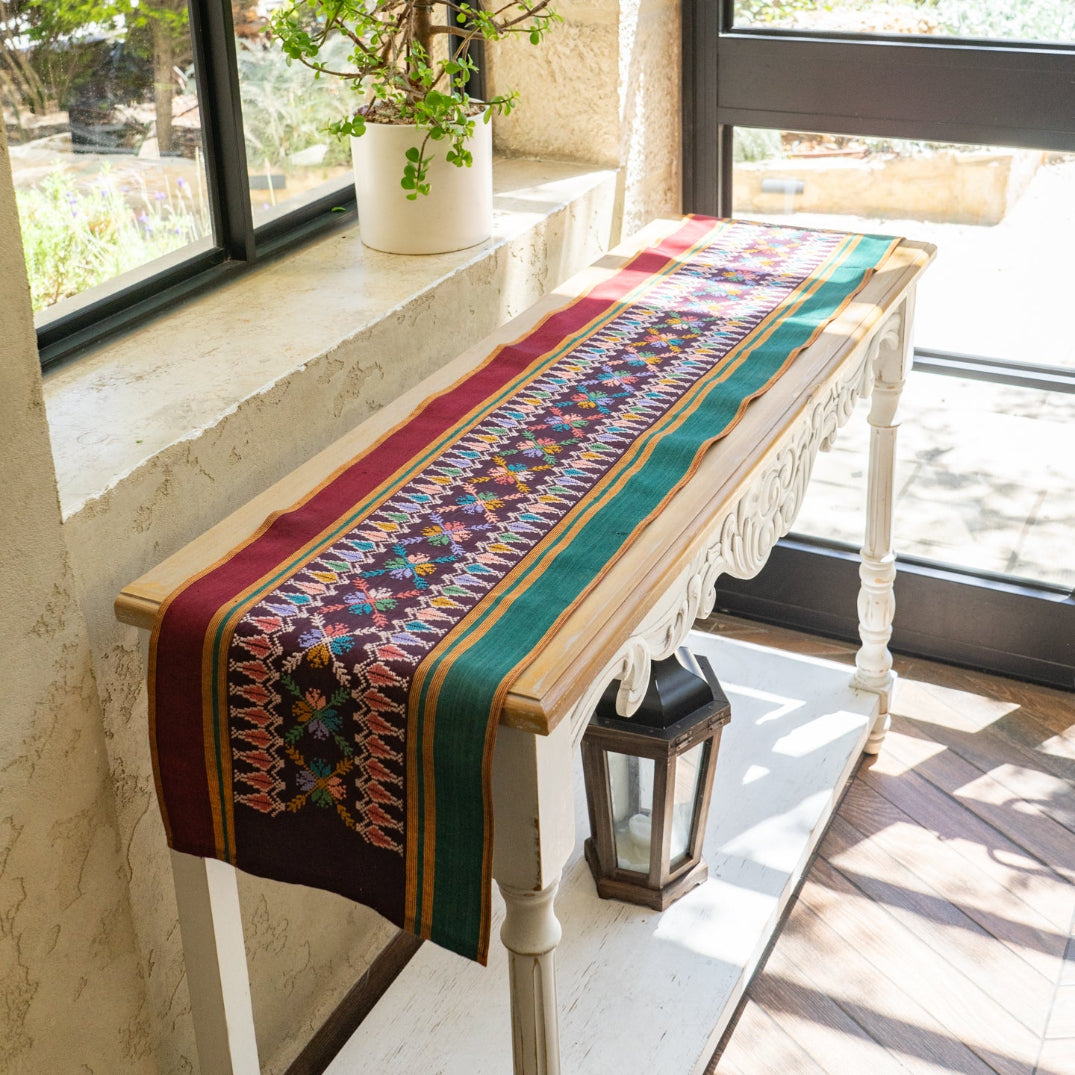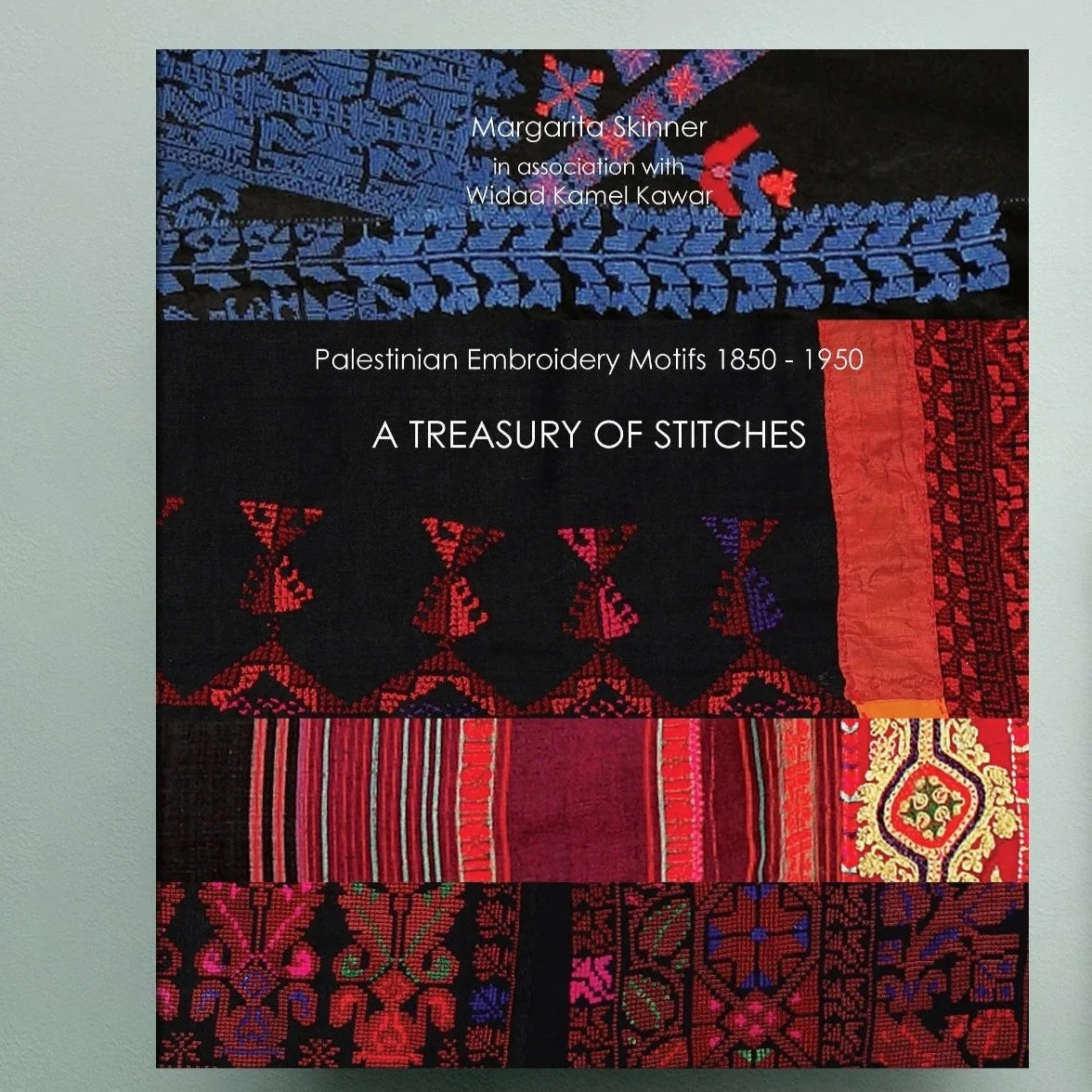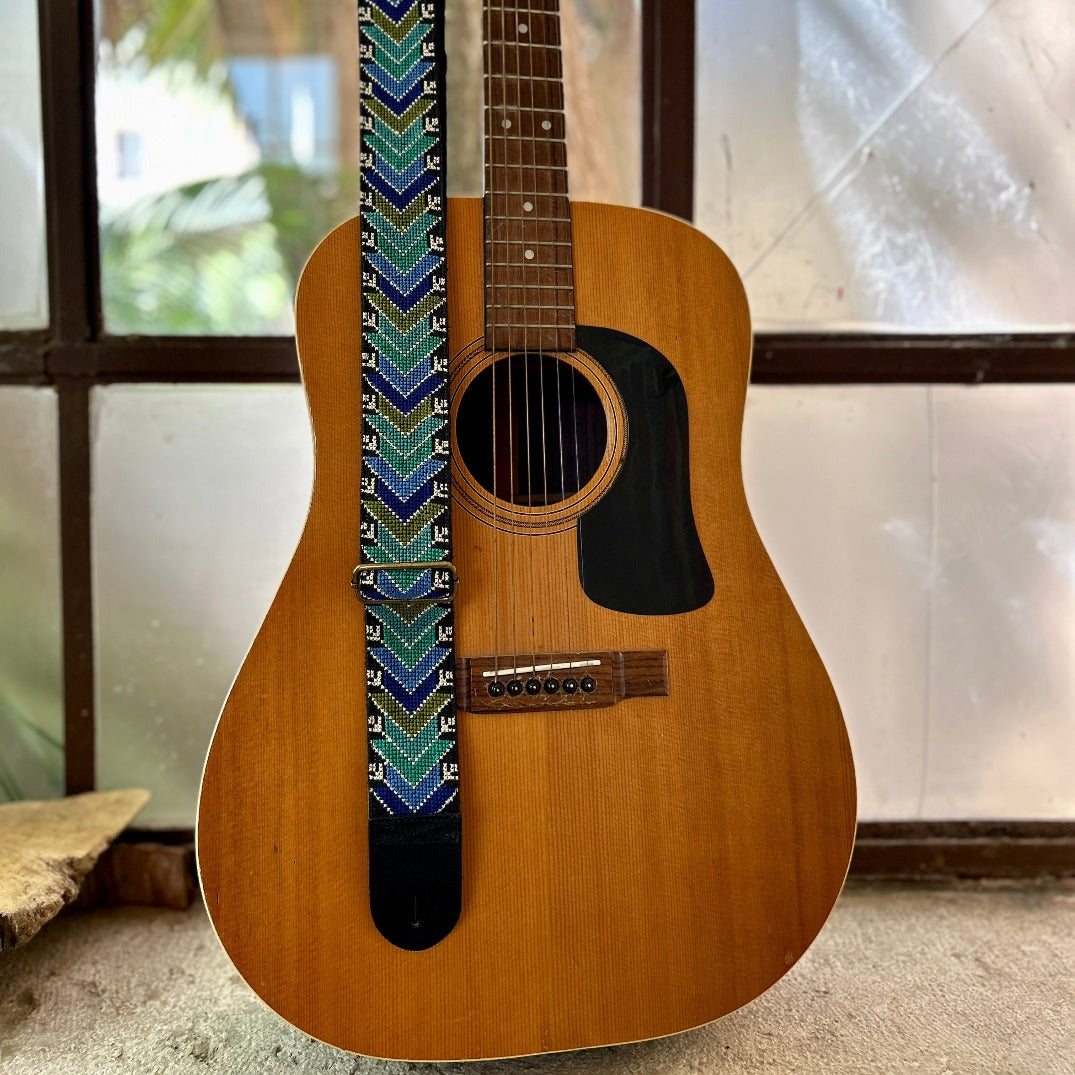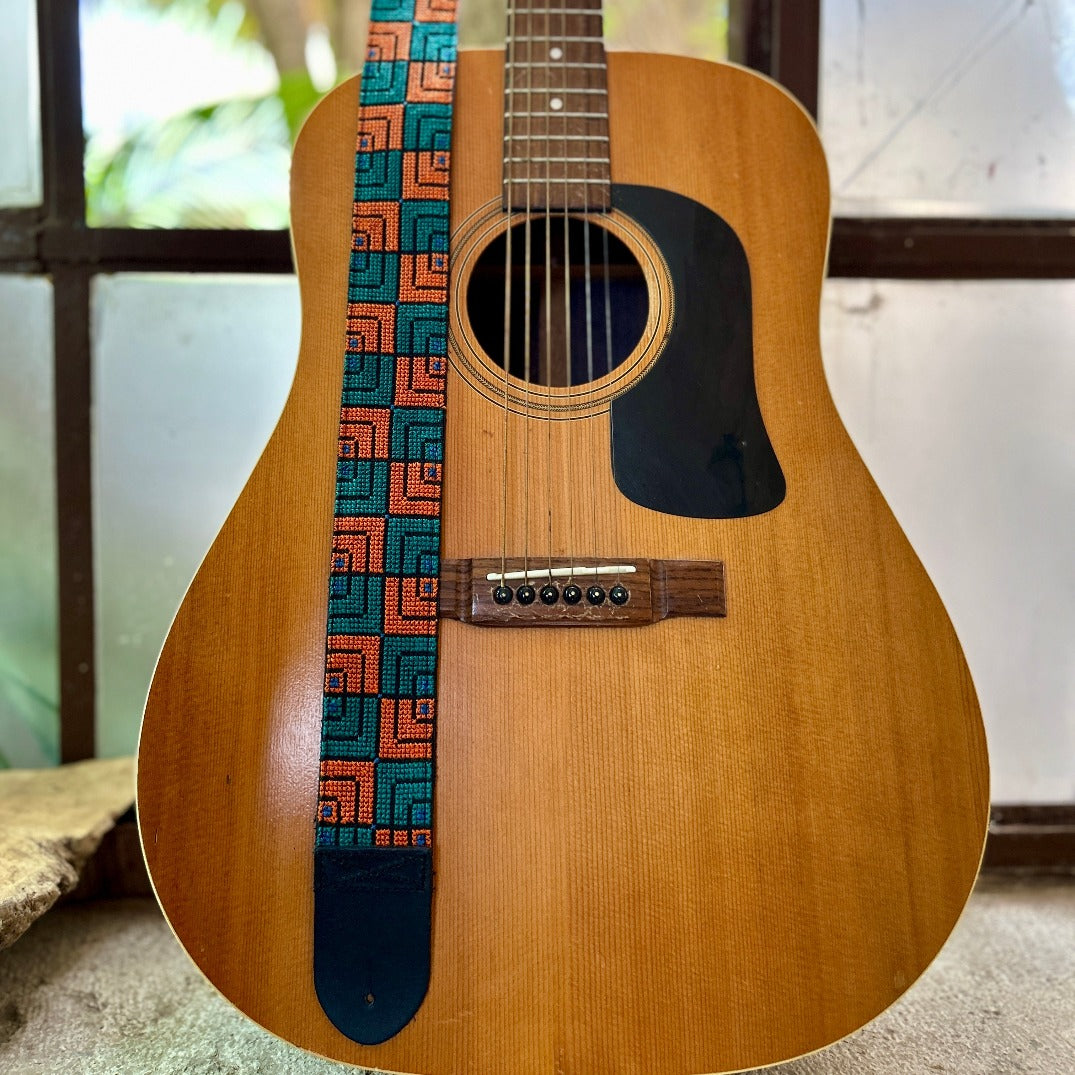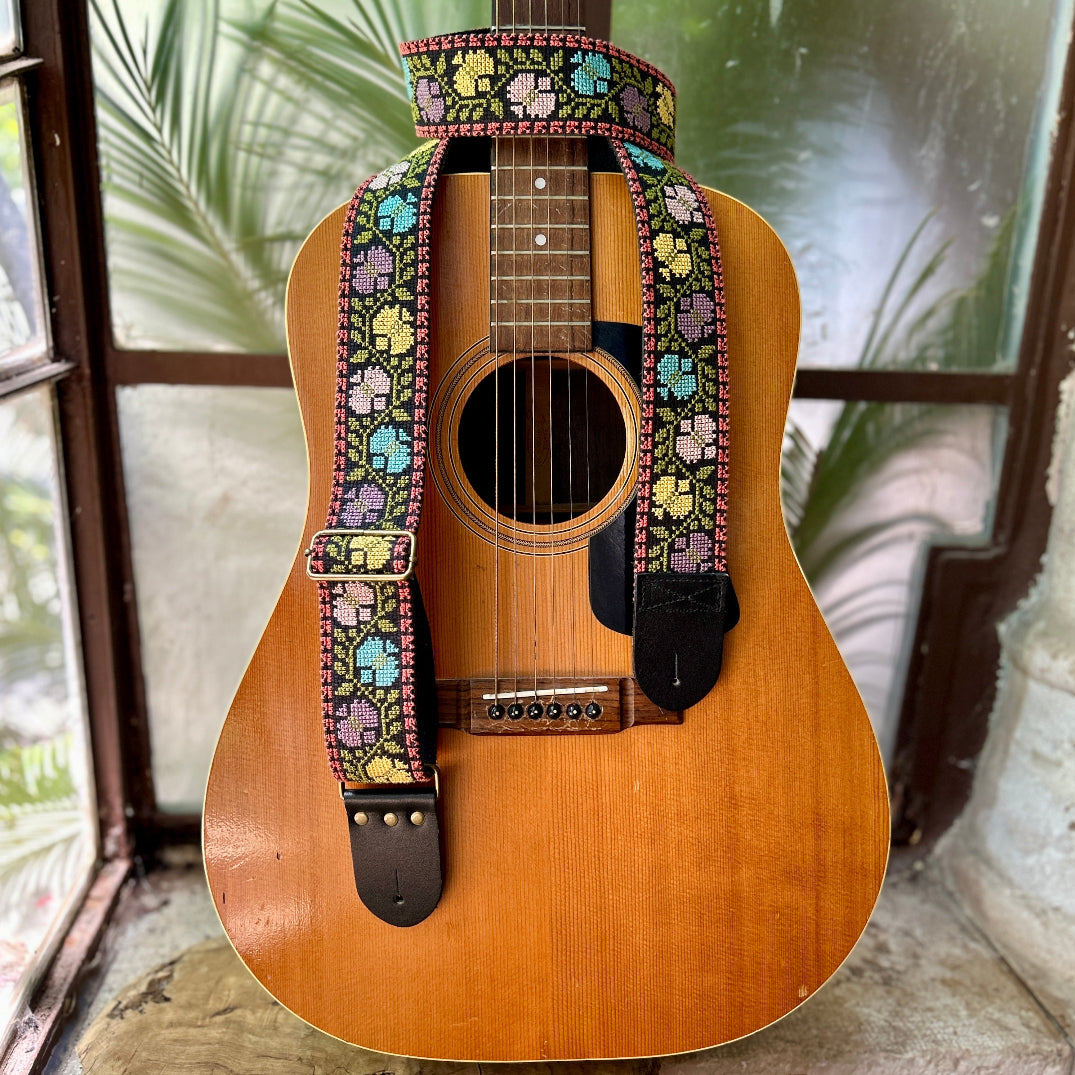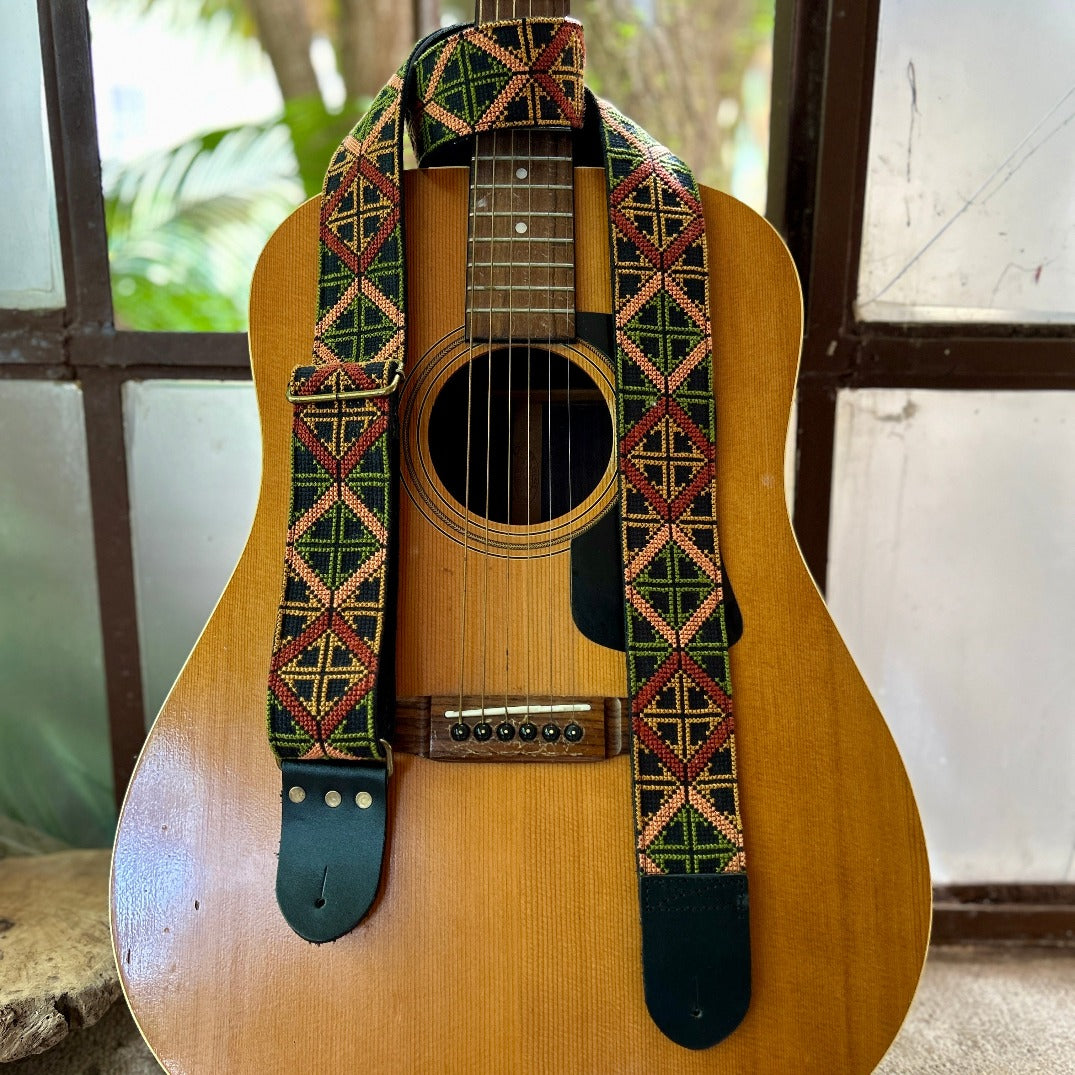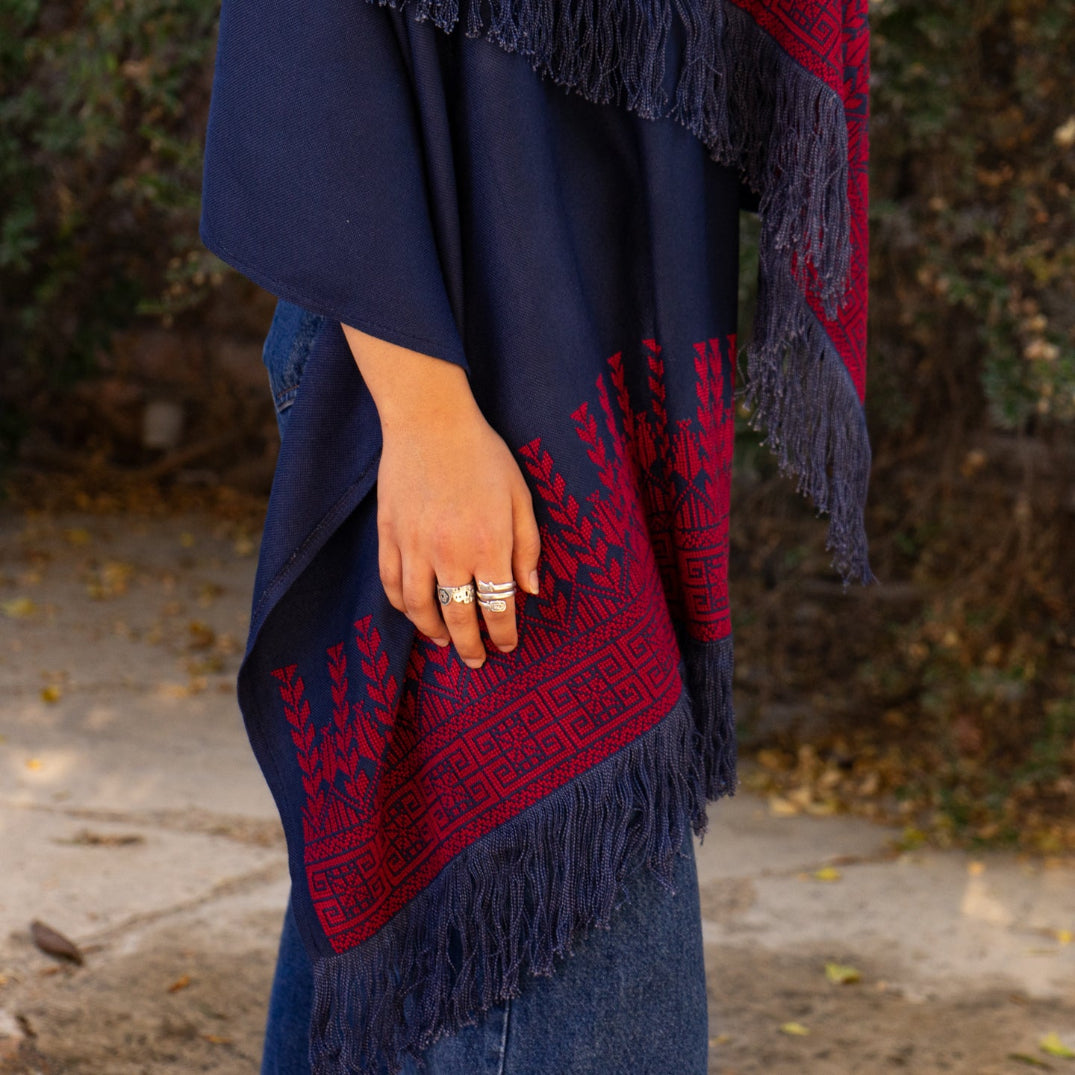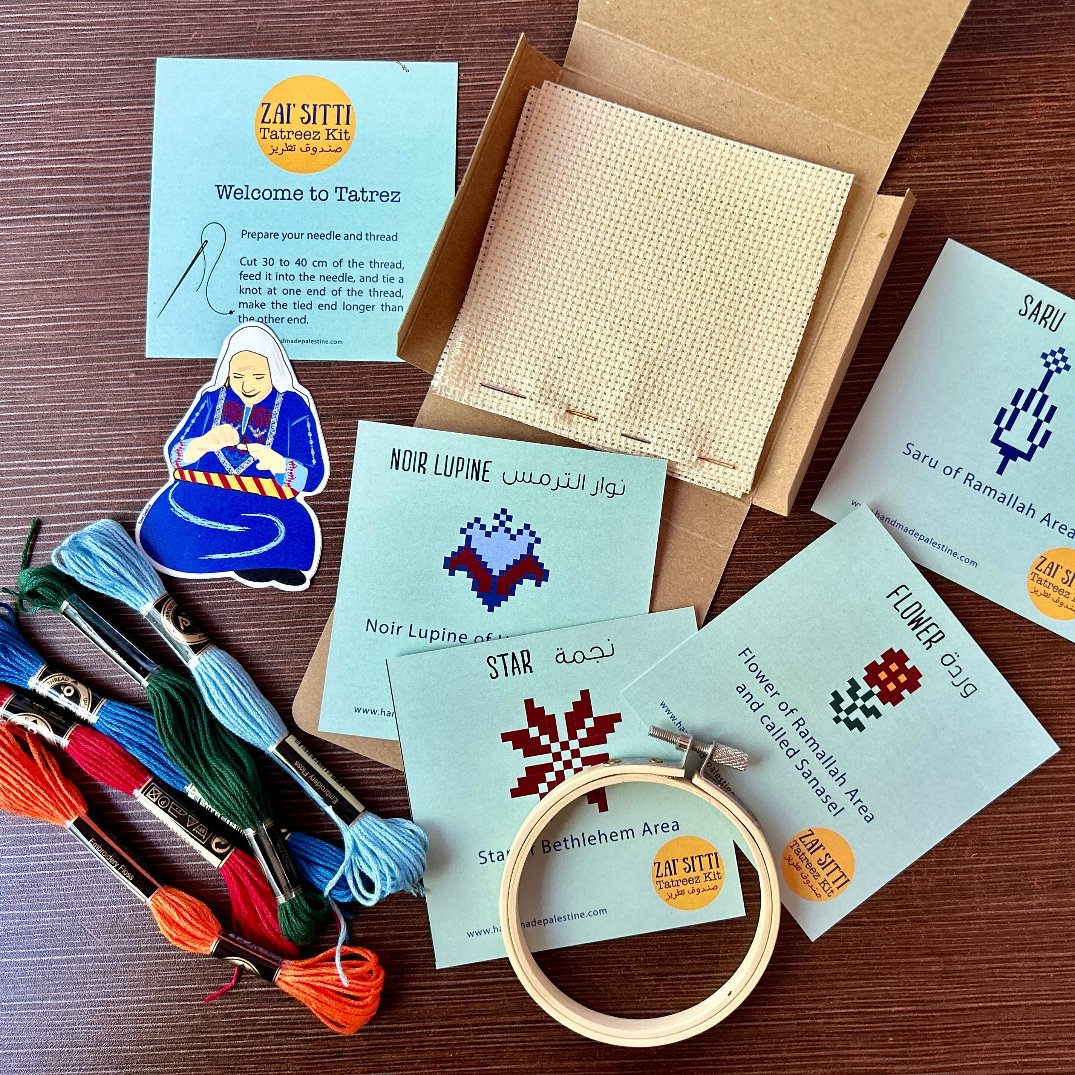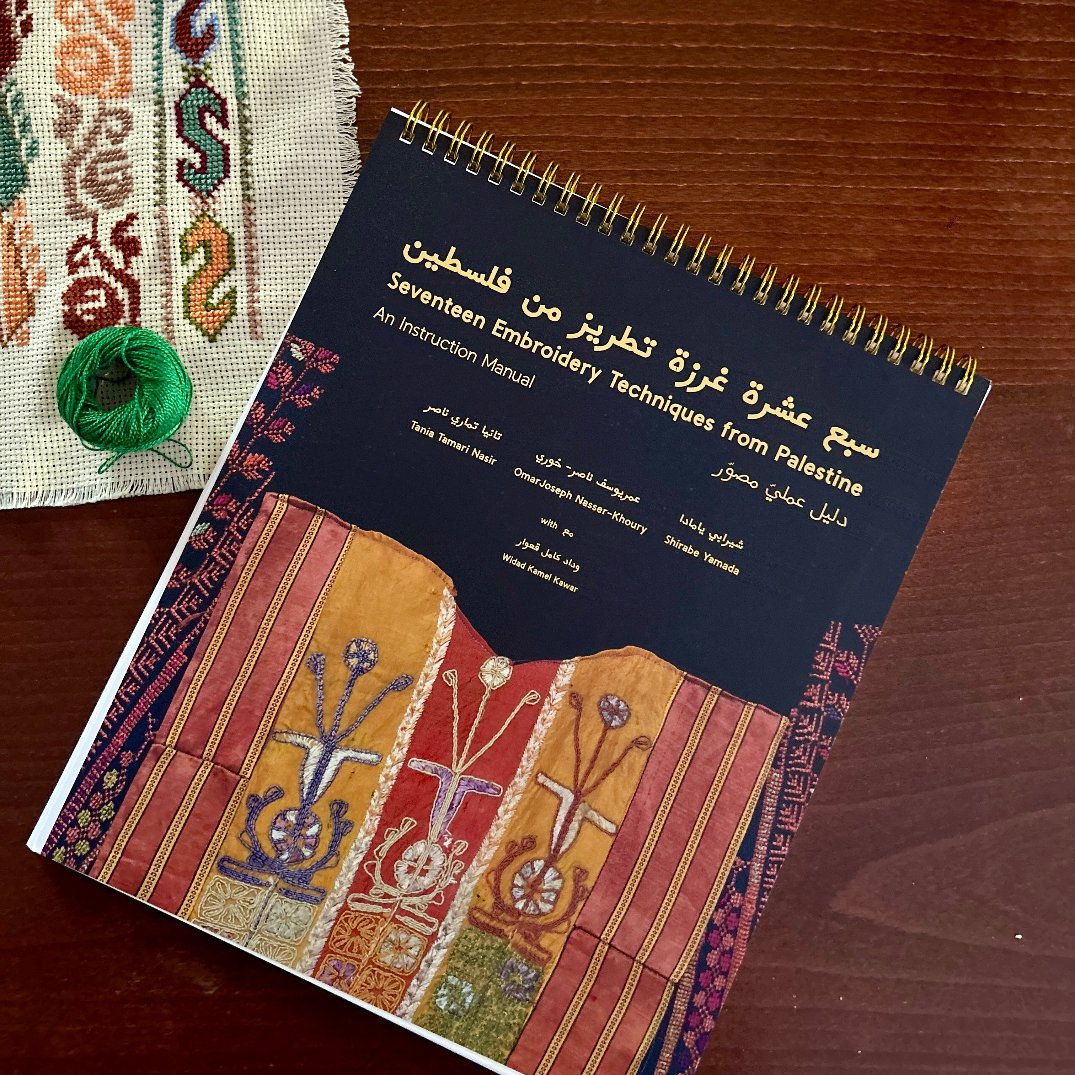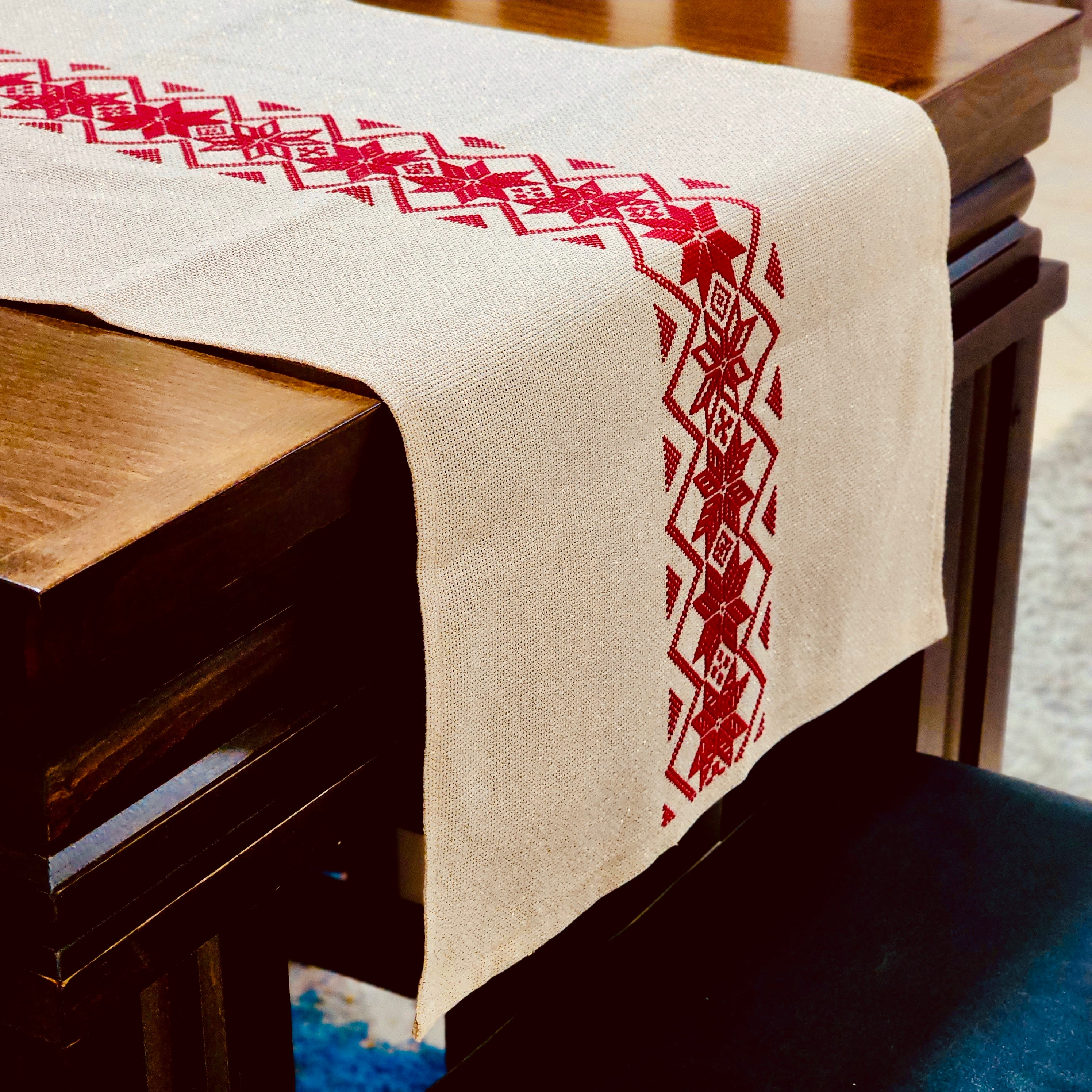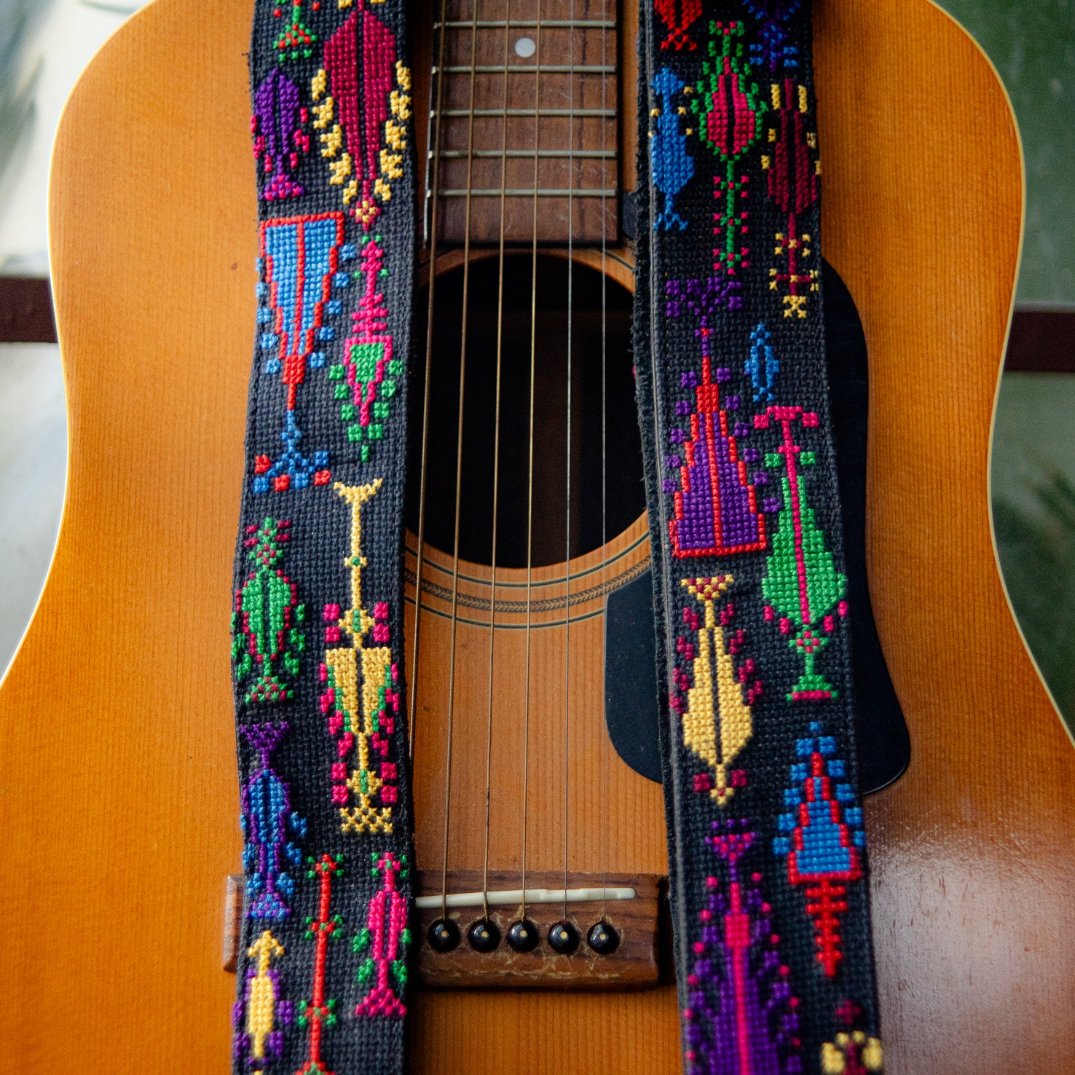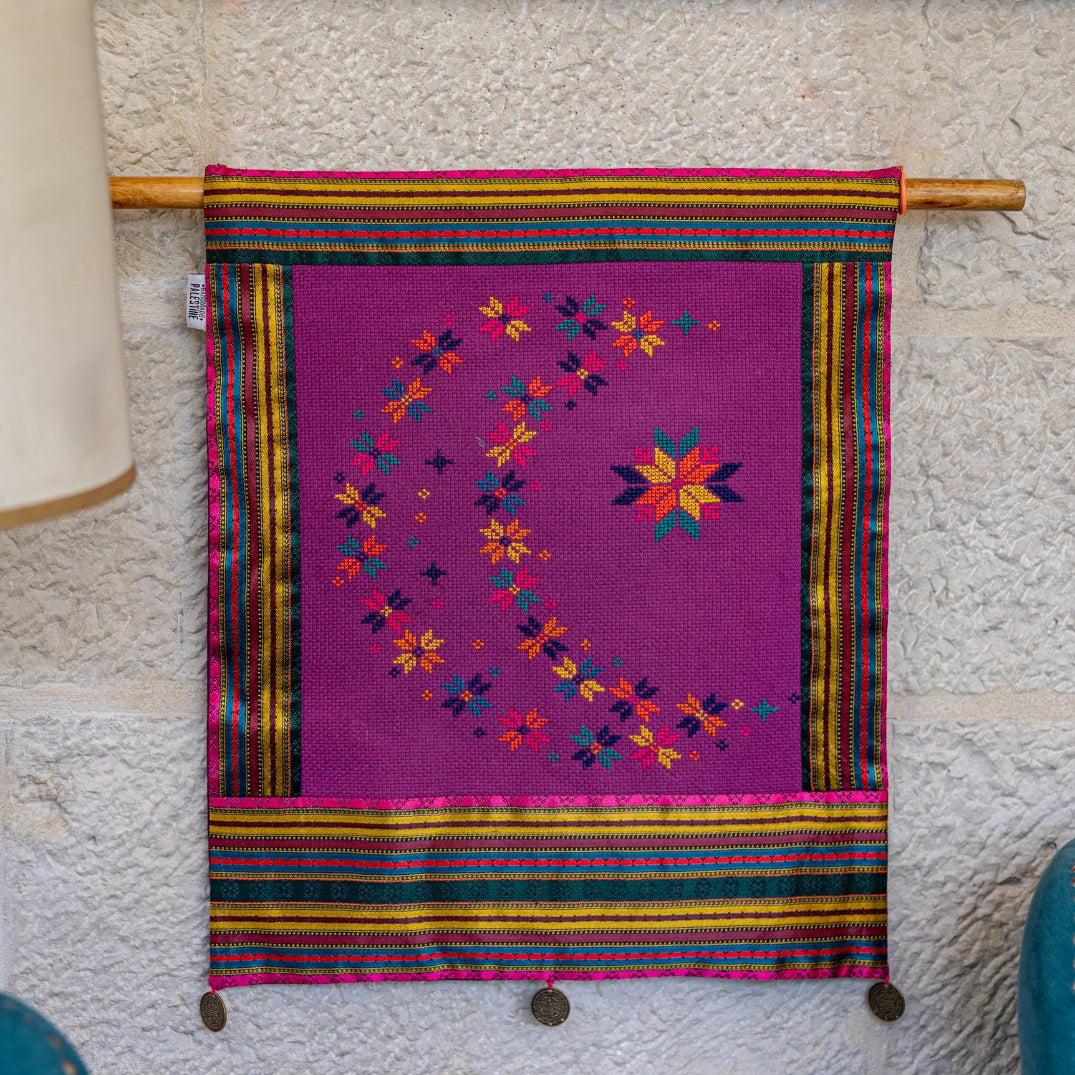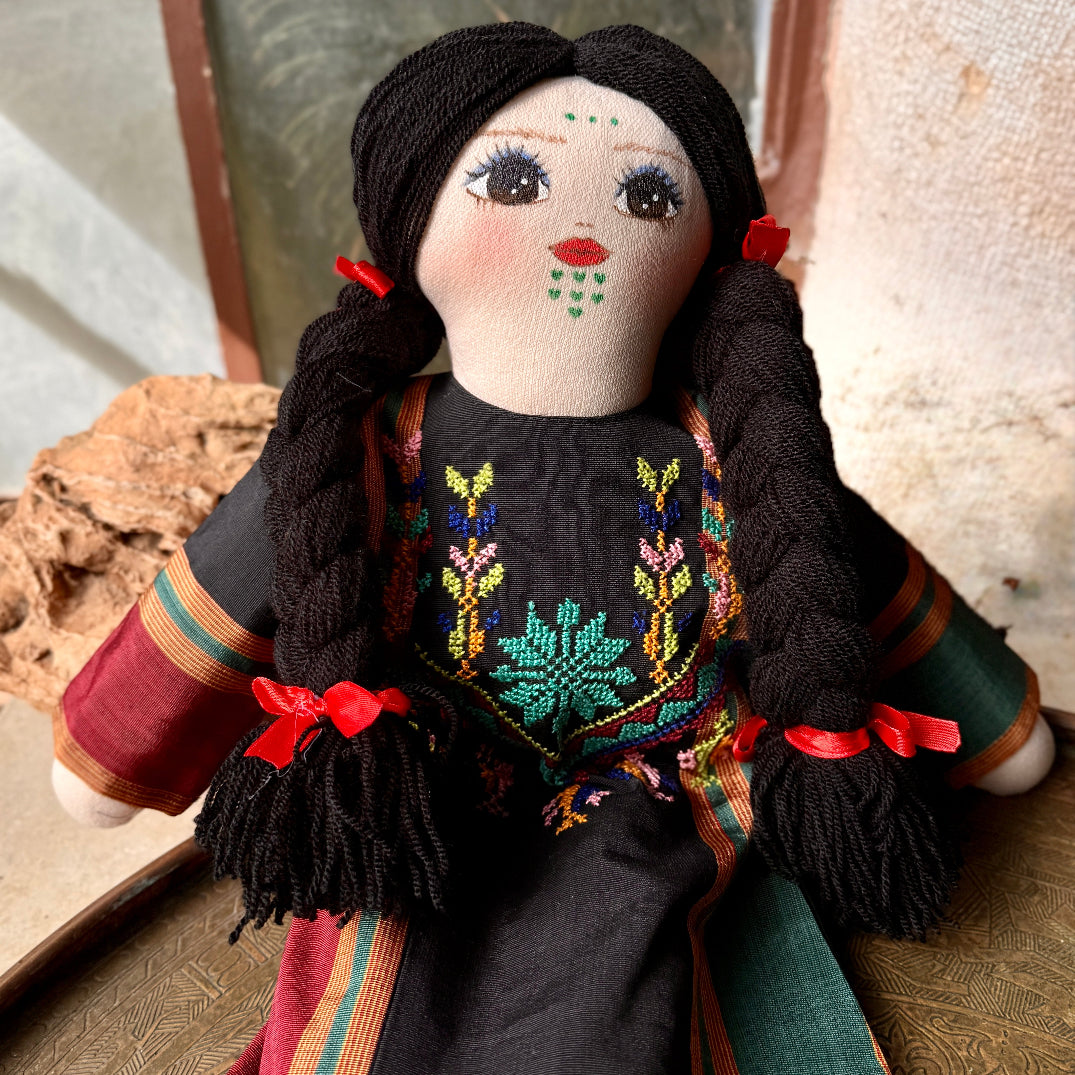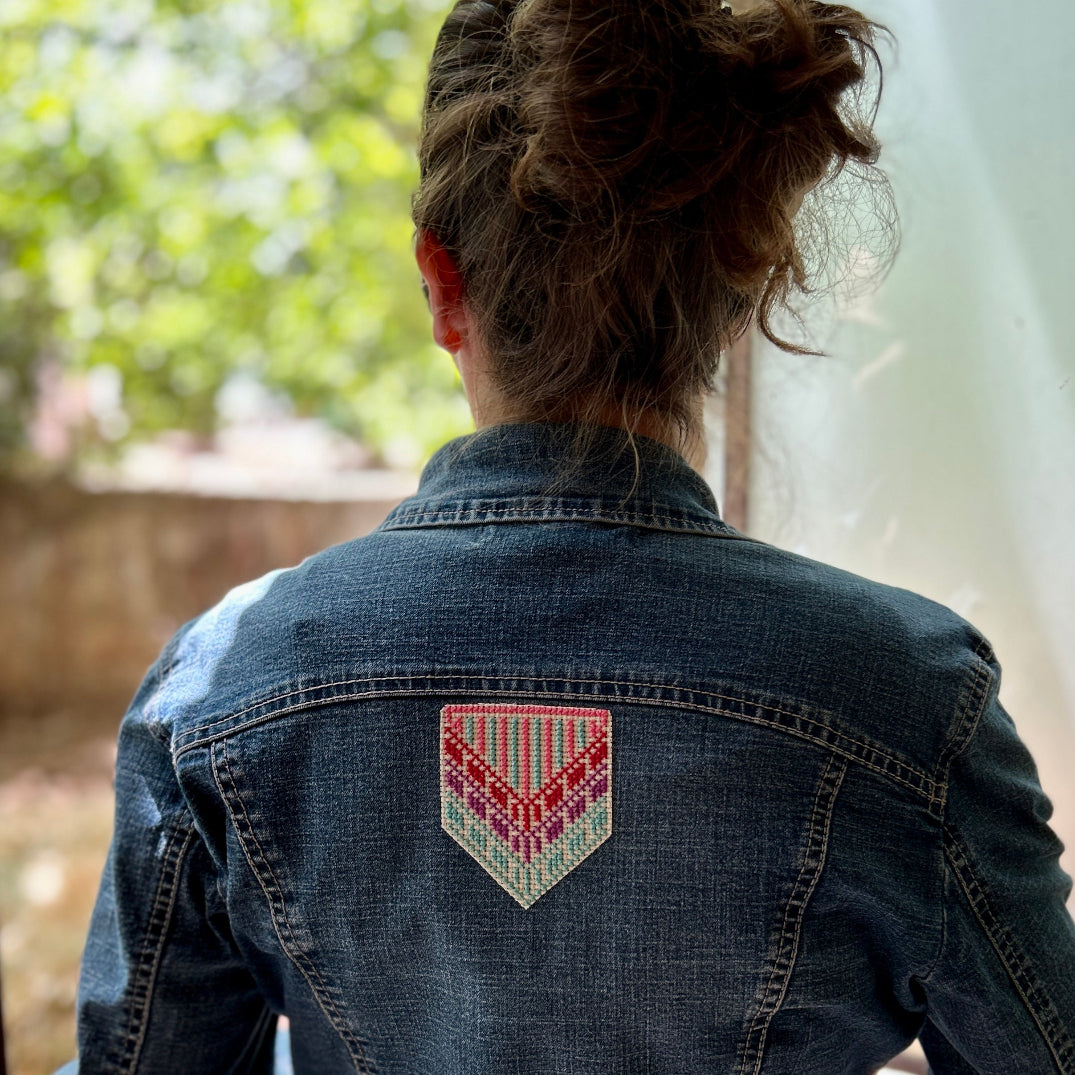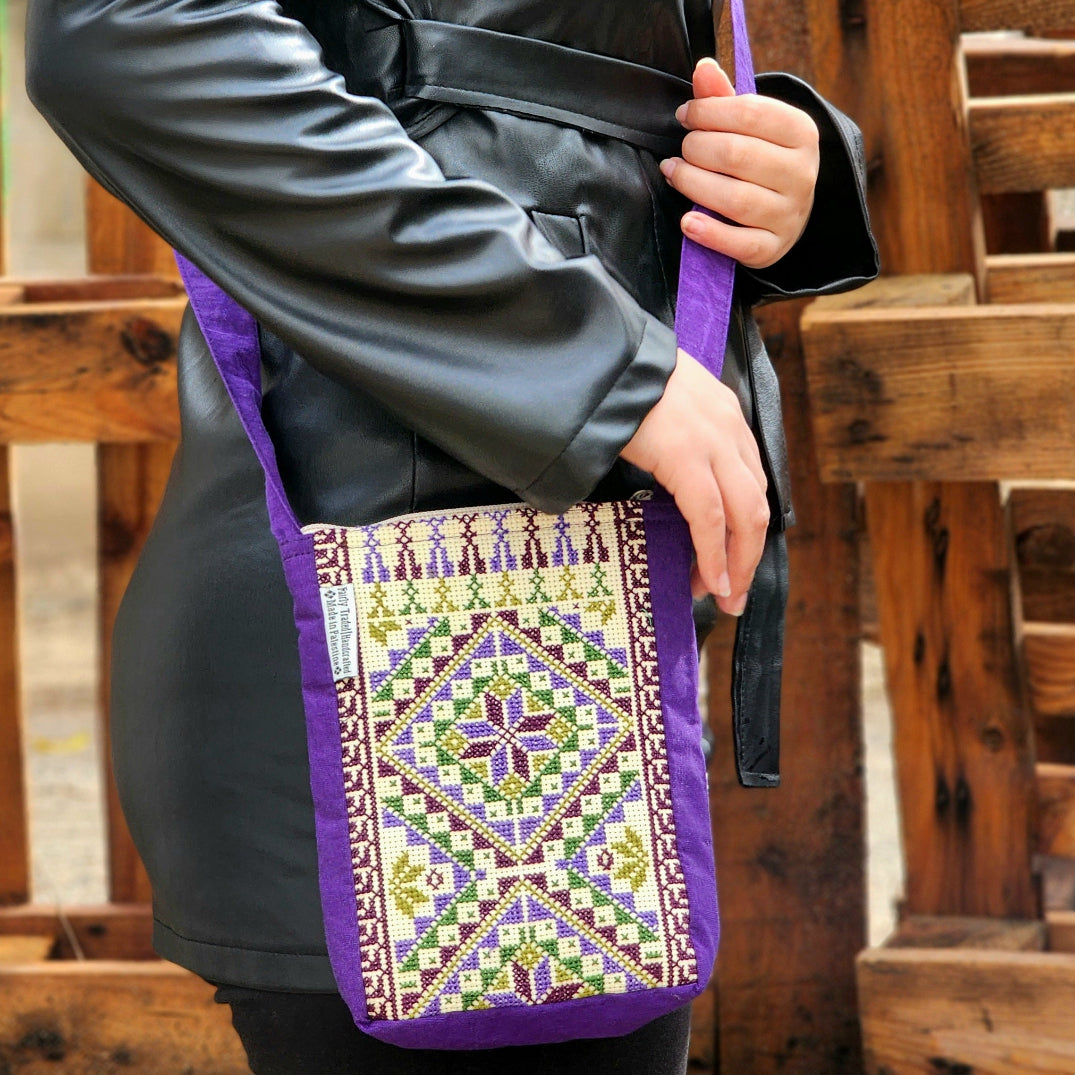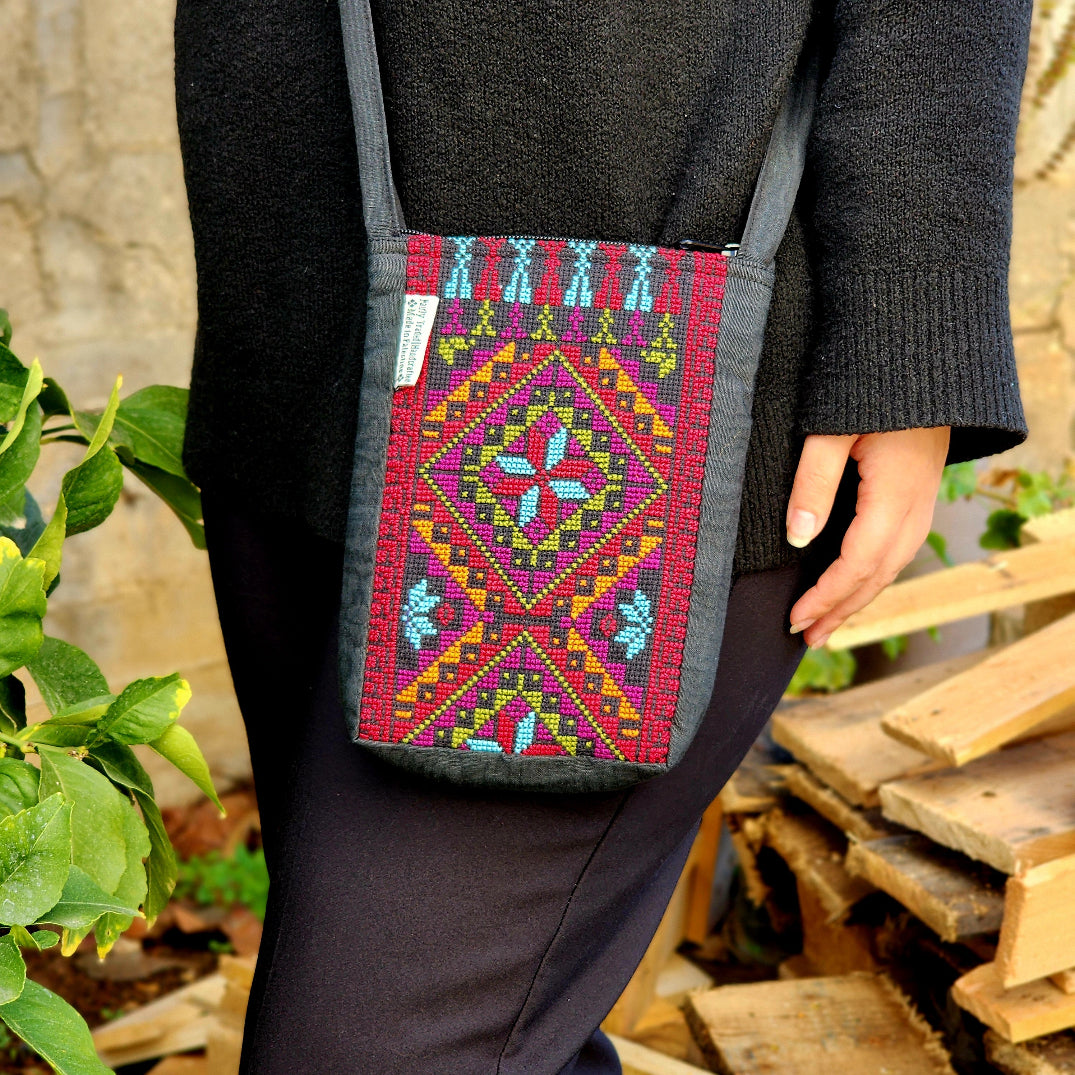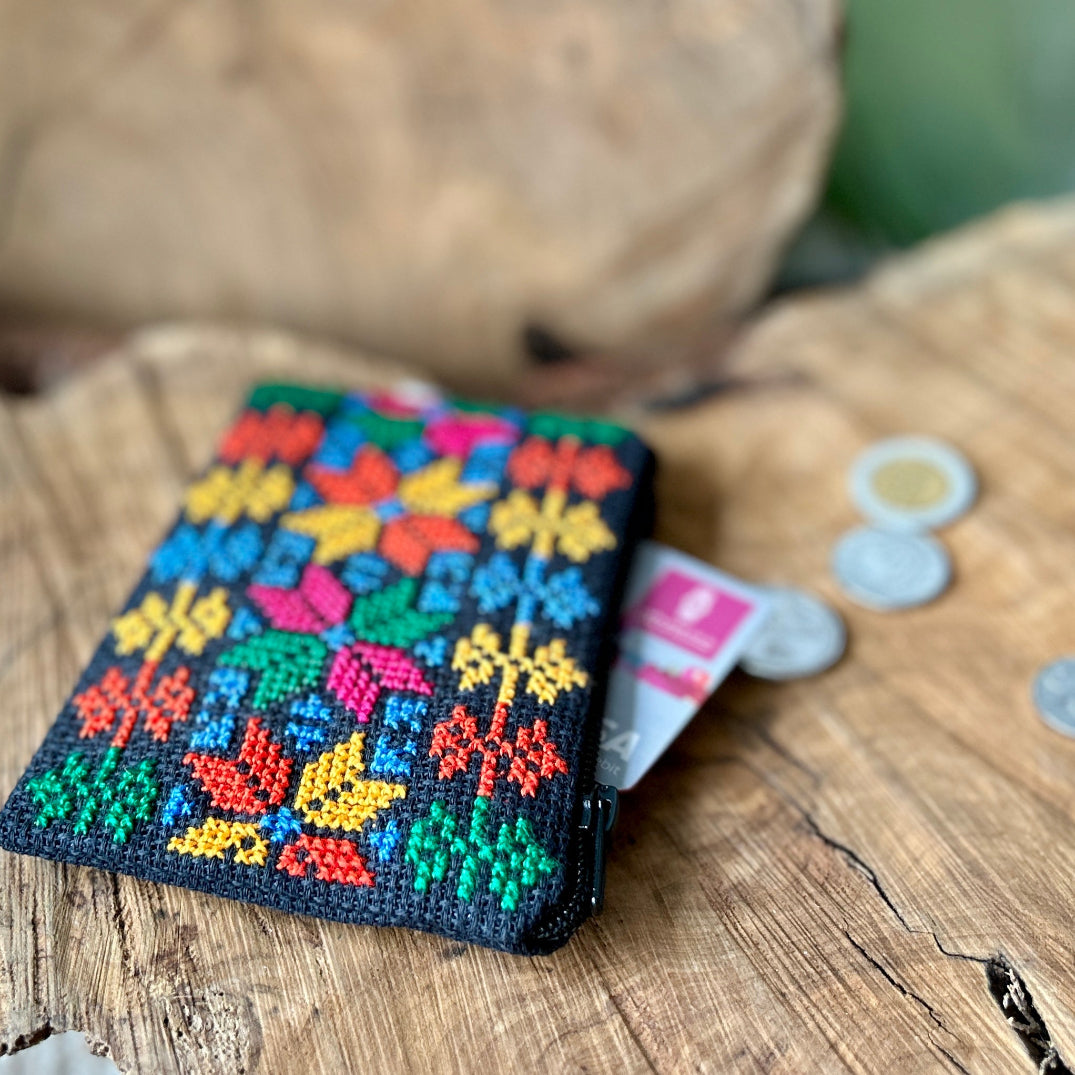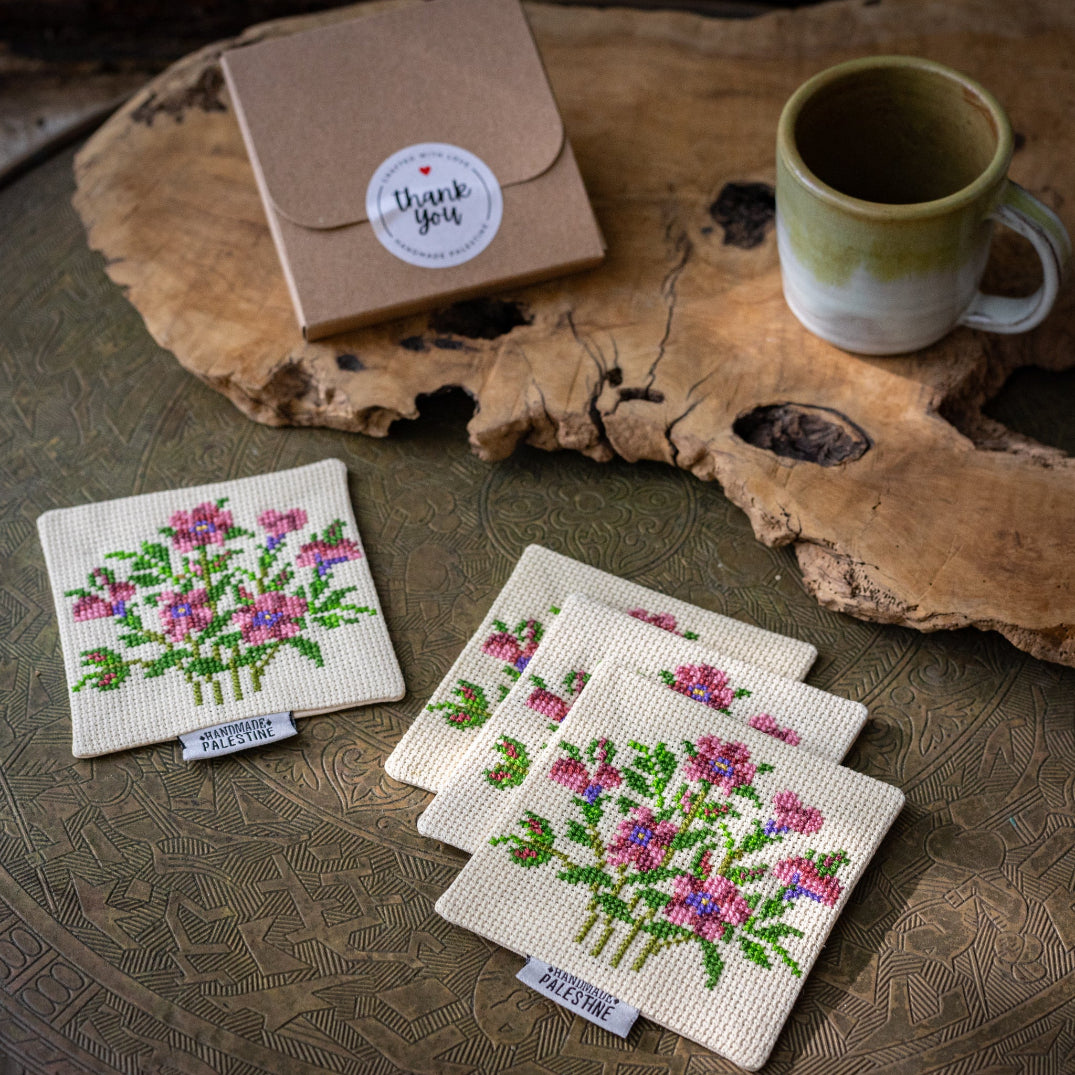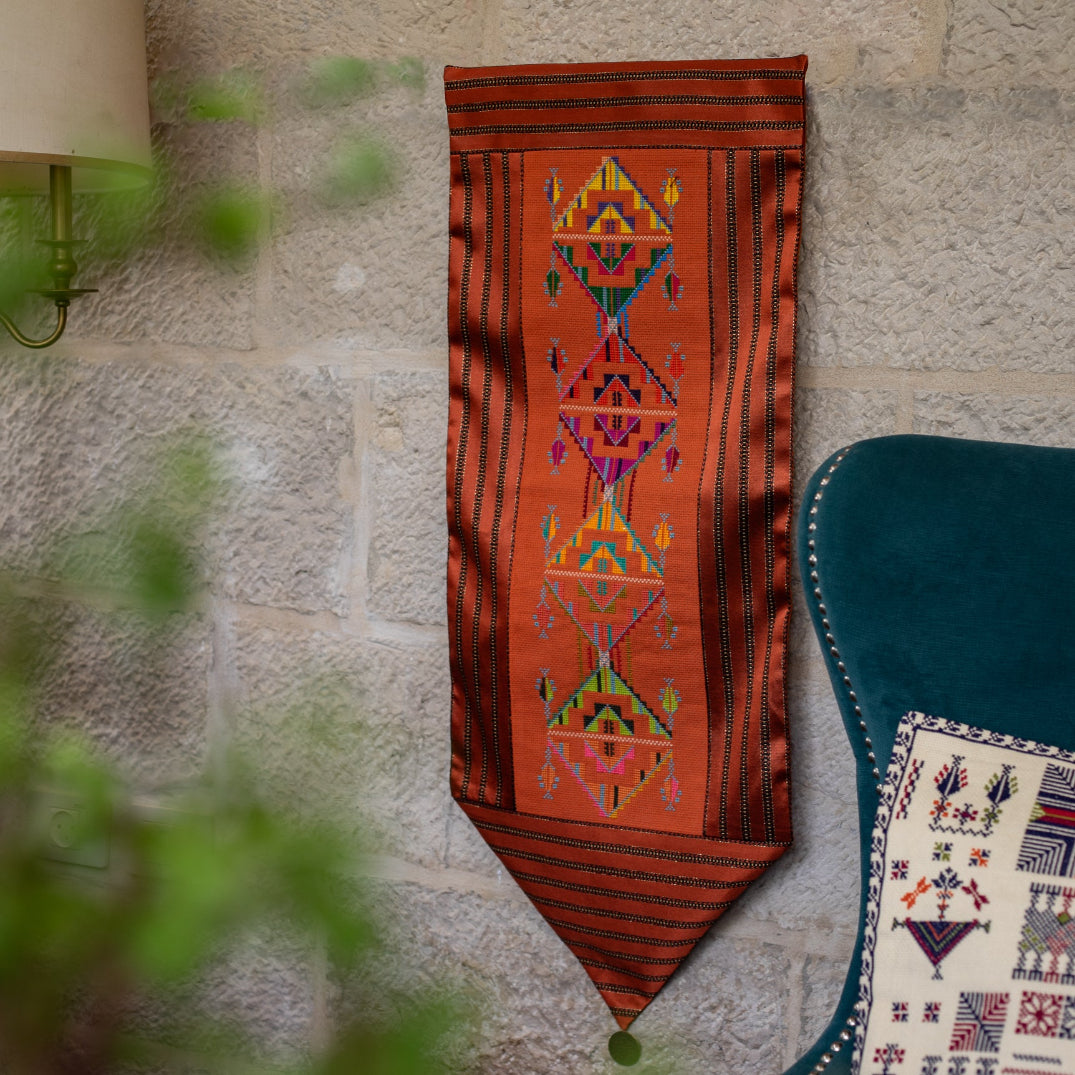
Tatreez — Palestinian cross-stitch embroidery — is one of the oldest and most complex needlework traditions in the world. It is also a living archive. Every pattern, colour and motif in traditional Palestinian embroidery once told a story: where a woman was from, the season, her family, her community. Women stitched the landscape of their villages into cloth, and that cloth survived when the villages did not.
The tradition dates back thousands of years, with roots in Canaanite and Phoenician textile work. By the nineteenth century, Palestinian thobes — the embroidered dresses worn by women — had become extraordinary regional documents, varying in pattern and colour from village to village. A woman from Gaza stitched differently to a woman from Ramallah. Hebron had its own signature. Each piece was unique, the product of years of work and the accumulated knowledge of generations.
After the Nakba of 1948, tatreez became an act of memory and resistance. Palestinian women in displacement camps continued to stitch, carrying their patterns with them into exile. In 2021, UNESCO recognised Palestinian embroidery on its Intangible Cultural Heritage list. The recognition was long overdue.
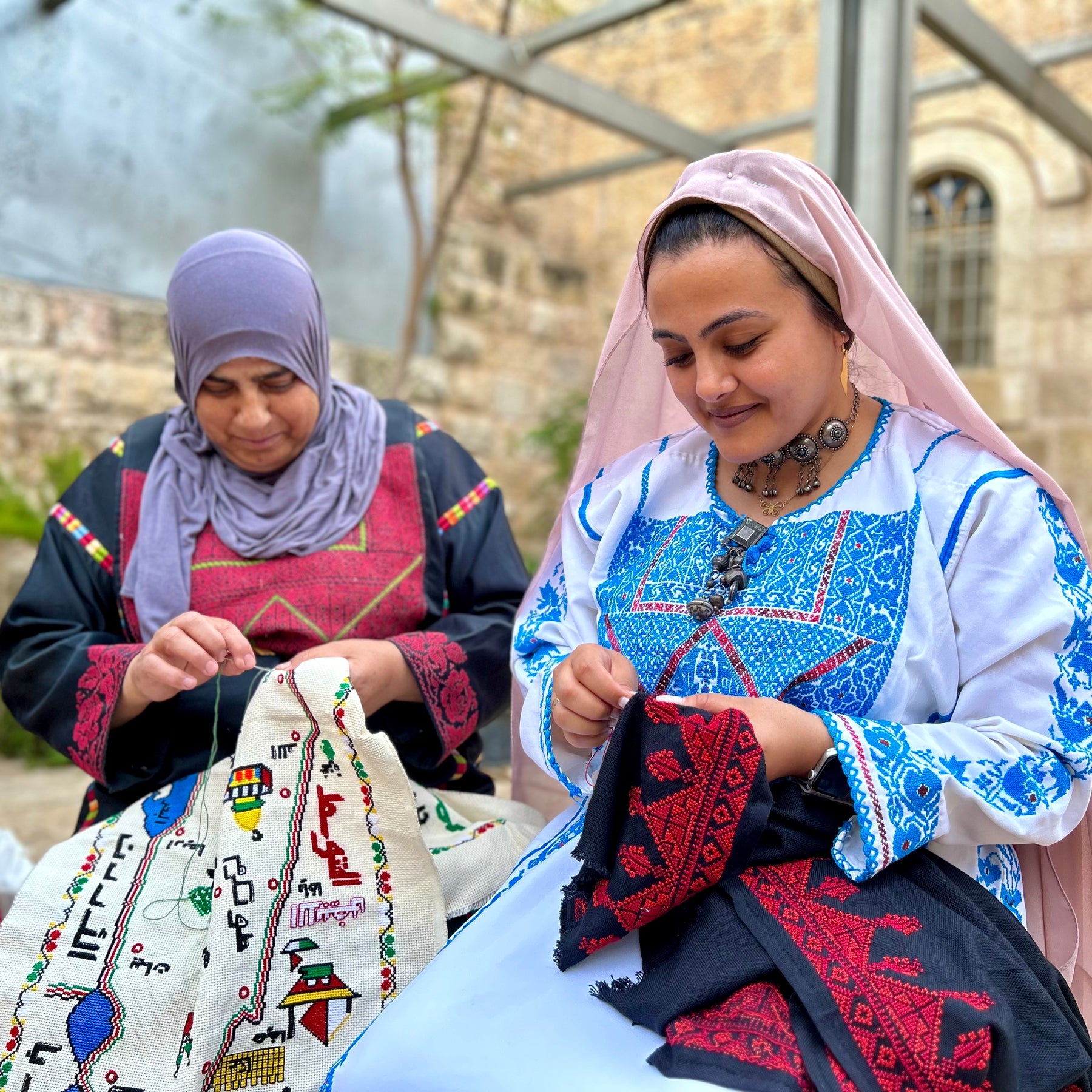
The pieces in this collection are hand-stitched by Palestinian women — many of them part of cooperatives we have helped establish across the West Bank. Our tatreez has its proud lineage in Gaza, where the tradition was kept alive through generations of occupation. Since October 2023, Gaza has been under total siege. Nothing has come in or out. The women who stitched for us are there, and we hold that with every piece we sell. What remains in this collection was made before that silence. When it is possible to source again, we will.
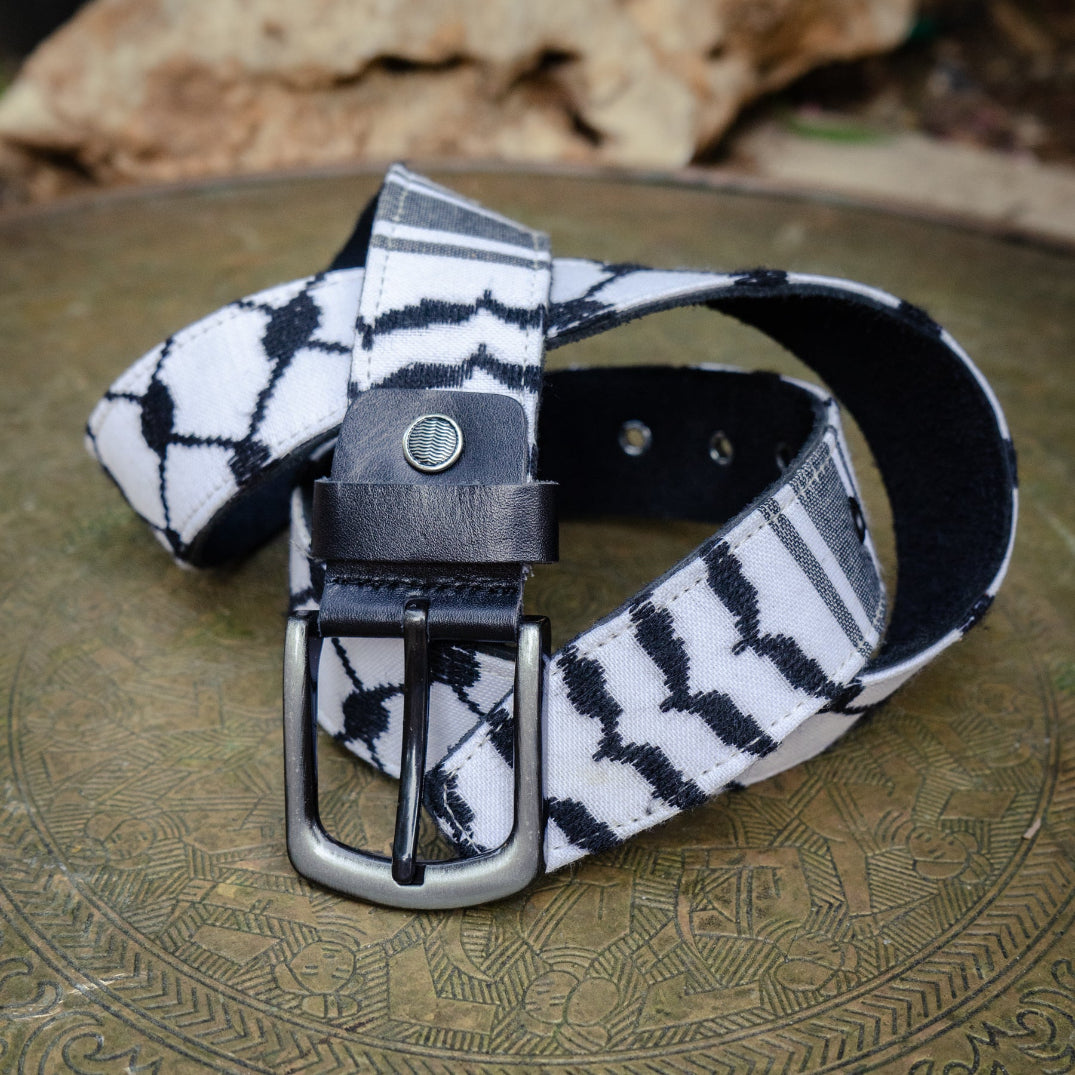
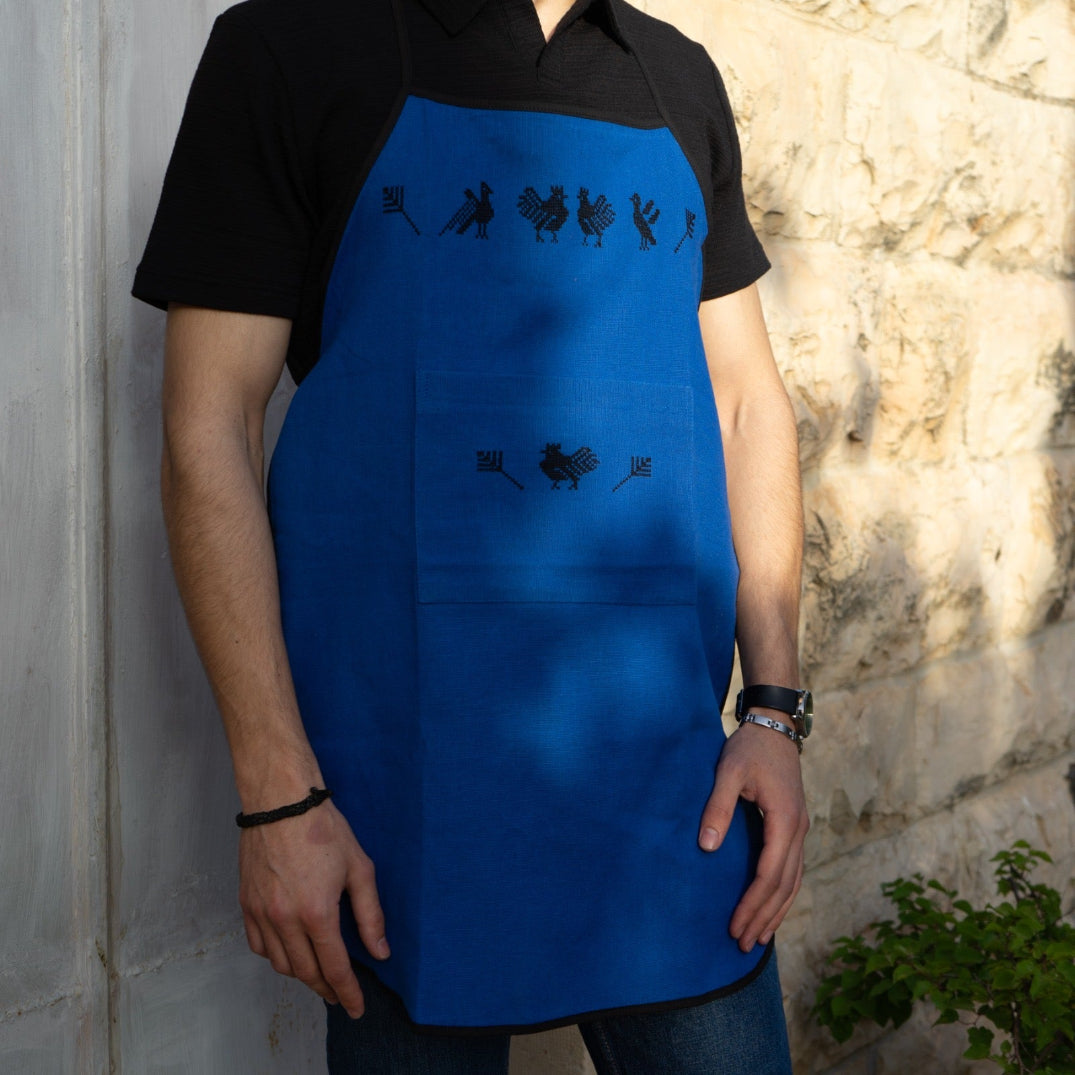
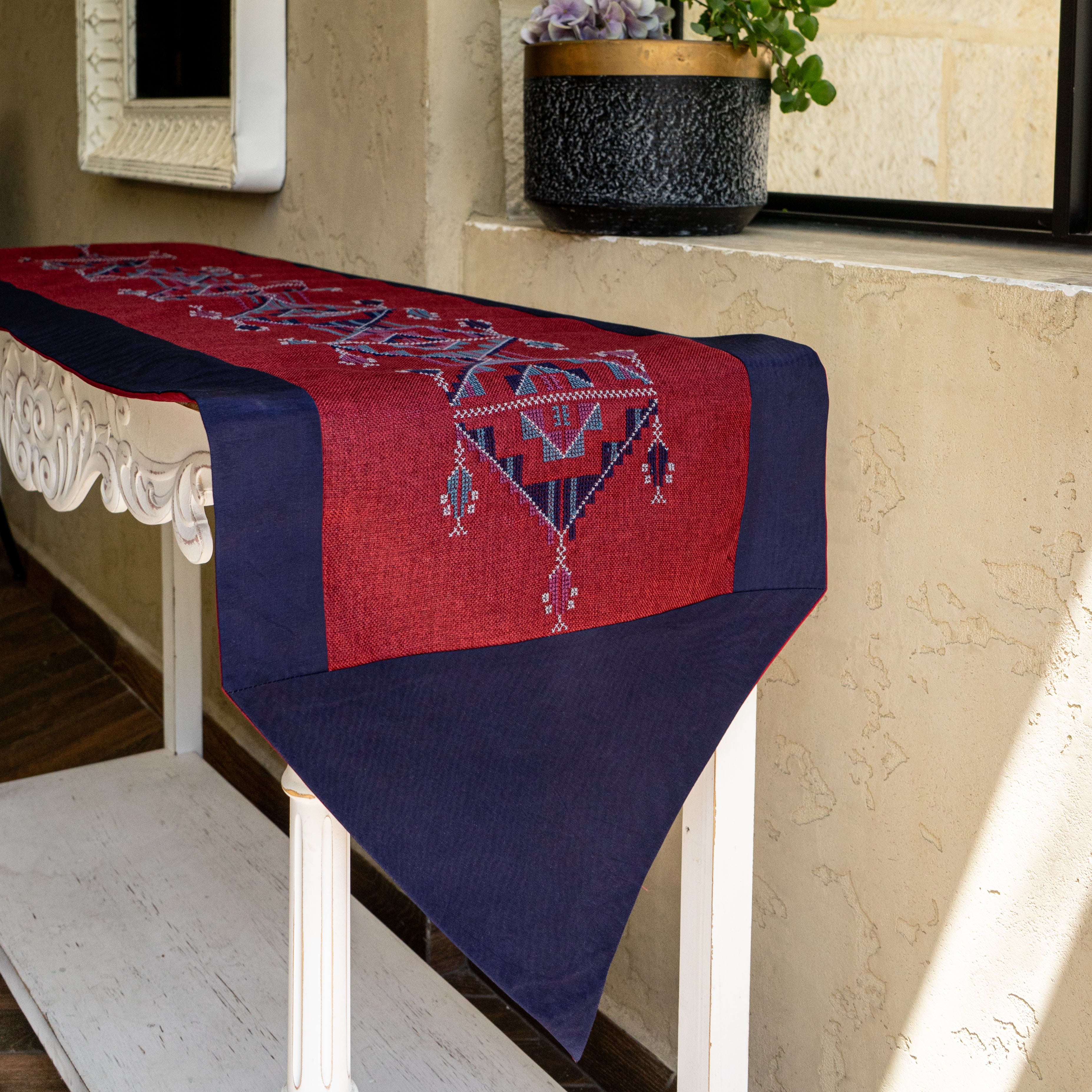
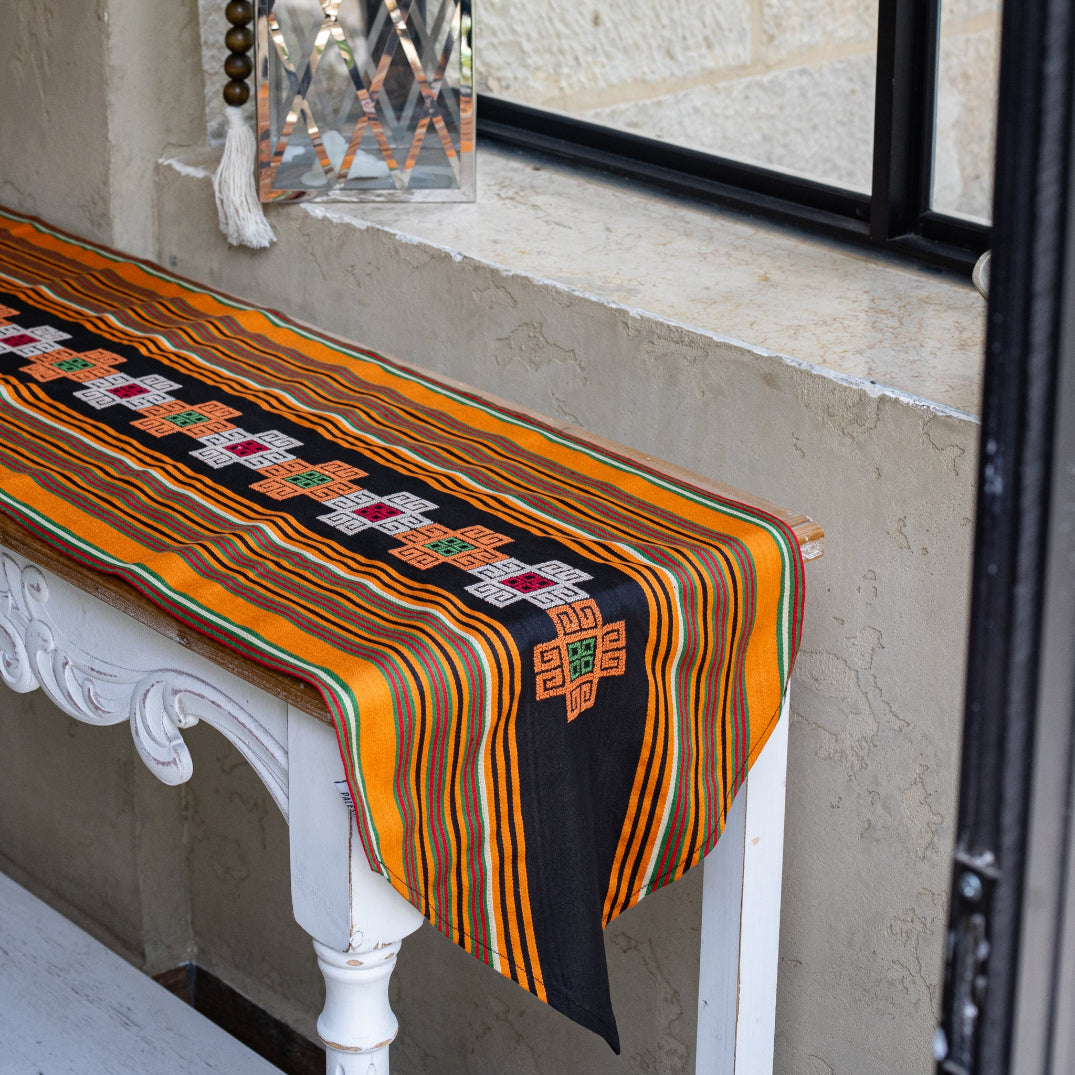
Our tatreez range includes pouches, shawls, cushion covers, wallets, bag straps, glasses cases and more.