
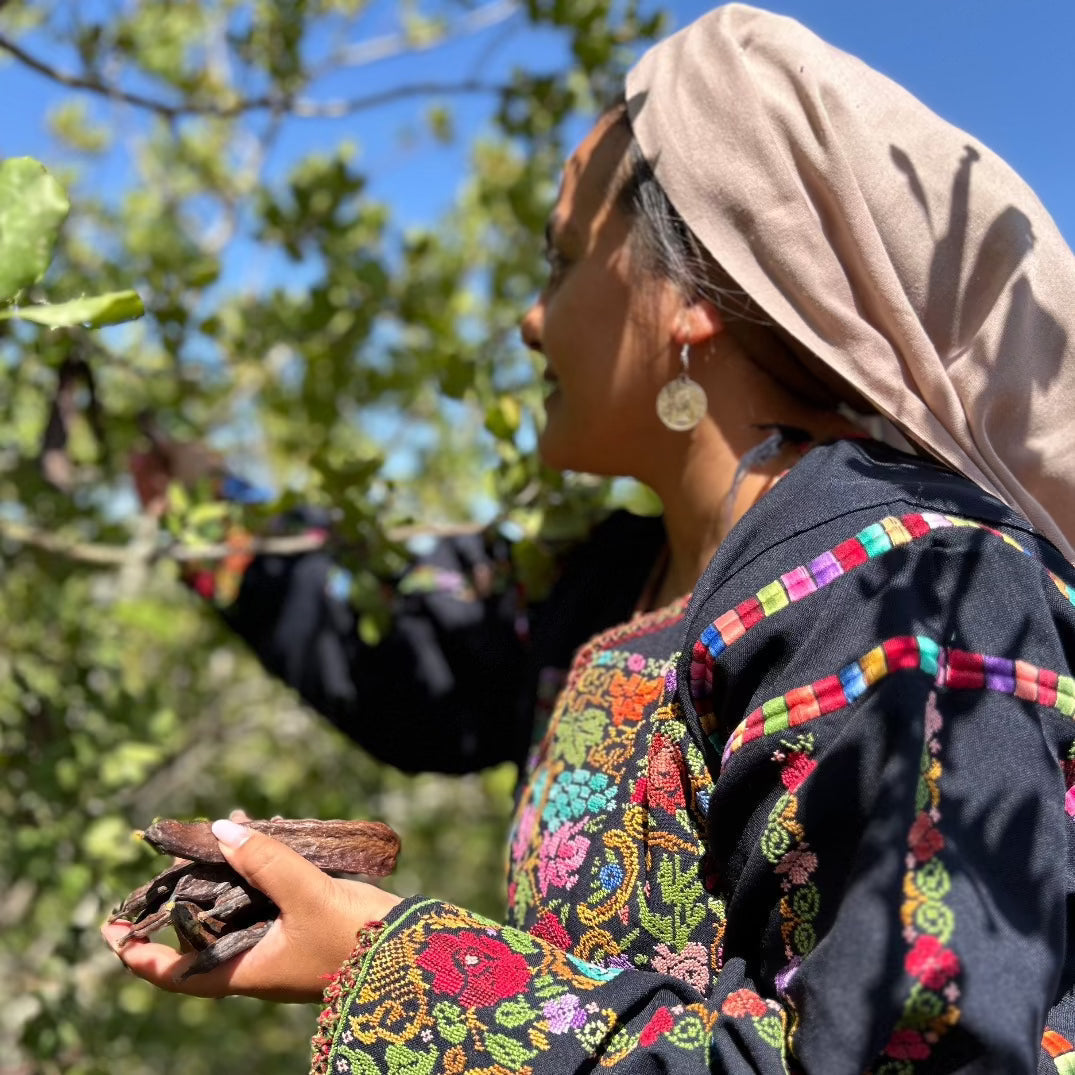
Refreshing Carob Juice: A Timeless Tradition in Palestine
Across Palestine, you’ll often find bottles of homemade carob juice being sold by street vendors, especially during the warmer months. Though it’s more of a brew than a juice, the Arabic name has remained familiar across generations.
Naturally sweet, earthy, and refreshing, carob drink is a simple taste of Palestinian tradition. Made from the pods of the kharoub tree, it connects the seasonal harvest with a food tradition that has been enjoyed and passed down for generations.

Why Carob Holds a Special Place in Palestinian Culture
Carob trees thrive in the Mediterranean climate of Palestine, where they have been cultivated for centuries. Known as kharoub in Arabic, carob pods are not only a symbol of resilience but also a source of sustenance. While carob has gained popularity worldwide as a cocoa alternative, Palestinians continue to cherish it in its traditional form—brewed into a delicious, fortifying drink.

Health Benefits of Carob
Carob is more than just a delicious treat—it’s packed with nutrients that make it a fantastic addition to any diet. Here’s what makes it so beneficial:
- Rich in Antioxidants: Helps fight inflammation and support overall well-being.
- High in Fiber: Aids digestion and promotes gut health.
- Caffeine-Free & Naturally Sweet: A perfect alternative to chocolate without the jitters or added sugars.
- Loaded with Calcium: Great for bone health and a plant-based source of essential minerals.

Want to know how to make your very own refreshing carob juice? Take a look below to our recipe.
How to Make Authentic Palestinian Carob Juice
Ingredients:
- 2 cups crushed carob pods
- 1 cup brown sugar (optional, adjust to taste)
- 4 cups water
Instructions:
- In a pot, combine the crushed carob pods with water and bring to a gentle simmer.
- Let it simmer for about 45 minutes until the pods soften and release their flavor.
- Remove from heat, strain the liquid, and set the pods aside.
- Break the softened pods into smaller pieces and return them to the pot.
- Add sugar (if using) and simmer for another 45 minutes to enhance the richness.
- Strain again, allow to cool, and serve chilled.
Storage & Serving Tips:
- Refrigerate for up to two weeks, adjusting sweetness and dilution to taste.
- Enjoy it cold for a refreshing break or mix with ice and a splash of lemon for a modern twist.
- Perfect as a caffeine-free, nutrient-packed drink for Ramadan and beyond.
Embrace this time-honored Palestinian tradition and enjoy a sip of carob juice with family and friends. Try making it at home with high-quality carob, perhaps even from your own Ramadan gift box which you can pre-order now here.

Written by Morgan Totah
Visit author's website


Leave a comment
This site is protected by hCaptcha and the hCaptcha Privacy Policy and Terms of Service apply.