
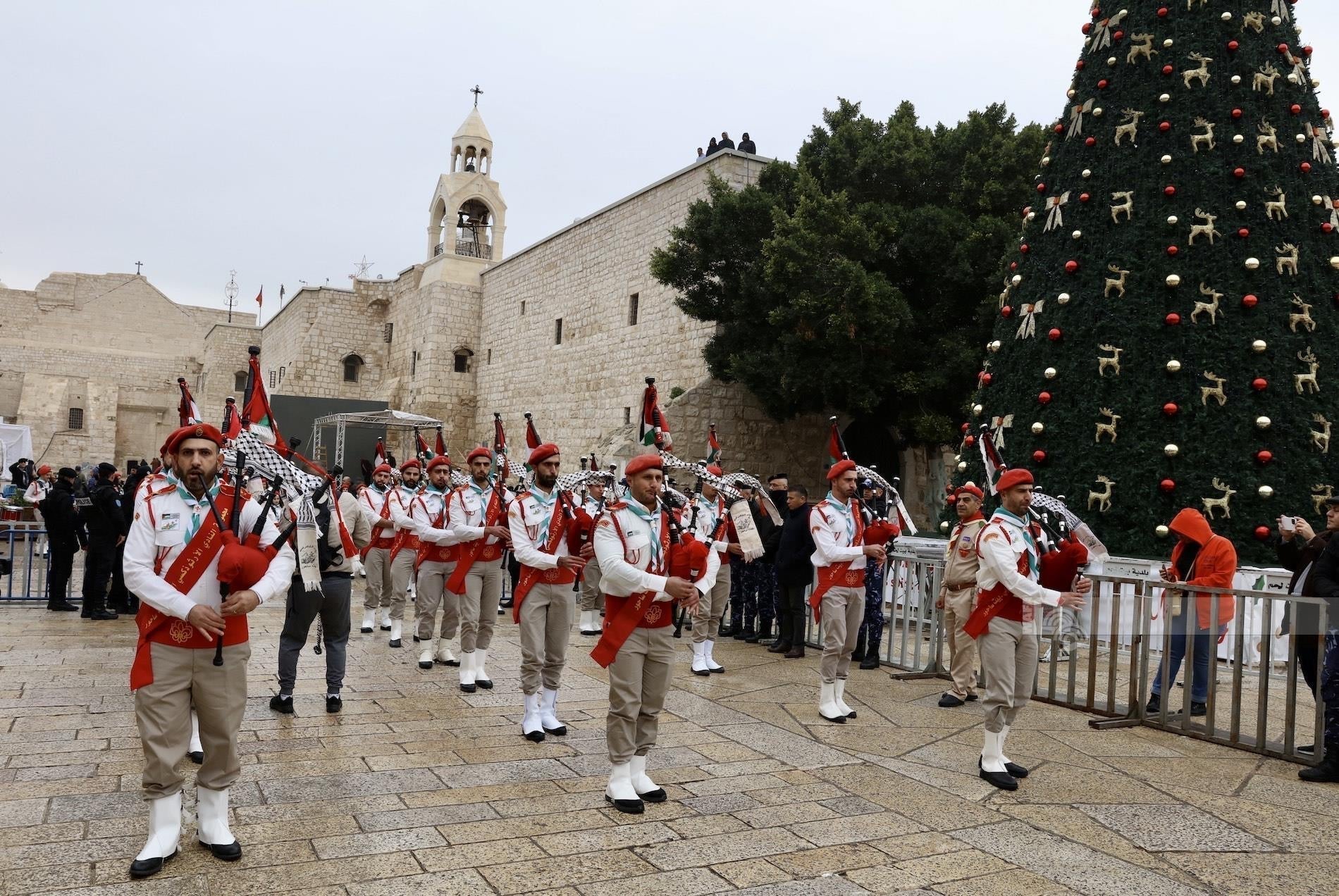
Orthodox Christmas in Palestine
Palestinian Christmas: How do Christians in Palestine celebrate?
Q: When people think of Christmas in Palestine, what do they usually imagine?
A: Most people imagine Roman (Western) Christmas on December 25, with lights, trees, and celebrations centered around Bethlehem. That is part of the story, but it is far from complete. In Palestine, Christmas is not one day and not one tradition. It is a season, shaped by multiple calendars, ancient histories, and communities that have learned how to celebrate together.
Q: What makes Christmas in Palestine different from other places?
A: One of the most powerful and painful realities is that the Christian community in historic Palestine has nearly disappeared. Because of this, Orthodox and Roman Catholic communities often come together for public celebrations, parades, and church events. They share space, rituals, and joy. By celebrating together, they create critical mass, keep traditions visible, and strengthen a sense of belonging. Christmas becomes not only a religious observance, but an act of community, survival, and care.
Q: How do Palestinian Christian households celebrate Christmas at home?
A: In Christian homes across Palestine, Christmas trees go up before Roman Christmas and stay up through Orthodox Christmas. The tree is not taken down after December 25. It stays lit and decorated as families move through the different celebrations. This is a quiet but meaningful reflection of how intertwined the communities are, and how Christmas is shared rather than segmented.
Q: What does Orthodox Christmas look like in Palestine?
A: Orthodox Christmas is celebrated on January 7 and is often more contemplative in tone. It is centered around church services, fasting before the feast, and time with family. The celebrations feel ancient and grounded, marked by incense, chant, and candlelight. The emphasis is less on spectacle and more on continuity, faith, and presence.
Q: Why is Orthodox Christmas on a different date than Roman Christmas?
A: The difference comes down to calendars. Orthodox churches follow the Julian calendar for religious celebrations, while Roman Catholic and Protestant churches follow the Gregorian calendar. The Julian calendar currently runs 13 days behind the Gregorian one, which is why Orthodox Christmas falls on January 7. In Palestine, this difference does not divide the season, but extends it, allowing Christmas to unfold slowly over time.
Q: Who was Jesus in the context of Palestine?
A: Jesus was a Jew, born and raised in this land. He lived as part of the Jewish community of Roman-era Palestine, shaped by its traditions, languages, and geography. Understanding Jesus as a Jewish figure rooted in this place is essential to understanding Christianity itself.
Q: What were the first Christian churches like?
A: The earliest Christian churches were Eastern. The traditions that later became Orthodox Christianity developed here, in Palestine and the surrounding region. These churches grew out of local cultures and customs long before Christianity expanded westward.
Q: How did Western churches come to Palestine?
A: With the Crusades came the Latin, or Roman, churches and the Western Christian structures more familiar today. These were layered onto an already ancient Christian landscape. In Palestine, Eastern and Western Christian traditions have existed side by side ever since, sometimes in tension, often in shared space.
Q: What does all of this mean today?
A: Christmas in Palestine is not just about dates or denominations. It is about endurance, shared traditions, and maintaining presence in a land where Christian life has been steadily diminished. When Orthodox and Roman communities celebrate together, when trees stay up for weeks, when churches open their doors to one another, Christmas becomes an act of continuity. It says: we are still here, and we celebrate together.

Written by Morgan Totah
Visit author's website


%20Christmas%20on...)
Leave a comment
This site is protected by hCaptcha and the hCaptcha Privacy Policy and Terms of Service apply.