
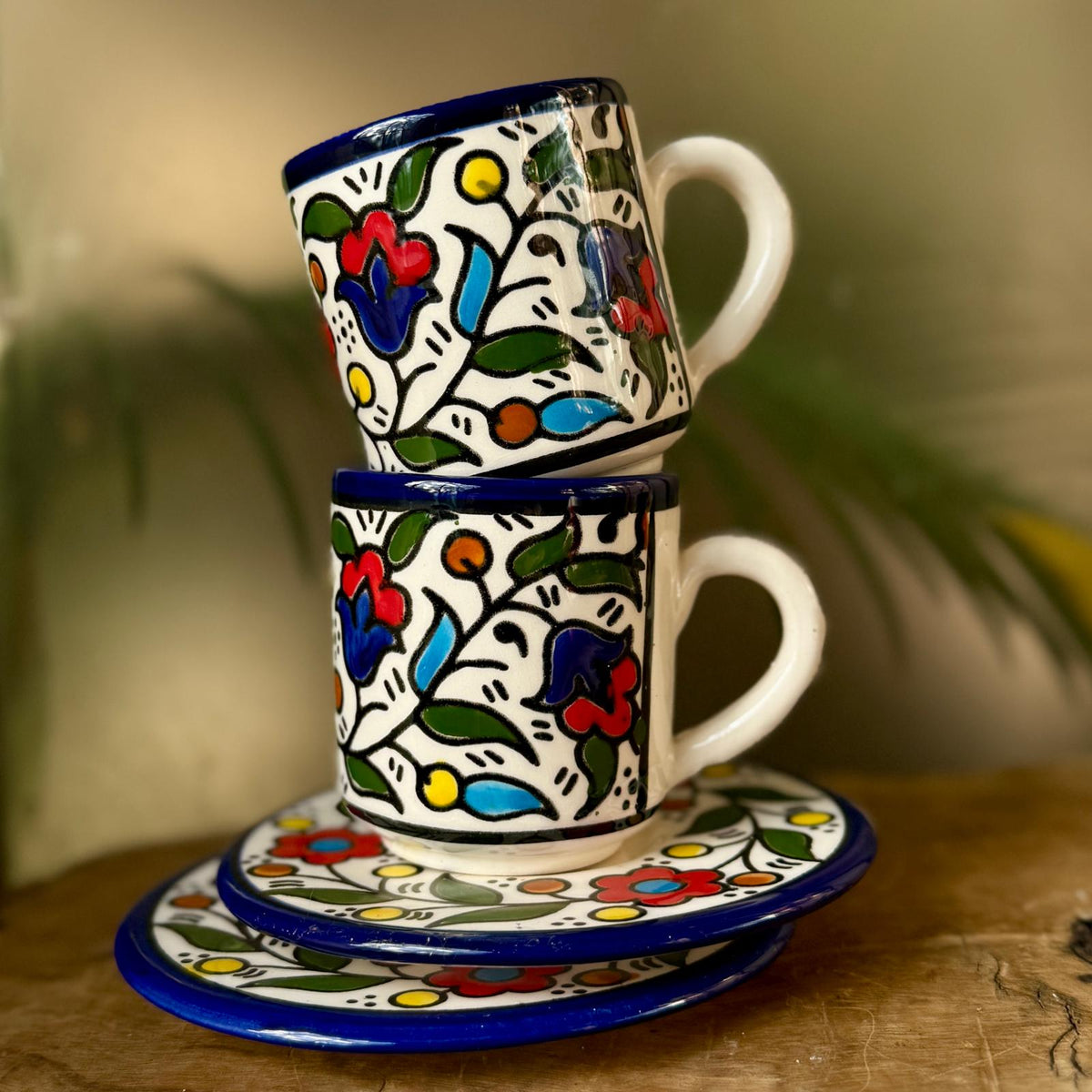
Palestinian Ceramics: The Ancient Craft of Hebron and What Makes Each Piece Unique
Some objects are functional. Some objects are beautiful. And then some objects are both pieces that sit on your table or hang on your wall and do the work of daily life while also carrying within them centuries of craft tradition and a specific, irreplaceable human story.
Palestinian ceramics from Hebron are that kind of object.
Hand-shaped and hand-painted by Palestinian artisans in one of the oldest continuously inhabited cities in the world, Hebron ceramics bring together a tradition of craftsmanship that stretches back hundreds of years with the individual skill of the potters and painters who carry it forward today. Every plate, bowl, mug, and vase is unique not as a marketing claim, but as a simple fact of how it was made.
This guide tells the story of Palestinian ceramics: where they come from, how they are made, what makes them distinctive, and why the craft matters.
Hebron: A City of Crafts
Hebron, known in Arabic as Al-Khalil, is one of the oldest cities in the world and one of the most important centers of Palestinian craft. Situated in the southern West Bank, the city has been a hub of trade, craftsmanship, and culture for millennia.

Hebron is known for several distinctive crafts: its hand-blown glass, its leatherwork, and above all its ceramics. The ceramic tradition of Hebron is not a recent development or a craft revival; it is a living continuation of pottery and tile-making traditions that have existed in the city for centuries. The specific visual vocabulary of Hebron ceramics the bold geometric patterns, the vivid blues and greens, the floral and vine motifs reflects a visual tradition that has developed and deepened across generations of artisans working in the same city, learning from one another, and passing their knowledge forward.
The Sharif Workshop: Handmade Palestine's Ceramic Partner
At Handmade Palestine, our ceramics are hand-painted by the Sharif Workshop in Hebron, a fair trade partner whose work represents the Hebron ceramic tradition at its finest.
The Sharif Workshop produces ceramics that are entirely handmade, hand-shaped, hand-painted, and fired in traditional kilns. Each piece begins as raw clay, shaped by the potter's hands into the form of a plate, bowl, mug, vase, or other object. Once shaped and dried, it is painted by hand; each pattern is applied individually by a skilled artisan using brushes and ceramic paints. The piece is then glazed and fired to set the color and harden the surface.
Because every piece is painted by hand, no two are exactly alike. The pattern on your plate was drawn by a person, not printed by a machine. The slight variations in line weight, the individual brushstrokes, the specific way one artisan's hand moves across the clay surface these are not imperfections. They are the marks of human craft, and they are part of what makes Hebron ceramics worth having.
What Palestinian Ceramics Look Like
Palestinian ceramics from Hebron have a distinctive visual identity that is immediately recognizable and deeply rooted in the visual traditions of the region.

Colors: Hebron ceramics are known for their vivid, saturated colors: deep blues and turquoises, rich greens, warm ochres and terracottas, and clean whites. The color palette reflects both the natural pigments available in the region and centuries of aesthetic development within the Hebron ceramic tradition.
Patterns: The patterns on Hebron ceramics draw on multiple visual traditions: Islamic geometric design, Byzantine and Ottoman tile motifs, and specifically Palestinian imagery including olive branches, vine leaves, flowers, and birds. The geometric patterns, in particular interlocking stars, hexagons, and diamonds, reflect the sophisticated mathematical traditions of Islamic decorative art, adapted over centuries into the specific visual language of Hebron.
Texture: Palestinian hand-painted ceramics have a surface texture that mass-produced ceramics cannot replicate. The glaze settles differently over hand-applied brushstrokes than over machine-printed designs, creating subtle variation in surface sheen and depth. A Palestinian ceramic piece catches light differently from different angles, a quality that comes directly from the hand-painted process.
What Is Made: The Products
Palestinian ceramics from Hebron are both beautiful and functional. The Sharif Workshop produces a range of pieces designed for daily use as well as display.
Plates and platters: hand-painted serving plates in a range of sizes, from small individual plates to large sharing platters. Each one is a working piece of Palestinian craft for your table.
Bowls: fruit bowls, serving bowls, and smaller individual bowls, each hand-painted with Hebron patterns.
Mugs and cups: functional pieces for daily use, bringing Palestinian craft into the most ordinary moments of the day.
Soap dishes: a beautifully practical piece that pairs naturally with Palestinian olive oil soap. Our hand-crafted Hebron ceramic soap dish is one of the most popular pieces in our collection.
Olive oil bottles, including our Limited Edition Gift Set pairing a handmade ceramic olive oil bottle with Palestinian cold-pressed olive oil one of the most meaningful Palestinian gift combinations available.
Vases and decorative pieces display pieces that bring the color and pattern of Hebron ceramics into any space.
Palestinian Ceramics and Palestinian Identity
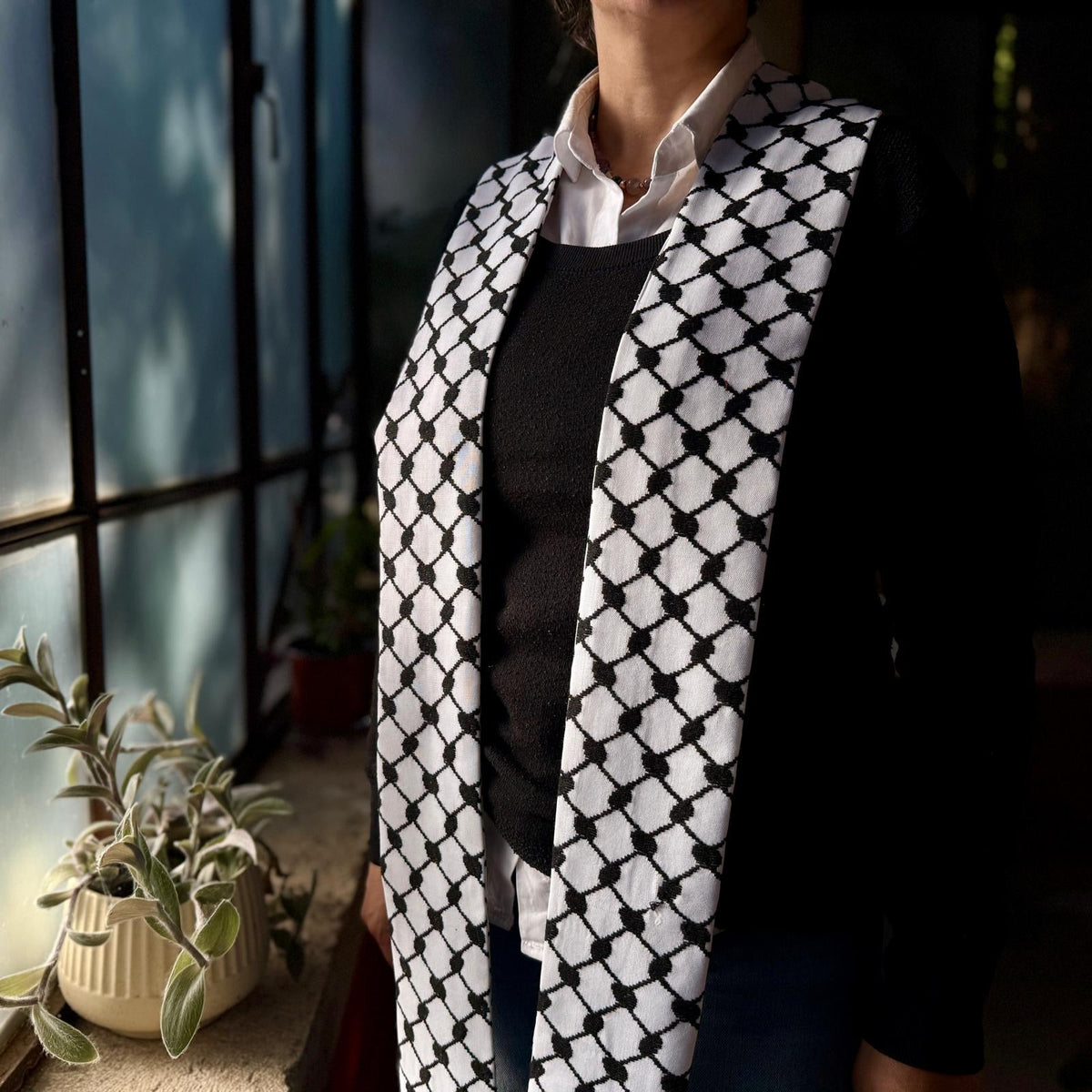
The patterns painted on Hebron ceramics are not purely decorative. Like the patterns of tatreez embroidery, like the fishnet and olive leaf motifs of the keffiyeh, the designs on Palestinian ceramics encode a relationship between the Palestinian people and their land.
The olive branch that appears on many Hebron ceramic pieces is the same olive branch that borders the keffiyeh, a symbol of rootedness, resilience, and the generations of Palestinian families who have tended olive groves across the centuries. The vine leaf and grape motif reflects the agriculture of the Palestinian hills. The birds in Palestinian ceramic decoration are the birds of the Palestinian landscape.
These are not generic Middle Eastern decorative motifs. They are specifically Palestinian, developed in a specific place, by specific communities, across specific generations. When you eat from a Palestinian ceramic plate, you are eating from something that carries the visual memory of Palestine within it.
Palestinian Ceramics as a Gift
Palestinian ceramics make extraordinary gifts: objects of real beauty and real utility that carry a story worth sharing.
A ceramic soap dish paired with a bar of Nabulsi soap. A hand-painted mug for someone who starts every morning with coffee or tea. A serving platter that becomes the centerpiece of a family table. A vase that holds flowers and carries Palestine into a room.
These are gifts that people use, that they live with, that they notice every day and that allow them, every time someone asks where they came from, to share the story of Palestinian craft.
Shop Palestinian ceramics → Explore Palestinian gift sets →
Caring for Palestinian Ceramics
Palestinian hand-painted ceramics are durable and designed for daily use, but a little care will keep them beautiful for years.
Washing: Most Palestinian ceramics can be hand-washed with warm water and mild soap. Check the base of your piece if it is marked as dishwasher safe, it can go in the dishwasher; if not, hand-washing is recommended to preserve the hand-painted finish.
Handling: Palestinian ceramics are fired stoneware, strong and chip-resistant under normal use. Handle with the same care you would give any quality ceramic piece.
Display: If displaying rather than using, keep out of direct strong sunlight for extended periods, which can fade some pigments over time.
Frequently Asked Questions About Palestinian Ceramics
Q: Where are Handmade Palestine's ceramics made?
A: Our ceramics are hand-painted in Hebron, Palestine, by the Sharif Workshop, a fair trade artisan partner. Every piece is handmade in Palestine by Palestinian artisans.
Q: Are the ceramics suitable for everyday use?
A: Yes. Palestinian ceramics from the Sharif Workshop are designed for daily use: plates, bowls, mugs, and soap dishes that are both beautiful and functional. Slight variations in pattern and glaze are natural characteristics of handmade pieces, not defects.
Q: Why does each piece look slightly different?
A: Because each piece is painted by hand by an individual artisan. No two pieces carry the same brushstrokes. This variation is the mark of genuine handcraft it is what distinguishes a Palestinian ceramic from a mass-produced piece, and it is part of what makes each one worth having.
Q: What patterns are used on Palestinian ceramics?
A: Hebron ceramics draw on a rich visual tradition including Islamic geometric patterns, Ottoman tile motifs, and specifically Palestinian imagery: olive branches, vine leaves, birds, and flowers. The palette typically features deep blues, turquoises, greens, and earthy tones.
Q: Do Palestinian ceramics make good gifts?
A: They are among the most practical and beautiful Palestinian gifts available objects people actually use every day, carrying Palestinian craft into the most ordinary moments of daily life. A ceramic piece paired with Nabulsi soap, Palestinian olive oil, or tatreez makes a particularly meaningful gift combination.
Written by Morgan Totah
Visit author's website


Leave a comment
This site is protected by hCaptcha and the hCaptcha Privacy Policy and Terms of Service apply.