
The Ultimate Palestinian Keffiyeh Guide: History, Meaning, How to Wear It & Where to Buy
Few garments carry as much meaning as the Palestinian keffiyeh. It is at once a piece of clothing, a cultural symbol, a political statement, and a living piece of heritage — worn by farmers, activists, grandmothers, and world leaders alike. If you are here, you likely already feel the pull of this remarkable scarf. Maybe you want to wear one in solidarity. Maybe you are drawn to its history. Maybe you simply want to understand what it means before you buy.
This guide covers everything: where the Palestinian keffiyeh comes from, what its patterns represent, the different names it goes by, how to style and tie it, and — most importantly — why buying a keffiyeh made by Palestinian artisans is a decision that makes a real difference in real people's lives.
What Is a Palestinian Keffiyeh?

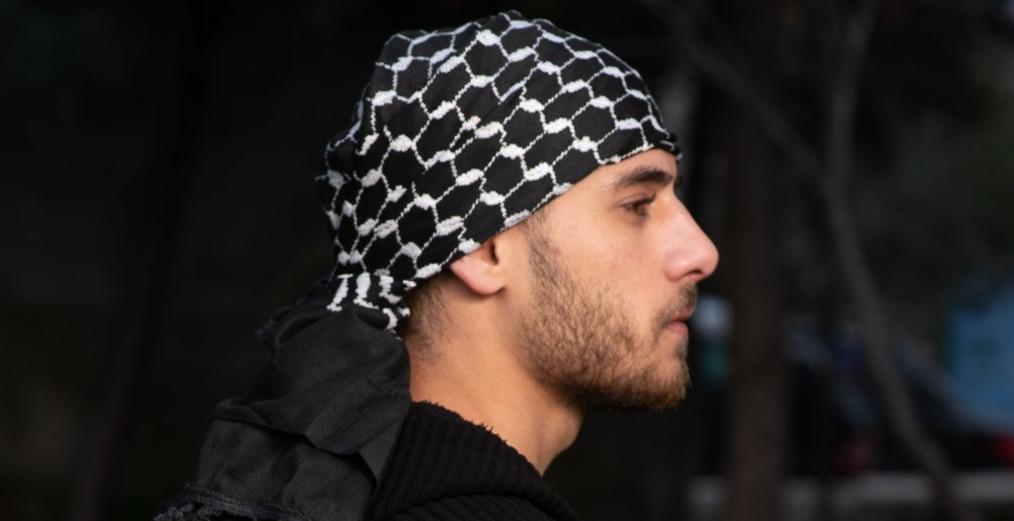
The Palestinian keffiyeh is a traditional square cotton scarf, typically black and white, characterized by a distinctive woven pattern of a fishnet design, bold stripes, and an embroidered border. It is worn draped over the head or shoulders, folded diagonally and secured with a rope or wrapped loosely around the neck.
While scarves of this general type are found across the Middle East and are known by different names in different countries, the Palestinian keffiyeh has its own distinct identity — both in its specific visual pattern and in the weight of meaning it carries. The black-and-white version in particular has become an internationally recognized symbol of Palestinian identity and solidarity.
Across different communities and different generations, you may hear it called a keffiyeh, a kufiya, a hatta, a shemagh, or a ghutrah. These names each carry their own regional and cultural nuances. We cover those distinctions in detail in our guide to Palestinian kufiya vs keffiyeh vs shemagh →, but for most people in Palestine and internationally, "keffiyeh" is the most widely understood term.
The History of the Keffiyeh in Palestine
The keffiyeh's roots in Palestinian life stretch back centuries. It was originally worn by Palestinian farmers and rural workers — a practical garment for protecting the head and neck from the sun, dust, and wind of the Palestinian landscape. In those early days, it was a symbol of rural, working-class identity.
By the 1930s, during the Great Arab Revolt against British colonial rule, the keffiyeh took on profound new meaning. Palestinian farmers and peasants — who had long worn the keffiyeh as part of their traditional daily dress, a practical garment against the sun, dust, and wind — began using it to cover their faces as they resisted British colonization. This is an important distinction: it was not a group of organized fighters who adopted the keffiyeh as a symbol of resistance. It was ordinary people, farmers and rural workers, who rose up against colonial rule while wearing the garment they had always worn. The keffiyeh's transformation into a symbol of resistance came from the people themselves — and this is precisely what gives it such enduring power.
This transformation deepened over the following decades. The keffiyeh became inseparable from the Palestinian national movement. Images of Palestinian leaders wearing it became iconic worldwide. And as Palestinian communities spread across the globe — into refugee camps, diaspora communities, and international activist circles — the keffiyeh traveled with them, becoming one of the most recognizable symbols of Palestinian identity in the world.
Today, the keffiyeh is worn by Palestinians of all backgrounds. It is worn as cultural pride, as everyday fashion, as a declaration of identity, and as an act of solidarity. It carries within its black-and-white threads an entire people's history of steadfastness — a concept Palestinians call sumud.
The Meaning Behind the Keffiyeh Pattern
The traditional Palestinian keffiyeh pattern is not decorative for its own sake. Each element carries meaning.
The fishnet pattern across the body of the scarf is said to represent Palestinian fishing communities and their connection to the Mediterranean Sea. It is a reminder that Palestinian identity is rooted in a specific land, with specific landscapes, trades, and traditions.
The bold olive-leaf embroidery along the border represents the olive tree — perhaps the most powerful symbol in Palestinian culture. Olive trees are ancient, stubborn, and deeply rooted. They have been planted by Palestinian families for thousands of years and have survived centuries of upheaval. For Palestinians, the olive tree represents resilience, connection to the land, and the inheritance of generations. It is no coincidence that the olive branch is woven into the keffiyeh's edge.
The two-tone pattern — typically black and white — is the most recognized version of the keffiyeh globally. Red-and-white versions are also traditional, historically associated with Jordanian heritage, while black-and-white is most closely associated with Palestinian national identity.
Together, these elements make the keffiyeh not just a garment but a textile that tells a story — of a people's land, their livelihood, and their enduring connection to home.
Keffiyeh, Kufiya, Shemagh, Hatta: What Is the Difference?
If you have spent any time researching the keffiyeh, you have probably encountered several different names for what appears to be the same garment. The differences matter — both culturally and practically.
Keffiyeh (also spelled kufiyeh or kefiyeh) is the term most widely used internationally and the one most associated with Palestinian identity globally.
Kufiya (also spelled kufiyya or koufiyya) is the Arabic pronunciation most commonly used by Palestinians themselves. If you are speaking with Palestinians or in a Palestinian context, kufiya is the most natural and respected term.
Shemagh is the term most commonly used in the Gulf region, Jordan, and Iraq. It refers to the same general style of headscarf but often in red-and-white, and it carries its own regional traditions distinct from Palestinian usage.
Hatta is another regional variant of the name, used in parts of the Gulf.
When it comes to Handmade Palestine, our keffiyehs are Palestinian kufiyahs — made in the tradition of Palestinian craft, by Palestinian artisans. While we use "keffiyeh" in many of our descriptions because it is the most internationally recognized term, what we are offering is a kufiya in the truest sense.
How to Wear a Palestinian Keffiyeh
One of the most common questions people ask is simply: how do I wear it? The answer depends a little on where in the world you are — the most common wearing style globally and the most common style in Palestine are not quite the same thing.
In Palestine, you will most often see the keffiyeh worn as a triangle in winter — folded diagonally, placed over the head with the tip of the triangle hanging down the back, and the two sides wrapped around the head and face for warmth. It is a deeply practical style rooted in the Palestinian landscape and climate.
The most common way to wear it as a neck scarf — both in Palestine and internationally — is also triangular. Fold the keffiyeh diagonally into a triangle. Hold the triangle in front of you with the long folded edge at the top and the bottom tip pointing down toward your stomach. Bring it up to your neck, then cross the two side ends behind your neck and let them fall at the front. It is simple, comfortable, and the style you will see most often.
We have also made a video showing several different ways to wear the keffiyeh — including this style and others — which you can watch here: [link to video].
Beyond the neck wrap, here are a few other common styles:
The Classic Head Drape: Fold the keffiyeh into a triangle and place it over your head, with the folded edge at your forehead and the two ends draped over your shoulders. This is the traditional Palestinian head-covering style.
The Shoulder Wrap: Drape the keffiyeh unfolded or loosely folded over both shoulders like a shawl — a relaxed, everyday style.
The Turban: Fold and wrap the keffiyeh around your head for a more elaborate, protective style that takes a little practice.
There is no single correct way to wear a keffiyeh. What matters most is that you wear it with awareness of what it represents — and that yours was made by Palestinian hands.
We have a full visual guide with step-by-step instructions here: How to Wear a Keffiyeh: 5 Ways to Style Palestine's Iconic Scarf →
How to Tie a Keffiyeh
If you want to wear the keffiyeh in the traditional Palestinian style — draped over the head and secured — you will need to know how to tie it properly. The basic method involves folding the square scarf diagonally into a triangle, placing it over the head with the fold at the front, and securing the two hanging ends either by tucking them in, crossing them at the back, or bringing them to the front and tying them loosely.
Getting it right on the first try takes a little practice. The weight and size of your keffiyeh make a difference — a well-made, properly sized Palestinian keffiyeh drapes and stays in place much more easily than a cheap, flimsy imitation.
Why Buying a Keffiyeh Made by Palestinian Artisans Matters
Here is something important to understand before you buy a keffiyeh: the global demand for this scarf has led to mass production in countries with no connection to Palestine whatsoever. You will find keffiyehs on Amazon, on fast fashion websites, and in souvenir shops — cheap, machine-made, and manufactured in countries where the keffiyeh has no cultural meaning and where no Palestinian artisan receives a penny.
Buying a keffiyeh from a Palestinian-owned source is a fundamentally different act. When your keffiyeh comes from Palestinian hands:
-
A Palestinian artisan or textile worker receives fair wages for their work
-
You are directly supporting a family in a community under enormous economic pressure
-
You are purchasing a piece of authentic Palestinian heritage, not a copy of it
-
Your money stays in Palestinian hands and Palestinian communities
Under military occupation, sustainable income for Palestinian artisans is not guaranteed — it is fought for every day. When you choose a keffiyeh made by Palestinian artisans, you become part of the economic resilience that allows Palestinian craft traditions to survive.
The Palestinian Keffiyeh at Handmade Palestine
At Handmade Palestine, our keffiyehs are made by a Palestinian factory with deep roots in Palestine. While some of our keffiyehs are produced within Palestine itself — where four factories currently operate — the majority are made by a Palestinian-owned factory based in Amman, Jordan. This factory was originally located in Palestine and was forced to relocate to Jordan.
We chose this factory deliberately. After evaluating the options available, including factories operating inside Palestine, we found this factory to be the most aligned with our values as a fair trade social enterprise — in terms of quality, consistency, and the integrity of its working conditions. For us, supporting Palestinian artisans and Palestinian-owned production is what matters, and this factory represents exactly that commitment.
We are a social enterprise based in Ramallah, in the heart of occupied Palestine. We work with over 30 artisan groups, women's cooperatives, and designers across Palestine — connecting them with international markets and ensuring they receive fair compensation for their extraordinary work.
Many of the women artisans we work with are the sole providers for their families. For them, the income from their craft is not supplementary — it is essential. Your purchase of a keffiyeh from Handmade Palestine directly supports these women and their families, while helping to preserve a craft tradition that Palestinian artisans have carried for generations.
Beyond the keffiyeh, every purchase also contributes to our broader mission: training programs for artisans, the founding of Manjel Ma'qoud (our House of Heritage in Ramallah), and our partnership with Mashjar Juthour, a nature reserve where we support the planting of trees in Palestine.
When you wear a keffiyeh from Handmade Palestine, you are wearing a piece of authentic Palestinian heritage — and you are part of a community that stands with Palestinian artisans. Meet the artisans →
Where to Buy an Authentic Palestinian Keffiyeh in the US
If you are based in the US and looking to buy a Palestinian keffiyeh online, the most important thing to look for is whether the seller can confirm the keffiyeh was made by Palestinian artisans — and whether the purchase benefits Palestinian people directly.
At Handmade Palestine, we ship from our fulfillment space in Oregon, so US orders typically arrive within 2–8 days. Our keffiyehs are sourced directly from Palestinian artisan partners. We are transparent about where everything is made and who makes it.
We are proud to be one of the most trusted Palestinian-run sources for authentic keffiyehs in the US.
Shop our Palestinian keffiyeh collection →
For a full guide to finding an authentic Palestinian keffiyeh online, including what to watch out for and why it matters where you shop, read: Where to Buy a Palestinian Keffiyeh Online in the US →
Frequently Asked Questions About the Palestinian Keffiyeh
Q: What is the difference between a keffiyeh and a shemagh?
A: Both refer to the same style of traditional Middle Eastern headscarf, but the names are used in different regional contexts. Keffiyeh (or kufiya) is the Palestinian term; shemagh is more commonly used in the Gulf region and Jordan. The black-and-white pattern is most closely associated with Palestinian identity. Read the full comparison →
Q: Is it cultural appropriation to wear a keffiyeh?
A: This is a question many people ask sincerely. The most thoughtful answer is: wearing a keffiyeh in solidarity — while understanding its meaning and buying one that directly supports Palestinian artisans — is an act of support, not appropriation. What matters most is where your keffiyeh comes from, who made it, and how you wear it.
Q: Are all keffiyehs made in Palestine?
A: No — and this matters. Many keffiyehs sold globally are mass-produced in countries with no connection to Palestine. If a keffiyeh does not clearly state it was made by Palestinian artisans or a Palestinian-owned factory, assume it was not. Read more about why origin matters →
Q: What size is a traditional Palestinian keffiyeh?
A: A traditional keffiyeh is a square scarf, typically around 120 cm x 120 cm (approximately 47 inches square). This size allows for all the traditional wearing and tying styles.
Q: How do I care for my keffiyeh?
A: Most cotton keffiyehs can be hand-washed in cool water with a gentle detergent. Avoid wringing or tumble drying — lay flat or hang to dry to preserve the weave and the embroidered border.
A Final Word: The Keffiyeh Is More Than a Scarf
The Palestinian keffiyeh has traveled far from the fields of Palestine. It has been worn in protest marches in New York, in solidarity vigils in London, on university campuses across the world. It has been banned, censored, and debated. And through all of it, it has remained what it has always been: a piece of Palestinian identity that no one can erase.
When you wear a keffiyeh, you carry a piece of that story. It deserves to come from the hands of the people whose story it is — and it deserves to be worn with the knowledge of what it represents.
At Handmade Palestine, we believe every purchase can be a small act of justice. Every keffiyeh sold means fair wages paid to an artisan in Palestine. Every order helps sustain a craft tradition, a livelihood, and a community that continues to create beauty under the most difficult of circumstances.
We are grateful for your support — and we hope you love your keffiyeh.
Written by Morgan Totah
Visit author's website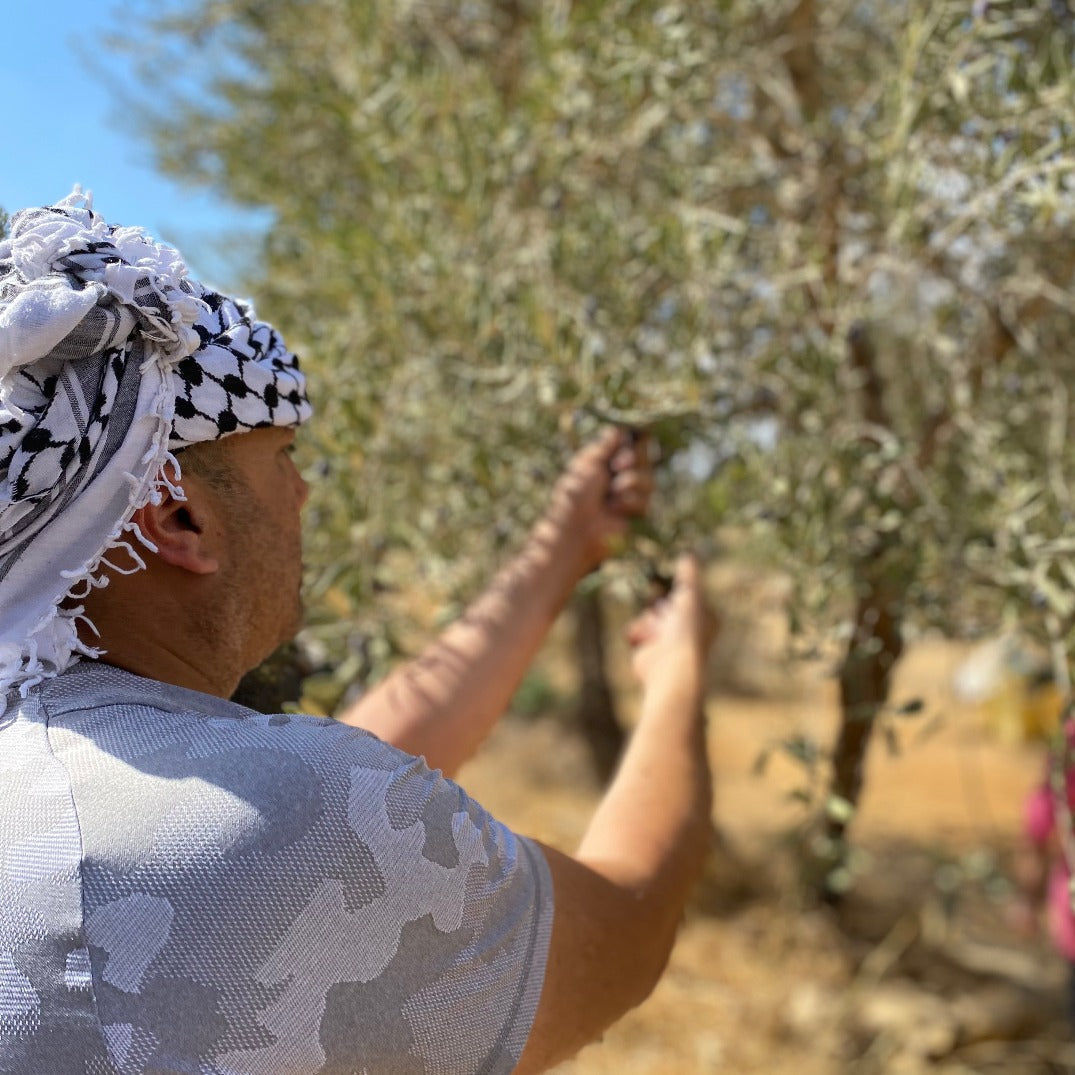


Leave a comment
This site is protected by hCaptcha and the hCaptcha Privacy Policy and Terms of Service apply.