
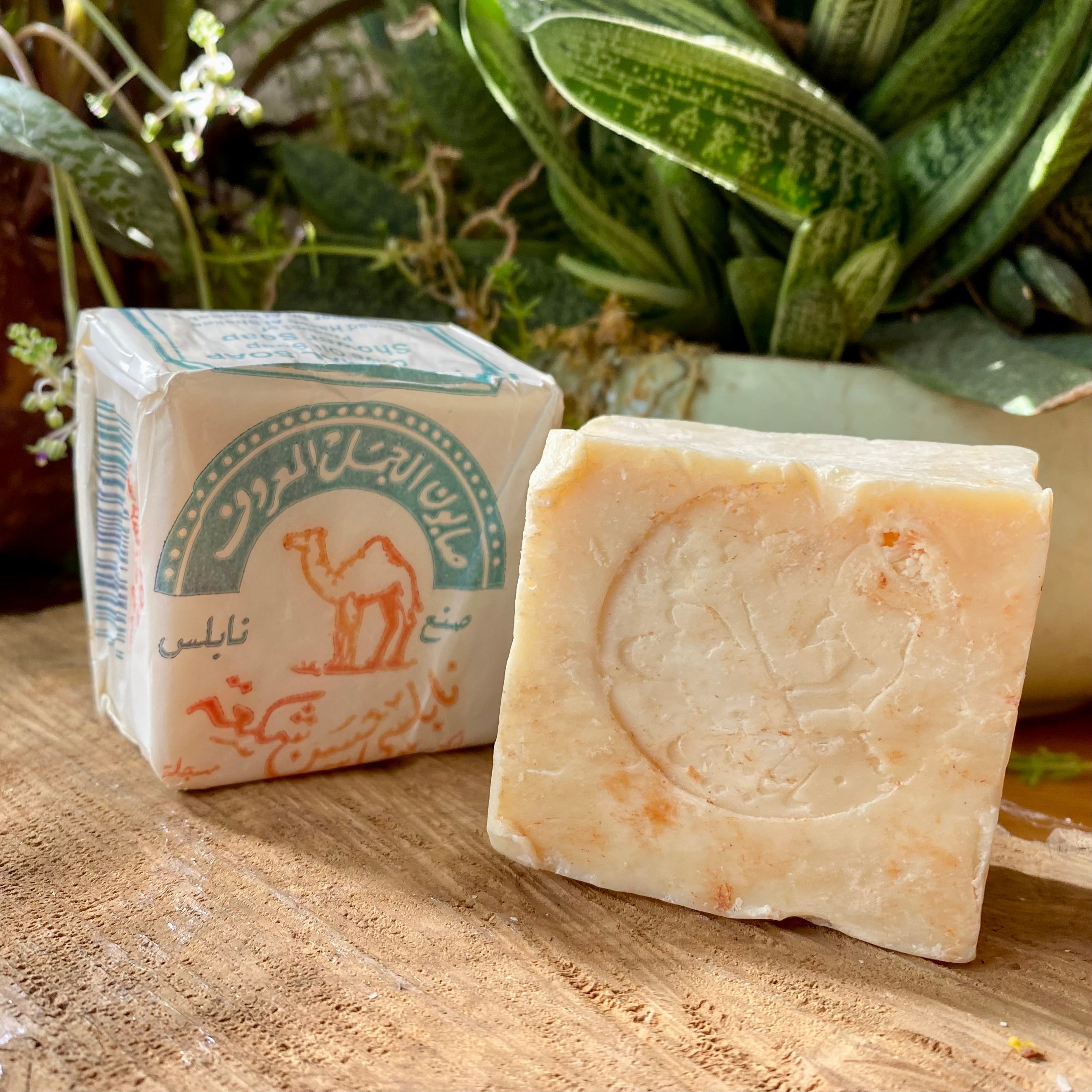
Nabulsi Soap and Palestinian Olive Oil Soap: What Makes It Special
Some products exist simply to serve a function. And then some products carry within them an entire history of a land, a city, a craft tradition, and a people who have refused to let that tradition disappear. Palestinian olive oil soap is the second kind.
For over a thousand years, the city of Nablus in the northern West Bank has been producing what many consider the finest olive oil soap in the world. Nabulsi soap, named for the city of its origin, is a product of extraordinary simplicity: olive oil, water, and lye, combined through a process refined over centuries into something that is at once a daily necessity and a cultural artifact.
This guide tells the story of Palestinian olive oil soap: where it comes from, how it is made, what makes it different, and why buying it matters.
What Is Nabulsi Soap?

Nabulsi soap (also written Naboulsi or Nablusi soap) is a traditional Palestinian soap made primarily from olive oil, produced in and around the city of Nablus in the northern West Bank. It is one of the oldest continuously produced soaps in the world, with a history stretching back over a thousand years.
The soap is made from three ingredients: extra virgin olive oil, water, and an alkaline solution (traditionally derived from plant ash, now typically sodium hydroxide). There are no synthetic additives, no artificial fragrances, no preservatives. The result is a pure, hard soap with a characteristic pale green or ivory color that deepens to a rich cream as it cures.
Nabulsi soap is part of the broader tradition of Palestinian olive oil soap made from Palestinian olive oil, produced by Palestinian families and cooperatives. While Nabulsi soap refers specifically to soap from Nablus, Palestinian olive oil soap is produced in communities across Palestine wherever olive oil is abundant, which is to say almost everywhere.
The History of Nabulsi Soap

Nablus has been a center of soap production since at least the tenth century. Historical records document soap factories called masabeen operating in the city during the medieval period, producing soap that was traded across the Arab world and into Europe.
By the nineteenth century, Nablus was one of the most important soap-producing cities in the Middle East. The city's masabeen were large-scale operations, some employing hundreds of workers, producing soap that was exported to Egypt, Syria, and beyond. Nabulsi soap was a prestigious commodity valued for its quality, its purity, and the skill of the craftsmen who made it.
The soap factories of Nablus were a central part of the city's economic and social life. Families who owned and operated masabeen were prominent figures in the city. The craft of soap making was passed from father to son, with the knowledge of the specific process, the precise temperatures, the timing of each stage, and the signs that indicated the soap was ready kept within families and workshops.
Over the course of the twentieth century, the number of soap factories in Nablus declined significantly. The disruptions of occupation, the challenges of competing with mass-produced soaps, and the loss of traditional trade routes all took their toll. Where once dozens of masabeen operated in the city, only a handful remain today.
But those that remain continue to produce soap by the same methods their predecessors used centuries ago, a living continuity of craft that is remarkable in its persistence.
How Palestinian Olive Oil Soap Is Made
The production of traditional Palestinian olive oil soap is a slow, seasonal process that has changed little in centuries.
The raw material: Palestinian olive oil. The quality of the soap begins with the quality of the oil. Palestinian olive oil produced from the ancient olive groves that cover the hillsides of the West Bank and Galilee is the foundation of everything. The oil used for soap is typically the oil from the olive harvest, which in Palestine takes place in autumn. The connection between the olive harvest and soap production is direct: the oil pressed from Palestinian olives in October becomes the soap cured and sold months later.
The cooking process. Traditional Nabulsi soap is made by combining olive oil with an alkaline solution in large vats and cooking the mixture over several days, stirring continuously and carefully monitoring the temperature and consistency. This process, called saponification, transforms the oil and alkali into soap through a chemical reaction. The timing and temperature of each stage are critical, and the knowledge of when to move from one stage to the next is part of the craft tradition passed down through generations.
Pouring and setting. Once the cooking process is complete, the liquid soap is poured directly onto the concrete factory floor and left to set into a solid slab.
Cutting. Once set, the soap is cut into individual bars using long-handled bladed tools, a process done by hand, bar by bar.
Curing. The cut bars are stacked into tall conical towers and left to cure for a minimum of several months, often up to a year or more. During curing, the soap hardens, its color lightens, and its texture and lather quality develop. The longer it cures, the milder and more refined the soap becomes. Some Nabulsi soap is cured for several years before sale.
The result of this process is a soap of exceptional quality: hard, long-lasting, rich in natural olive oil, and free of any synthetic ingredients.
What Makes Palestinian Olive Oil Soap Different
Palestinian olive oil soap is fundamentally different from most commercially produced soap and from many soaps marketed as "natural" or "artisan."
The ingredients are pure. Traditional Palestinian olive oil soap contains olive oil, water, and lye nothing else. No synthetic fragrances, no artificial colors, no preservatives, no palm oil, no coconut oil. The simplicity of the ingredients is part of what makes it exceptional.
The olive oil is high quality. The olive oil used in traditional Palestinian soap comes from Palestinian olive groves, ancient trees that have been cultivated for centuries in the specific soil and climate of Palestine. The quality of Palestinian olive oil is internationally recognized, and it translates directly into the quality of the soap.
The process is slow. Mass-produced soap is made quickly, with chemical shortcuts that reduce production time at the cost of quality. Traditional Palestinian olive oil soap takes months, sometimes years, from production to sale. This slow process produces a soap that is harder, longer-lasting, and gentler than anything made quickly.
It is genuinely good for skin. Olive oil is rich in oleic acid, squalene, and vitamins E and K, compounds that nourish and protect skin. Palestinian olive oil soap retains the natural glycerin produced during saponification, which most commercial soap manufacturers remove and sell separately. This retained glycerin makes Palestinian olive oil soap exceptionally moisturizing.
It lasts. A well-cured bar of Palestinian olive oil soap lasts far longer than a commercial bar of the same size. The hard, dense texture means it does not dissolve quickly, and proper storage between uses extends its life further.
The Olive Tree Root of Everything
Palestinian olive oil soap begins with Palestinian olive oil, and Palestinian olive oil begins with Palestinian olive trees that are among the most powerful symbols in Palestinian culture.
Many of the olive trees currently producing oil in Palestine are hundreds of years old. Some are ancient beyond reckoning. They have been planted, tended, and harvested by Palestinian families across generations, and they have survived centuries of upheaval, occupation, and attempted erasure.
The olive harvest in Palestine is not merely an agricultural event. It is a communal ritual, a cultural gathering, a connection between families and their land that has persisted across generations of displacement and restriction. Families travel from cities to their villages to harvest together. The harvest is a time of celebration and solidarity — and it is under increasing threat as occupation restricts Palestinian farmers' access to their own olive groves.
When you buy Palestinian olive oil soap from Handmade Palestine, you are not just buying soap. You are supporting the Palestinian olive farmers whose trees produced the oil, the families and cooperatives who make the soap, and a cultural tradition that connects daily life to the deepest roots of Palestinian identity.
Shop our Palestinian olive oil soap collection →
How to Use and Care for Palestinian Olive Oil Soap
Using your soap: Palestinian olive oil soap produces a creamy, rich lather. It works beautifully for body washing, face washing, and hand washing. Because it is pure olive oil with no synthetic ingredients, it is suitable for sensitive skin, including the skin of children.
Between uses: Allow your soap to dry between uses by storing it on a well-draining soap dish away from standing water. This prevents the bar from softening and dissolving too quickly and significantly extends its life.
Storage: If storing soap long-term, keep it in a cool, dry place with good air circulation. Palestinian olive oil soap improves with age; a bar stored for a year or more before use will be harder, milder, and longer-lasting than a freshly made bar.
What to expect: The lather of olive oil soap is different from the thick, foamy lather of synthetic commercial soaps. It is creamier and more subtle, which is a sign of the natural ingredients, not a deficiency. Your skin will feel clean and nourished, not stripped.
Frequently Asked Questions About Palestinian Olive Oil Soap
Q: What is Nabulsi soap?
A: Nabulsi soap is a traditional Palestinian olive oil soap produced in and around the city of Nablus in the northern West Bank. It is made from olive oil, water, and lye, with no synthetic ingredients, using a process that has been refined over more than a thousand years. It is one of the oldest continuously produced soaps in the world.
Q: Is Palestinian olive oil soap good for sensitive skin?
A: Yes. Palestinian olive oil soap is pure olive oil soap with no synthetic fragrances, artificial colors, or harsh detergents. Olive oil is naturally gentle and nourishing for skin, and the retained glycerin in traditionally made olive oil soap adds additional moisturizing properties. It is generally suitable for sensitive skin, including children's skin.
Q: How long does Palestinian olive oil soap last?
A: A well-cured bar of Palestinian olive oil soap lasts significantly longer than a commercial bar of the same size, because it is harder and denser. With proper care, storing on a draining soap dish between uses, a single bar can last for weeks to months depending on frequency of use.
Q: Why is the soap pale green or cream colored?
A: The color comes from the olive oil itself. Freshly made Palestinian olive oil soap has a characteristic pale green color from the chlorophyll in the olive oil. As it cures, the color lightens to a creamy ivory. The color is a natural indicator of the olive oil content it is not added artificially.
Q: What is the difference between Nabulsi soap and other olive oil soaps?
A: Nabulsi soap refers specifically to soap produced in Nablus using the traditional method, cooked in large vats, poured on factory floors, cut and cured for months or years. Other Palestinian olive oil soaps may be produced by smaller cooperatives and family producers using similar methods but outside of Nablus. Both are authentic Palestinian olive oil soaps. What distinguishes Palestinian olive oil soap from other olive oil soaps globally is the quality of Palestinian olive oil and the craft tradition behind its production.


Leave a comment
This site is protected by hCaptcha and the hCaptcha Privacy Policy and Terms of Service apply.