Article: Micro Mosaic Jewelry: The Ancient Palestinian Craft Behind Every Piece

Micro Mosaic Jewelry: The Ancient Palestinian Craft Behind Every Piece
Some crafts require patience. And some crafts require a kind of patience so extraordinary, so painstaking, that the finished object seems almost impossible: a miniature world built from hundreds of tiny pieces of colored stone, each placed by hand, forming a pattern of breathtaking precision and beauty.
Palestinian micro mosaic jewelry is that kind of craft.
Palestinian artisans make each piece of micro mosaic jewelry by hand, one tiny fragment at a time, carrying on a tradition passed down through generations. The technique is ancient, the materials are natural, and the results are unlike anything produced by machine or shortcut. When you hold a piece of Palestinian micro mosaic jewelry, you are holding something that could only have been made by human hands and specifically, by Palestinian hands that have carried this craft forward across centuries.
This guide tells the story of Palestinian micro mosaic jewelry: where it comes from, how it is made, what makes it remarkable, and why it matters.
What Is Micro Mosaic Jewelry?

Micro mosaic is a jewelry-making technique in which tiny fragments of stone, glass, or ceramic, sometimes only a millimeter or two in size, are set together in a pattern to create a miniature mosaic image or design. The fragments are placed individually by hand, fitted together with extraordinary precision, and set in a base of adhesive or resin. The result is a piece of jewelry whose surface is composed entirely of these tiny fragments, a mosaic so small that its individual pieces may only be visible under magnification, but whose overall effect is one of remarkable color, depth, and detail.
Palestinian micro mosaic jewelry uses fragments of natural stone, typically locally sourced materials including limestone, marble, and other stones found in and around Palestine. The use of natural stone gives Palestinian micro mosaic its characteristic earthy, rich color palette: warm creams, deep reds, soft greens, and the distinctive tones of Palestinian stone that echo the colors of the land itself.
The History of Micro Mosaic in Palestine
Mosaic as an art form has ancient roots in the region. The Levant, the area that includes Palestine, present-day Israel, Jordan, Lebanon, and Syria, has a mosaic tradition stretching back thousands of years. Some of the most extraordinary ancient mosaics ever discovered were found in this region, including the famous Madaba Map in Jordan and the extraordinary Byzantine mosaics of the Church of the Nativity in Bethlehem.
Palestinian craftspeople inherited this ancient mosaic tradition and, over centuries, developed it into the miniaturized form that characterizes micro mosaic jewelry. The adaptation of large-scale mosaic techniques to the intimate scale of jewelry represents a remarkable creative achievement requiring not just technical skill but a fundamental reimagining of the craft.
The tradition of Palestinian micro mosaic jewelry has been centered particularly around Bethlehem and the surrounding areas, a region with a long history of Christian Palestinian artisans producing religious and decorative objects for pilgrims and travelers. The craft developed alongside the trade in religious souvenirs and devotional objects, with Palestinian craftspeople producing pieces that combined local stone with designs drawn from religious iconography, geometric patterns, and the natural world of Palestine.
Over the centuries, Palestinian micro mosaic jewelry developed its own distinct visual vocabulary, patterns and designs rooted in Palestinian artistic tradition, geometric motifs drawn from Islamic and Christian art, and natural imagery reflecting the Palestinian landscape. Today, contemporary Palestinian designers working with micro mosaic bring these traditional elements into dialogue with modern aesthetics, creating pieces that are at once ancient and entirely contemporary.
How Palestinian Micro Mosaic Jewelry Is Made

The process of making Palestinian micro mosaic jewelry is entirely by hand; there is no mechanized shortcut, no mass production method that can replicate what a skilled artisan does one fragment at a time.
Preparing the stone. The natural stone used in Palestinian micro mosaic is sourced, cut, and prepared by hand. Larger pieces of stone are cut into thin slabs, then into small fragments tiny cubes, rectangles, or irregular shapes depending on the design being created. This preparation alone requires skill and precision: the fragments must be the right size and shape to fit together in the intended pattern.
Designing the pattern. Before a single fragment is placed, the artisan works from a design, a pattern or image that will be built up from the individual stone pieces. For geometric patterns, this design may be precise and mathematical. For more figurative designs, the artisan must translate a complex image into the language of tiny stone fragments, deciding which colors and shapes will be placed where.
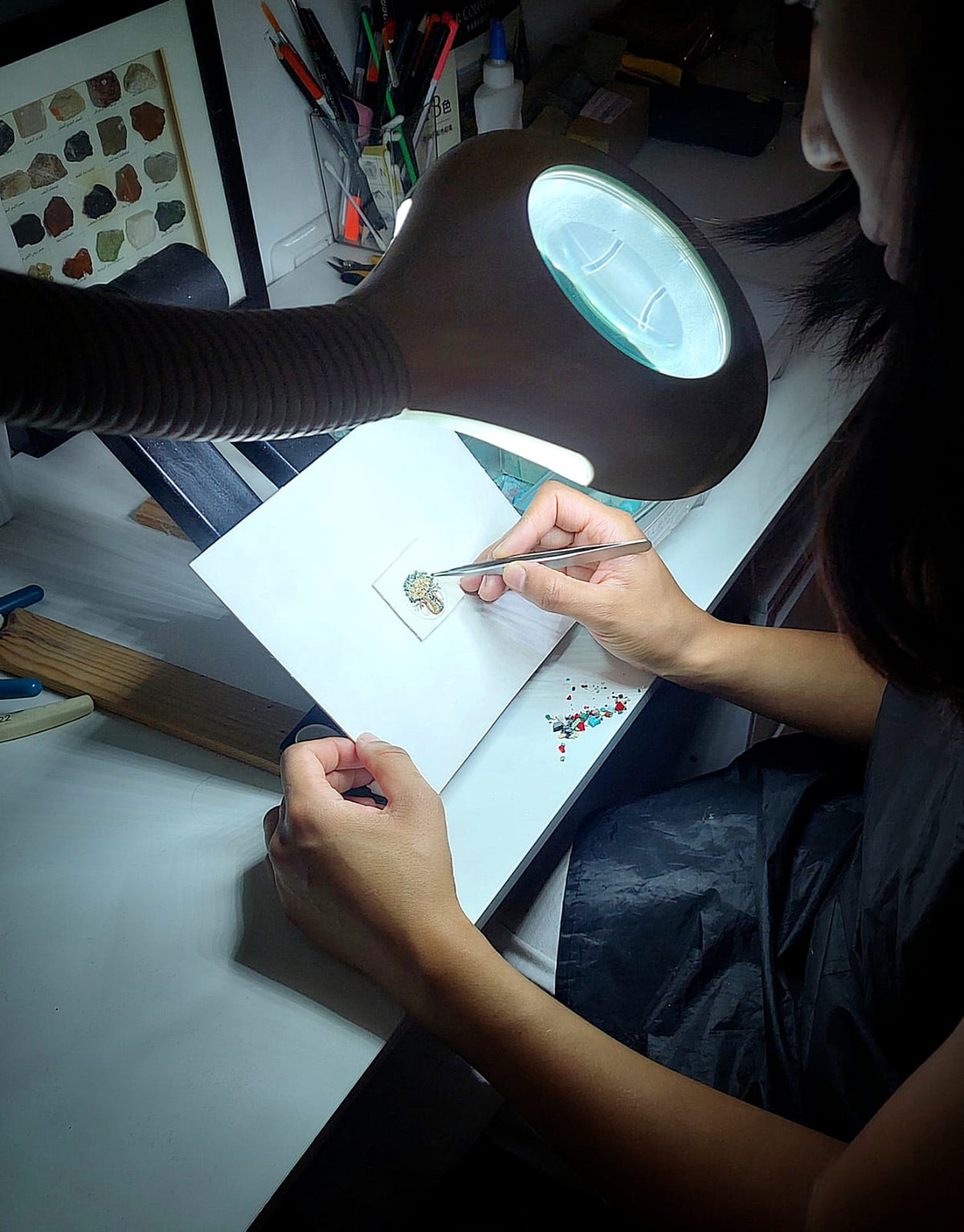
Setting the fragments. The fragments are set one by one into the base, a process that for a complex piece can take many hours, spread across days or weeks. The artisan uses tools to place each fragment with precision, fitting the pieces together as closely as possible. The spaces between fragments are filled with a setting material that holds everything in place.
Finishing. Once all fragments are set, the surface is smoothed and polished, the piece is trimmed and refined, and the jewelry finding the clasp, the bail, the ring setting is attached. The finished piece is inspected for quality, with any imperfect fragments replaced or adjusted.
The time required to produce a single piece of Palestinian micro mosaic jewelry varies enormously depending on its complexity. A small, simple piece may take several hours. A complex pendant or brooch with a detailed figurative design may take days. There is no way to rush the process without compromising the result, which is why every piece of Palestinian micro mosaic jewelry is, in the truest sense, handmade.
The Materials: Palestinian Stone and Natural Color
One of the most distinctive qualities of Palestinian micro mosaic jewelry is its use of natural Palestinian stone. The warm creams and ivories of Palestinian limestone, the deeper tones of local marble, the rich colors of natural minerals found in the region these are the colors of the Palestinian landscape, and they give Palestinian micro mosaic jewelry a visual quality that is rooted in a specific place.
This connection between the materials and the land is not incidental. Palestinian artisans working with Palestinian stone are, in a very literal sense, carrying the land with them in their work. Each piece of jewelry contains fragments of Palestinian stone physical matter from the land of Palestine, shaped by Palestinian hands, into an object that can be worn and carried anywhere in the world.
For Palestinians in the diaspora, this is a particularly powerful dimension of micro mosaic jewelry. Wearing a piece made from Palestinian stone is a form of carrying home a physical connection to a land that displacement and occupation have made inaccessible for many.
Micro Mosaic Jewelry and Palestinian Identity

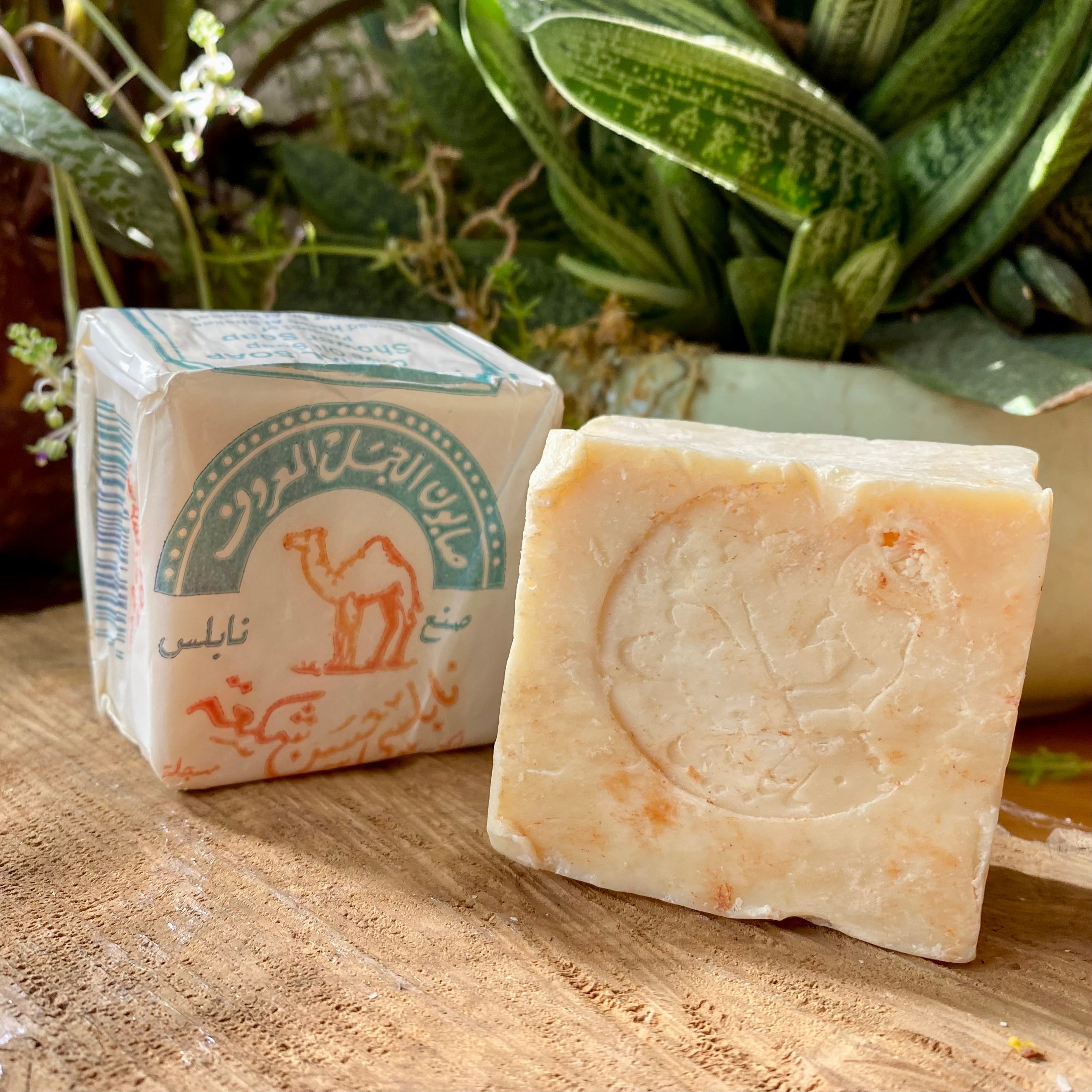
Palestinian micro mosaic jewelry sits within a broader tradition of Palestinian craft alongside tatreez embroidery, keffiyeh weaving, olive wood carving, and Nabulsi soap making as one of the ways Palestinian culture has expressed, preserved, and transmitted identity through making.
Like tatreez, micro mosaic is a craft in which the making is inseparable from the meaning. The patience required to place hundreds of tiny fragments one by one, the sustained attention, the commitment to precision, the refusal of shortcuts reflect something about Palestinian persistence and resilience that goes beyond mere aesthetics.
Palestinian artisans who practice micro mosaic are not simply making beautiful objects. They are maintaining a living connection to an ancient craft tradition. They are passing skills from one generation to the next. They are creating objects that carry Palestinian identity into the world objects that can be worn, given, inherited, and treasured.
At Handmade Palestine, we work with Palestinian artisans whose micro mosaic jewelry represents this tradition at its finest. Each piece in our collection was made by hand in Palestine, by artisans who have dedicated years to mastering this craft. When you buy a piece of Palestinian micro mosaic jewelry from Handmade Palestine, you are paying directly for that skill and that dedication and supporting an artisan who depends on their craft for their livelihood.
Explore our micro mosaic jewelry collection → Meet the artisans behind Handmade Palestine →
Palestinian Micro Mosaic as a Gift
Palestinian micro mosaic jewelry makes one of the most meaningful gifts it is possible to give: a wearable piece of Palestinian heritage, made by hand by a Palestinian artisan, carrying within it centuries of craft tradition and the colors of the Palestinian land.
Whether given as an expression of solidarity, as a celebration of Palestinian culture, or simply as a beautiful and unique piece of jewelry, a micro mosaic piece from Handmade Palestine carries a story that no mass-produced gift can match.
Explore Palestinian gift ideas →
Caring for Your Micro Mosaic Jewelry
Palestinian micro mosaic jewelry is durable but should be treated with care to preserve its beauty.
Avoid water and moisture. Remove micro mosaic jewelry before swimming, bathing, or washing hands. Prolonged exposure to water can affect the setting material that holds the stone fragments in place.
Store carefully. Store micro mosaic pieces separately from other jewelry to prevent scratching. A soft pouch or lined jewelry box is ideal.
Clean gently. If cleaning is needed, use a soft, dry cloth. Avoid chemical cleaners, ultrasonic cleaners, or abrasive materials, which can damage the stone surface or the setting.
Handle with care. While the stone fragments in well-made micro mosaic jewelry are firmly set, a sharp impact can dislodge fragments. Handle your pieces with care and avoid dropping them on hard surfaces.
Frequently Asked Questions About Palestinian Micro Mosaic Jewelry
Q: What is micro mosaic jewelry?
A: Micro mosaic jewelry is made by setting tiny fragments of natural stone, glass, or ceramic, sometimes only a millimeter or two in size, one by one by hand to create a miniature mosaic pattern or image. Palestinian micro mosaic jewelry uses natural Palestinian stone and is made entirely by hand by Palestinian artisans.
Q: Is Palestinian micro mosaic jewelry made by hand?
A: Yes, entirely. There is no mechanized process that can replicate micro mosaic. Every fragment is placed individually by a skilled artisan. A single piece can take hours or days to complete depending on its complexity.
Q: What stone is used in Palestinian micro mosaic jewelry?
A: Palestinian micro mosaic jewelry typically uses natural stone sourced from Palestine and the surrounding region, including limestone, marble, and other local minerals. The use of natural Palestinian stone gives the jewelry its characteristic warm, earthy color palette that reflects the colors of the Palestinian landscape.
Q: Where does the Palestinian micro mosaic tradition come from?
A: The micro mosaic tradition in Palestine developed from the ancient mosaic heritage of the Levant, a region with thousands of years of mosaic art history. Palestinian craftspeople, particularly in the Bethlehem area, adapted large-scale mosaic techniques to the intimate scale of jewelry, developing a distinct tradition that continues to this day.
Q: Is micro mosaic jewelry a good gift?
A: It is one of the most meaningful gifts you can give: a handmade piece of Palestinian heritage, made by a Palestinian artisan, carrying centuries of craft tradition. Each piece is unique, wearable, and tells a story that mass-produced gifts cannot. Explore our collection

Leave a comment
This site is protected by hCaptcha and the hCaptcha Privacy Policy and Terms of Service apply.