
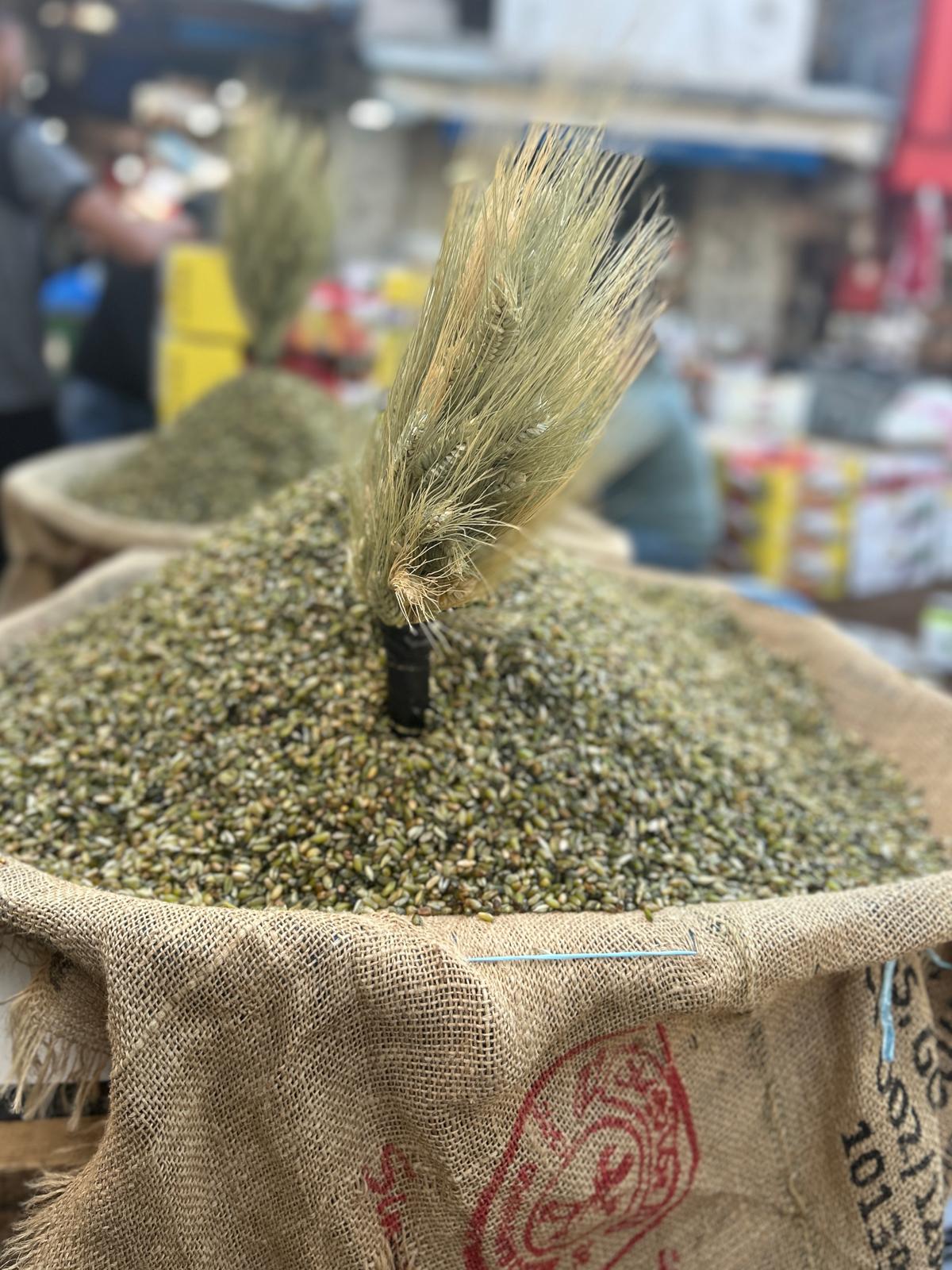
Freeke Season: The Importance of Ancient Grains
There’s something special about late spring in Palestine. The hills begin to shift from green to gold, village fields fill with movement, and the scent of toasted green wheat drifts through the air. It’s freeke season — a time that feels deeply rooted in memory, tradition, and the land itself.

In Palestine, wheat has never been just a crop. It’s part of daily life, family traditions, craftsmanship, storytelling, and survival. For generations, ancient grains have shaped not only Palestinian cuisine, but also Palestinian cultural identity.
Across Palestinian villages, wheat appears in countless forms. There’s bulghur, cracked and dried for comforting everyday meals. Whole wheat berries simmered into hearty dishes. Smeed (semolina) used for pastries and breads. Flour for taboon bread baked fresh each morning. And of course freeke — young green wheat harvested early, roasted over open flames, then rubbed by hand until it reveals its signature smoky flavor.

This beautiful versatility says so much about Palestinian food culture. Wheat isn’t used one way — it’s transformed and adapted with care, season after season, generation after generation. Nothing is wasted. Every stage of the grain has a purpose.
But wheat’s importance stretches far beyond the kitchen.
Traditionally, after harvest season, wheat straw was carefully saved and woven into handmade baskets, serving trays, mats, and plates. These practical objects carried the spirit of the harvest into everyday life. Even today, Palestinian artisans continue this tradition, preserving techniques passed down through generations.
Wheat also found its way into Palestinian tatreez embroidery. Many traditional motifs are inspired by agriculture and village life — symbols of cypress trees, olive branches, fields, and stalks of wheat stitched carefully into thobes and textiles. These patterns are more than decoration; they are visual stories of connection to the land and the rhythms of rural life.

Perhaps that’s why freeke feels so meaningful during harvest season. The process itself reflects community, patience, and ancestral knowledge. Farmers harvest the wheat while it’s still green and tender, roast it over fire, dry it in the sun, and crack it by hand. It’s labor-intensive, deeply seasonal work that has been practiced for centuries.
And the result is something extraordinary: smoky, nourishing, and deeply comforting.
Freeke can be turned into soups, pilafs, salads, and stuffing dishes that gather families around the table. One of the most beloved Palestinian dishes is freeke-stuffed chicken — a centerpiece meal filled with warmth and celebration.
You can learn more about Palestine’s wheat culture and try a traditional Freeke-Stuffed Chicken recipe here: Handmade Palestine: Freeke—Palestine’s Wheat Culture and a Recipe from the Land
Looking for a fresh and modern way to enjoy this ancient grain?
We also love this vibrant Mediterranean Freekeh Salad recipe from Fufu’s Kitchen: Mediterranean Freekeh Salad by Fufu’s Kitchen
At Handmade Palestine, we believe ancient grains are more than ingredients. They are living heritage — connecting food, farming, artistry, and memory. Every bowl of freeke, every loaf of bread, every woven basket tells a story of Palestinian resilience and connection to the land.
And during freeke season, those stories feel especially alive.
Written by Morgan Totah
Visit author's website


Leave a comment
This site is protected by hCaptcha and the hCaptcha Privacy Policy and Terms of Service apply.