
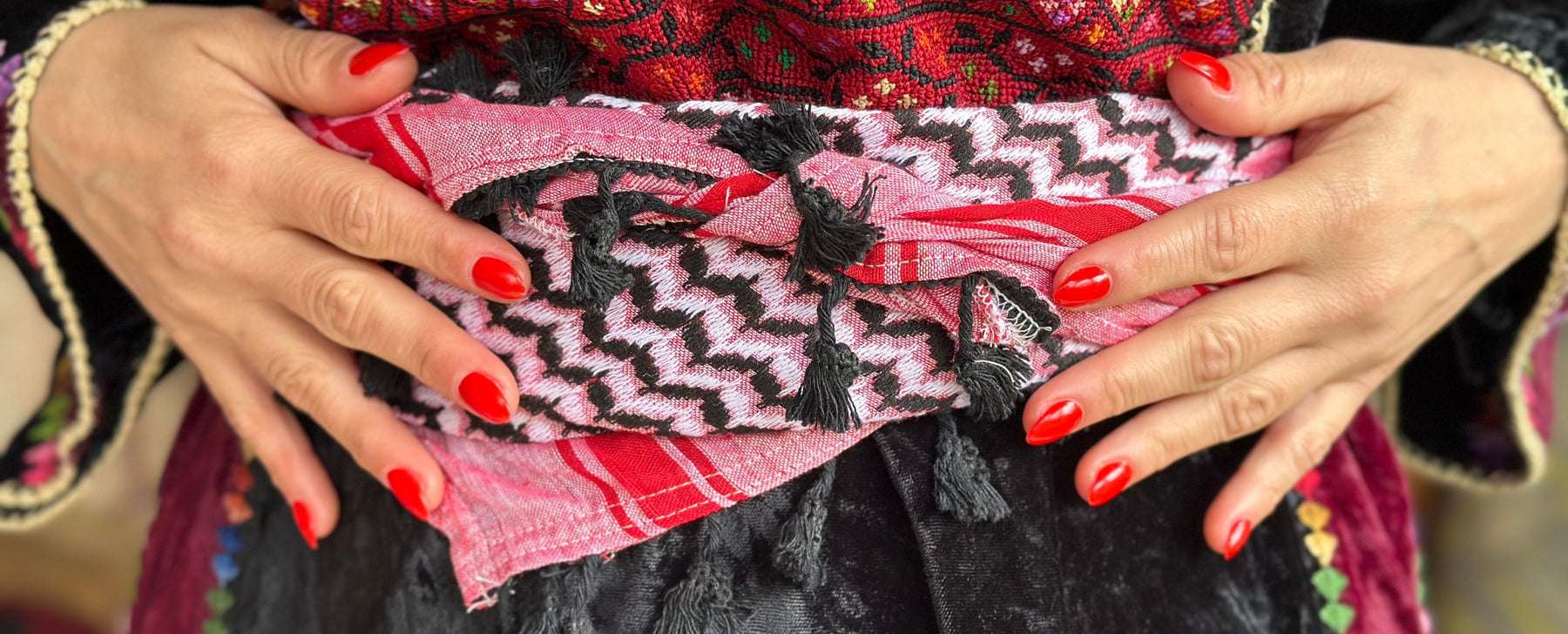
Keffiyehs
The Palestinian keffiyeh simply put is inspirational. It is Palestine's most well known and powerful symbol of resistance against oppression.
The Palestinian keffiyeh is more than a scarf. It is one of the most recognised symbols of resistance, identity and cultural pride in the world — and one of the most misunderstood. There are four keffiyeh factories in Palestine and one Palestinian factory in Jordan, from where we source our keffiyehs.
The keffiyeh has been worn across the region for centuries, originally as practical everyday wear — shielding against sun, dust and cold in the same simple garment. During the Arab Revolt of 1936–1939 against the British, Palestinians from across the class spectrum adopted the keffiyeh together, and the scarf became a symbol of collective resistance. After the Nakba of 1948, it took on the weight of displacement and memory. By the 1960s and 70s it had become recognised globally as the emblem of Palestinian struggle.
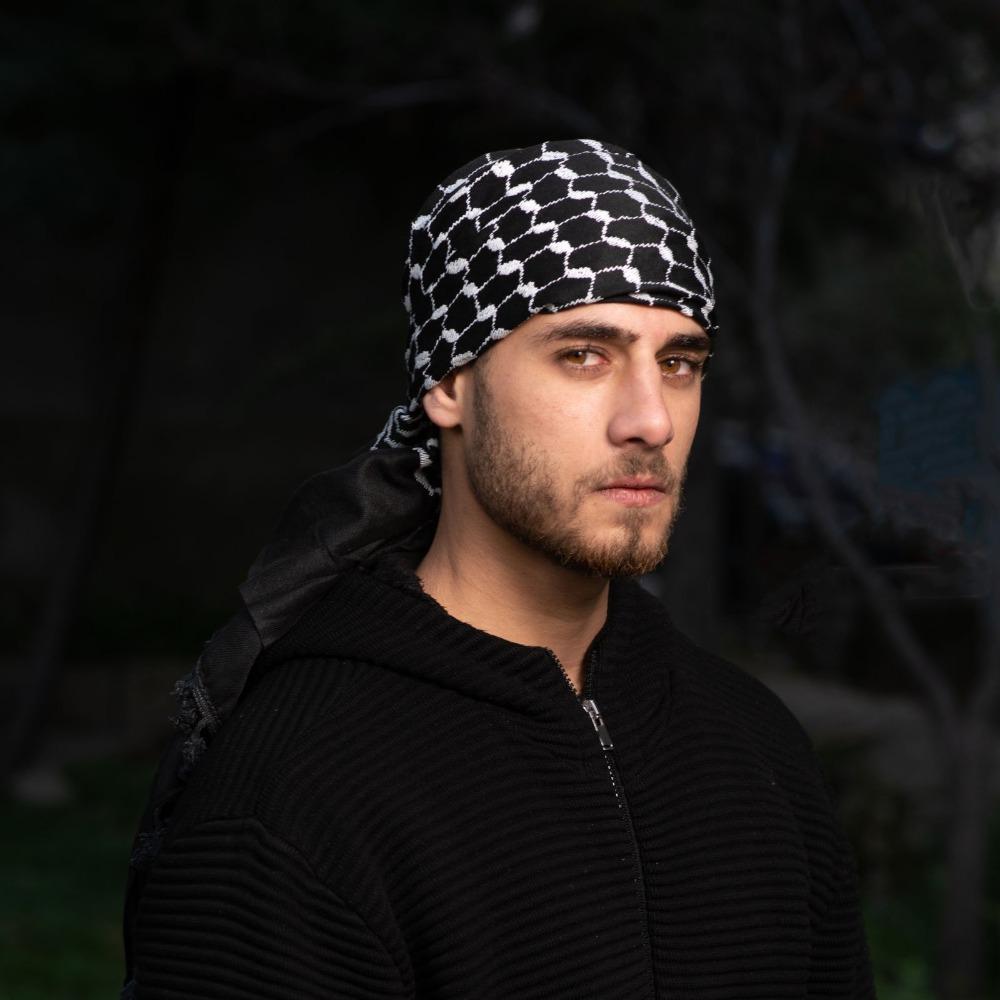
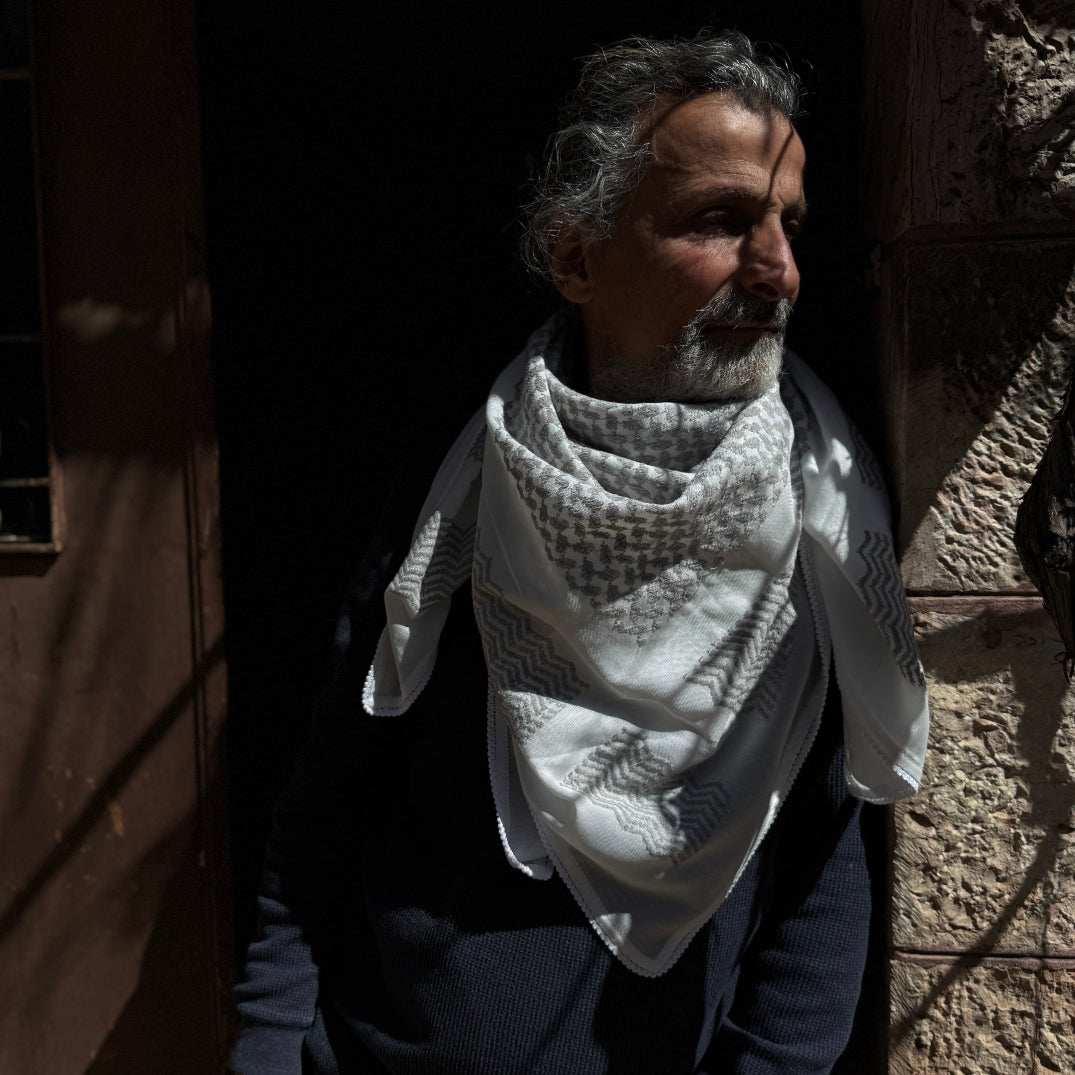
The classic black-and-white style is meaningful. The fishnet pattern woven throughout represents Palestine's fishing communities and the sea. The bold parallel lines evoke ancient trade routes and the branches of the olive tree. Every thread connects to a landscape and a people.
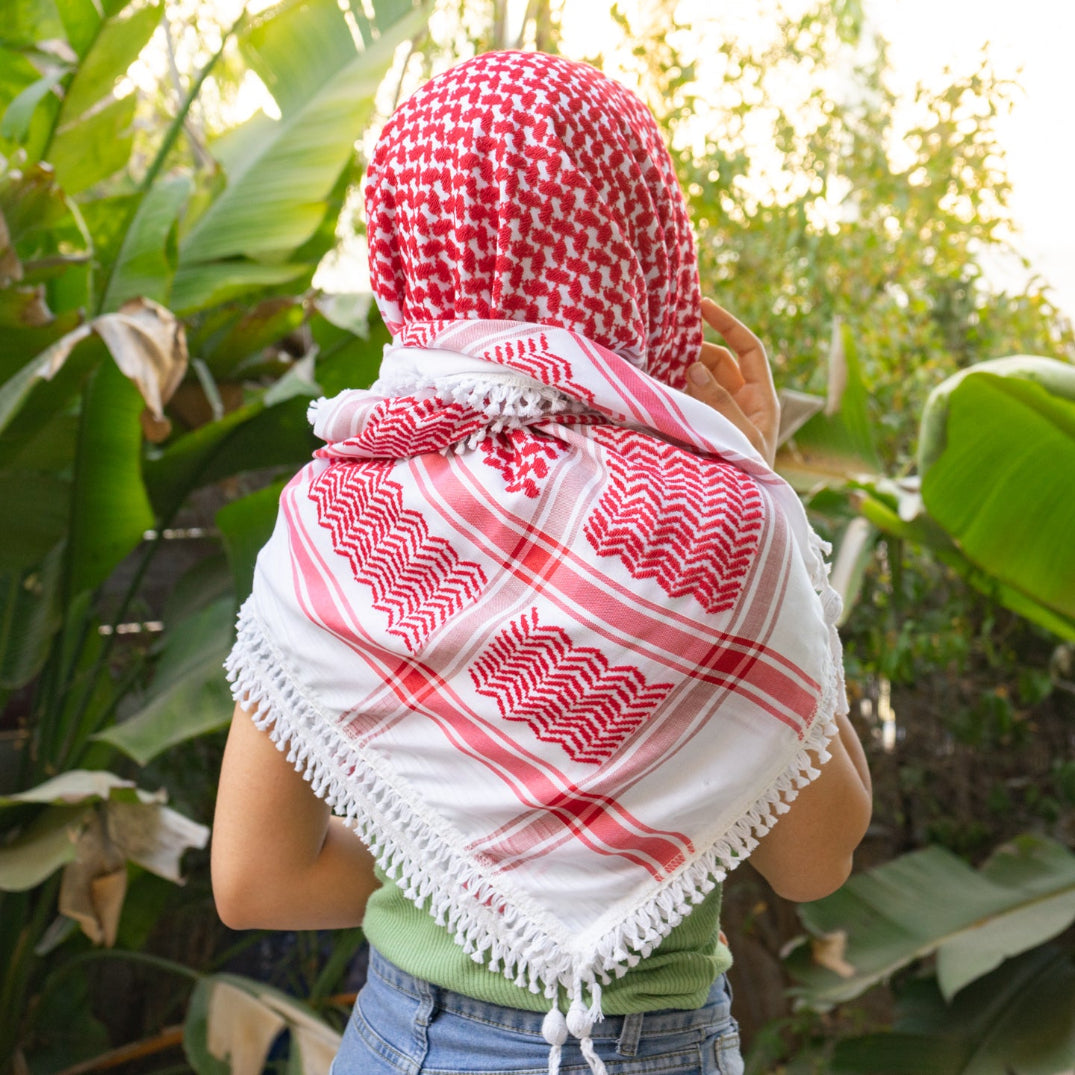
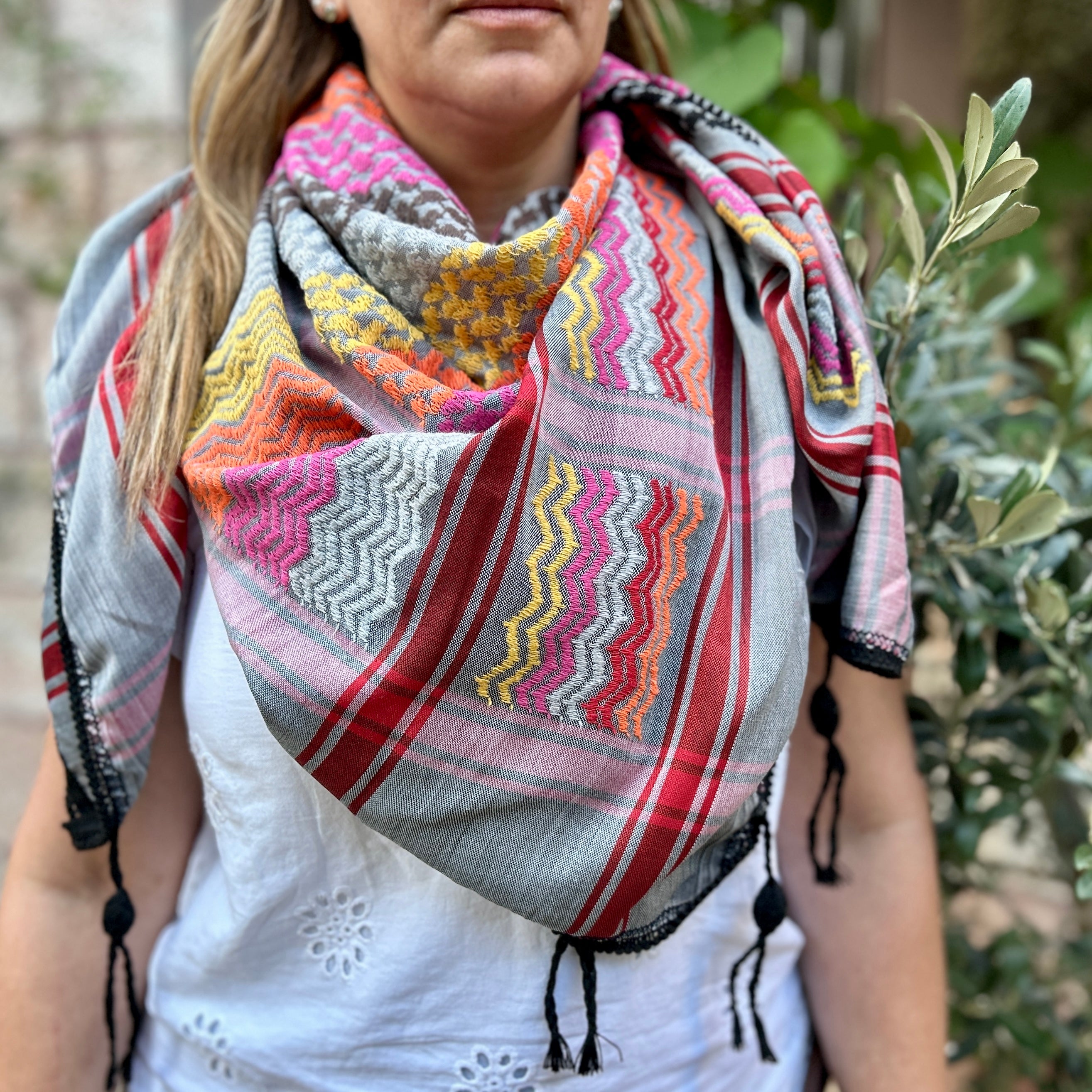
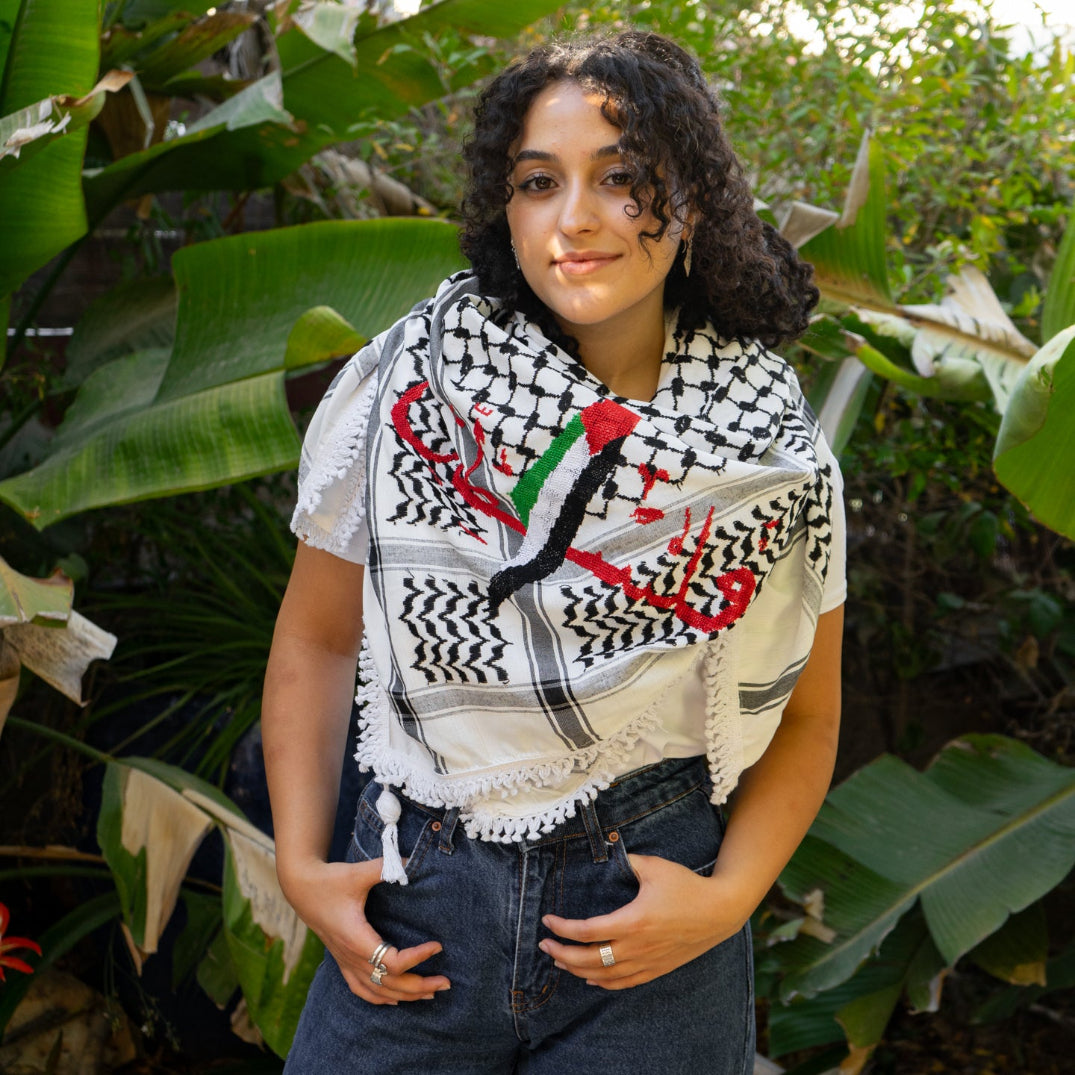
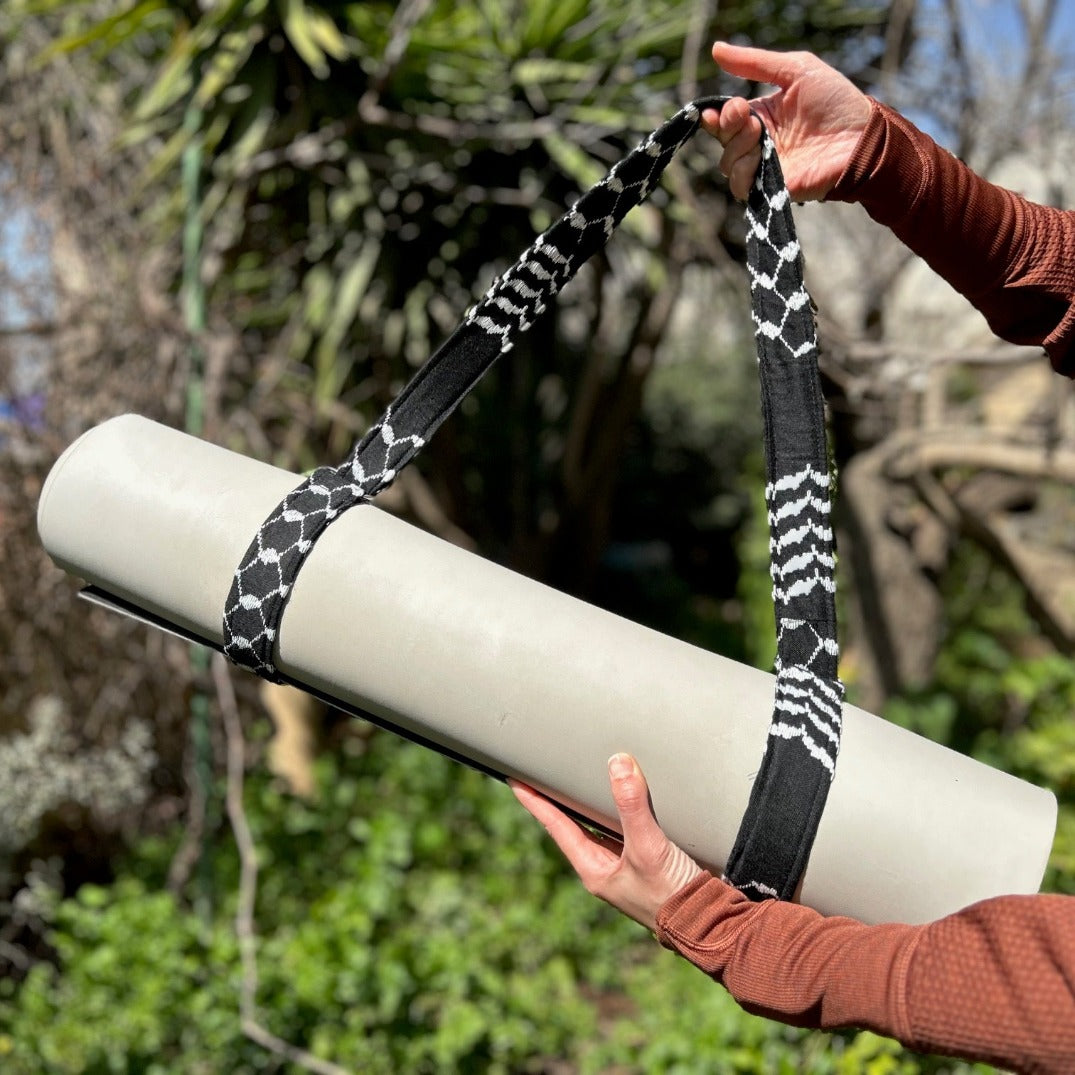
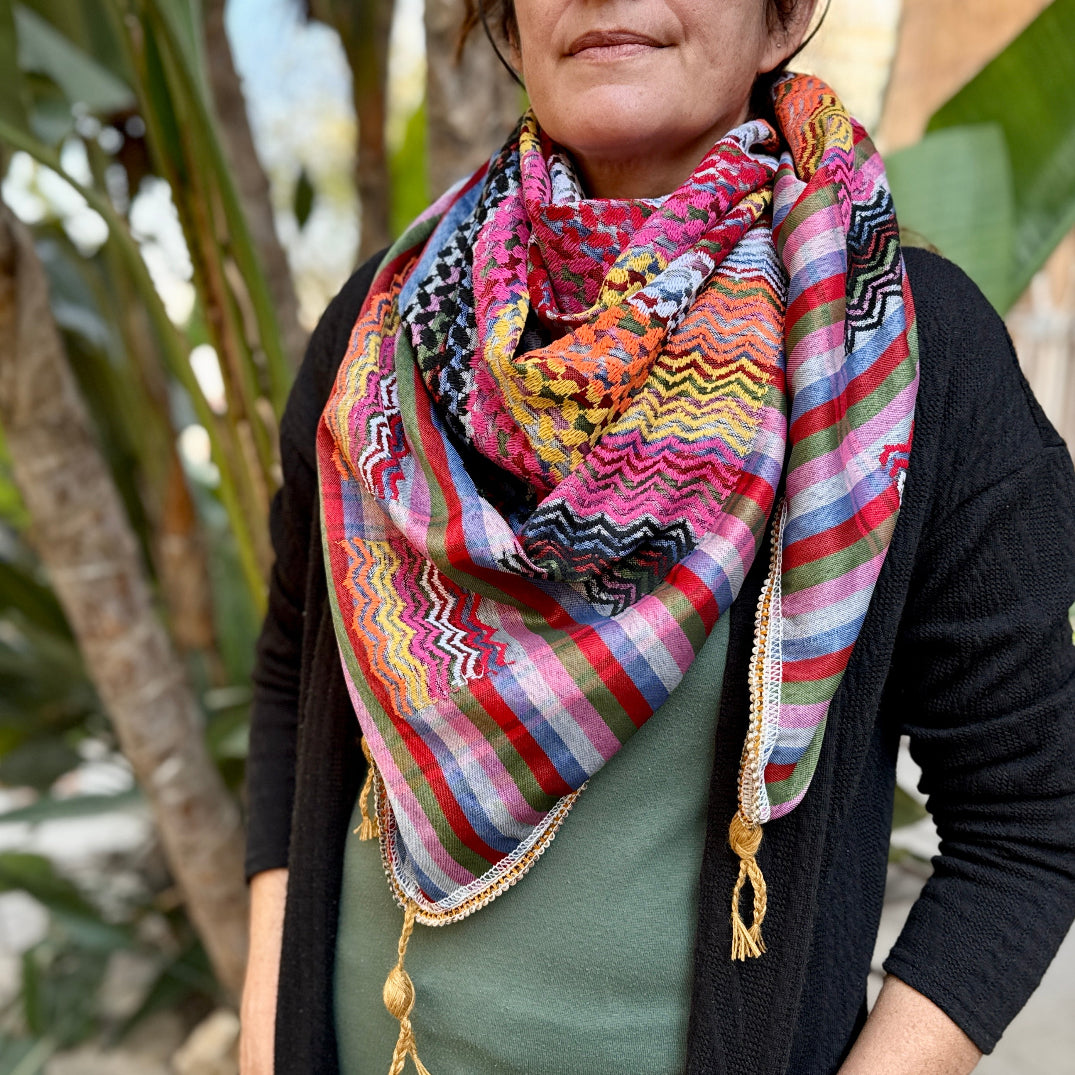
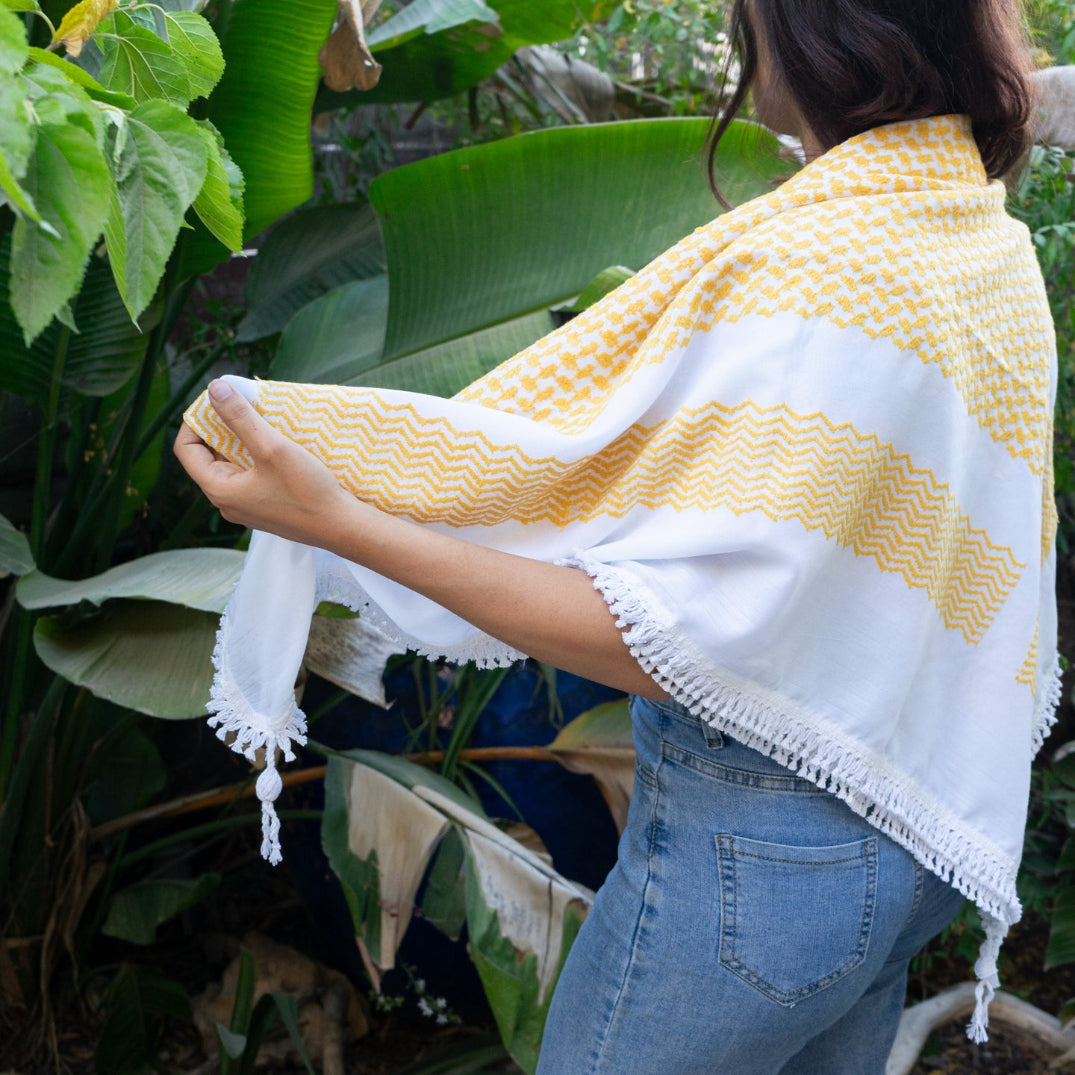
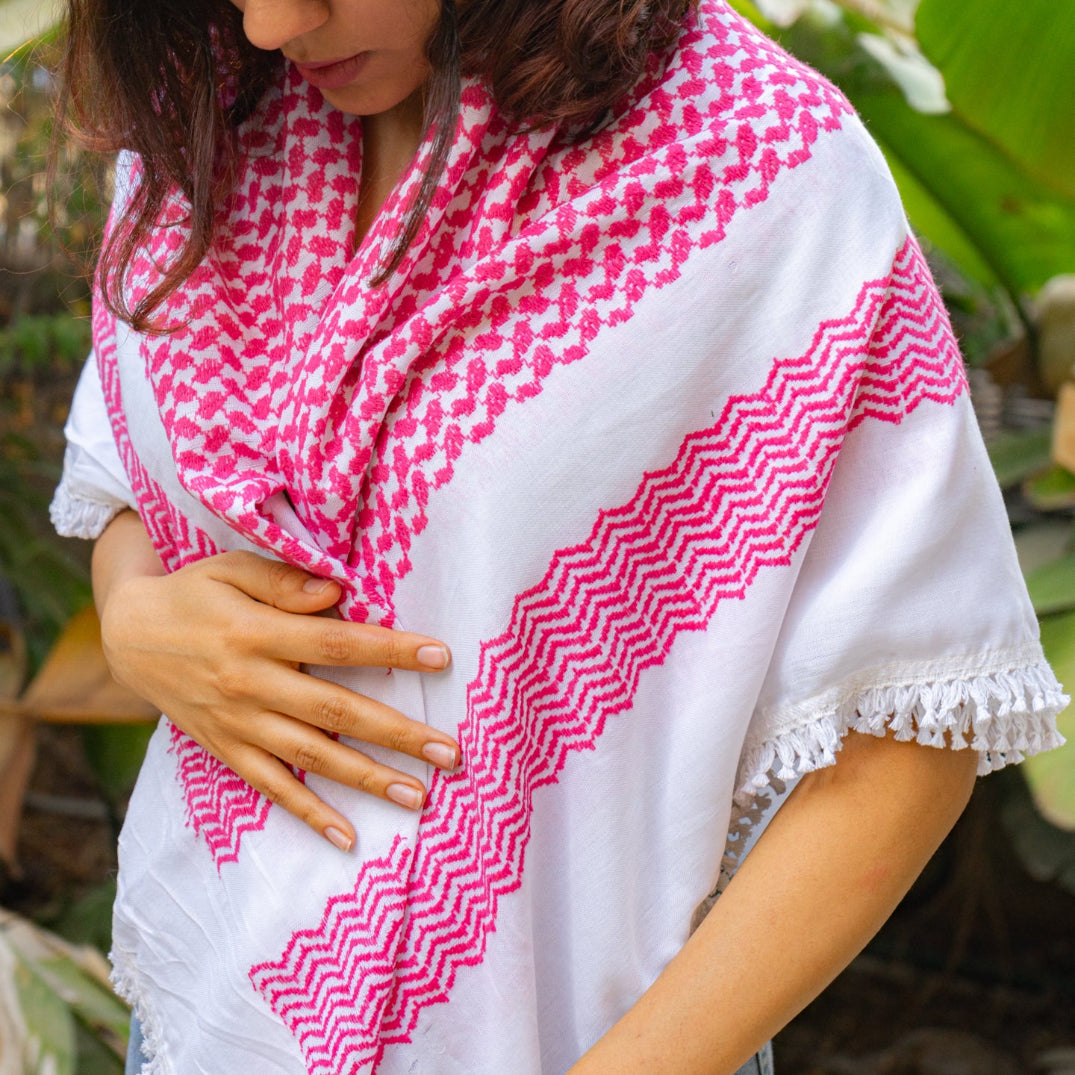
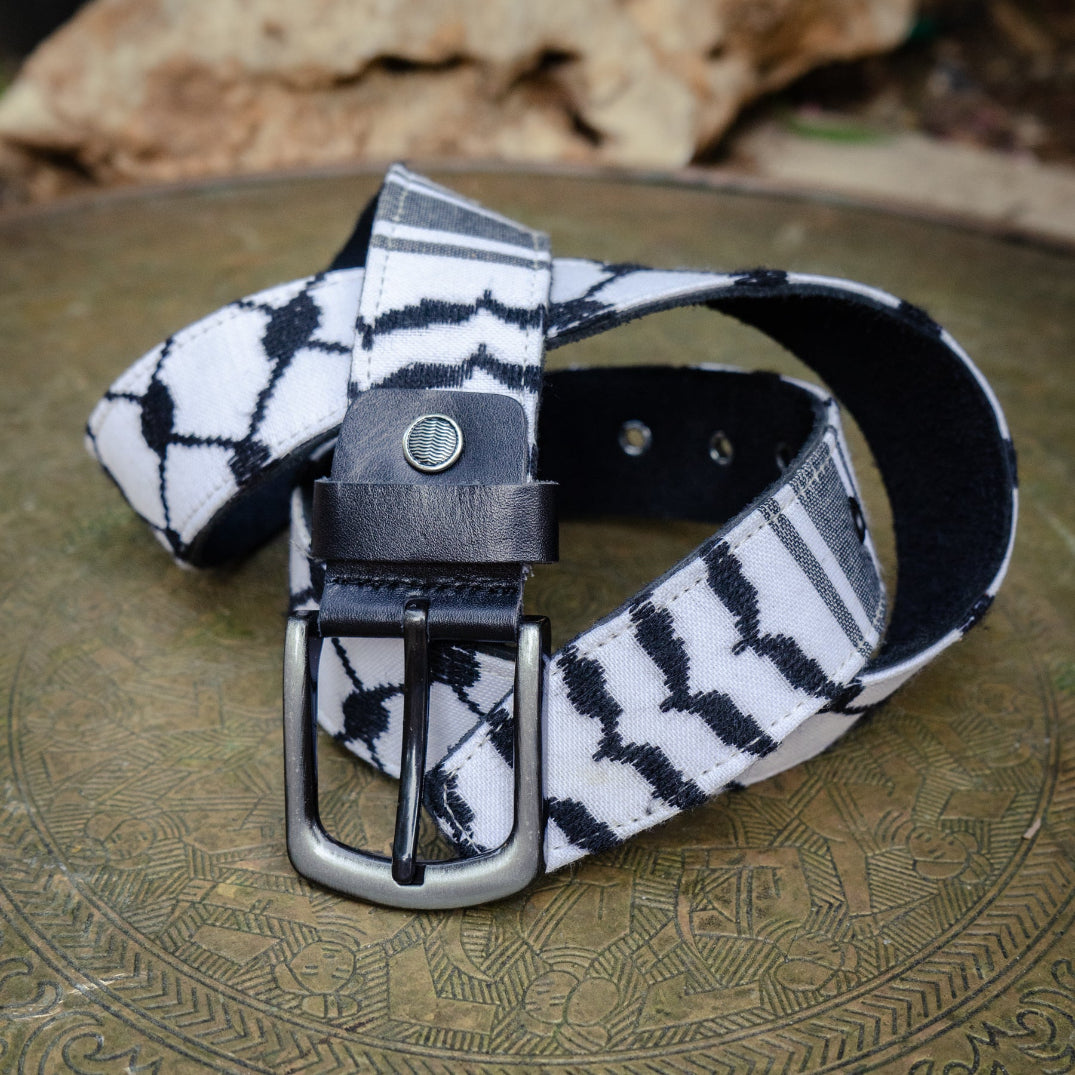
Our collection includes the traditional Arafat-style keffiyeh in black-and-white and red-and-white, multicolour variations woven at the Palestinian factory, and embroidered keffiyehs hand-stitched with tatreez by Palestinian women — a pairing of the two most iconic Palestinian crafts. We also carry keffiyeh-fabric accessories including guitar straps, yoga mat straps and pouches made by women artisans.
When you buy a Palestinian-made keffiyeh, you are directly supporting the factories that keeps this tradition alive and the workers inside it. You are making a choice that matters. Browse the collection below and wear it with knowledge of what it carries.
Filters







Blog posts

Celebrating Palm Sunday in Palestine
Palm Sunday in Palestine is no longer just a celebration — it’s an act of resilience. As the Christian community dwindles and access to holy sites is restricted, believers come together across deno...
Read more
The True Meaning of Easter: Palm Sunday and Hope + More Easter Crafts
A quiet reflection on Palm Sunday from Palestine—where the Easter story began, and where hope and steadfastness are still lived every day.
Read more
Spring, Land, and Sumud: Why Land Day Matters
A short reflection on Land Day and its meaning today—exploring the deep connection between Palestinians and their land, and how sumud (steadfastness) continues to shape everyday life, craft, and tr...
Read more