
He Painted Home: Remembering Sliman Mansour
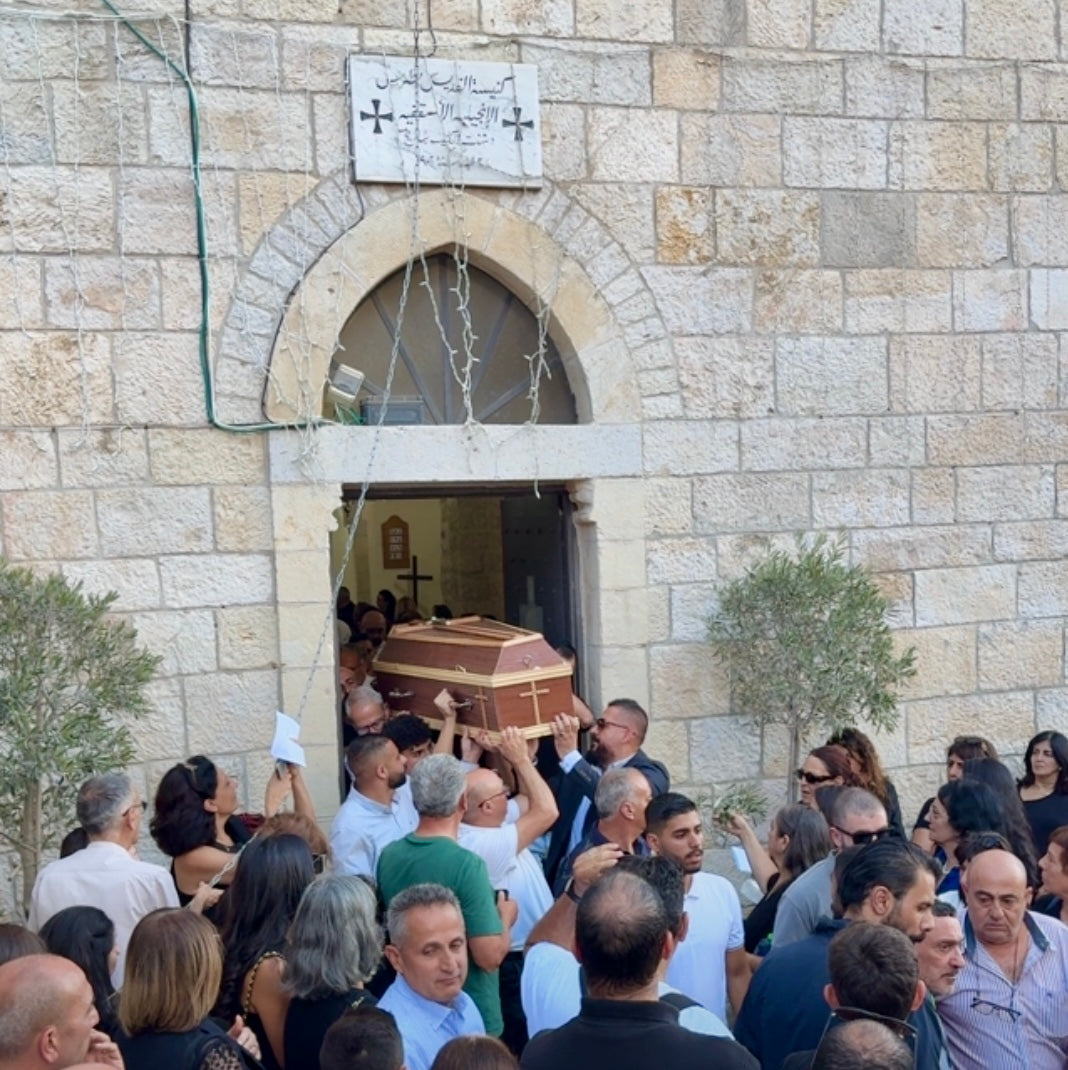
On Wednesday, 26 August, Palestinians gathered in Birzeit to say goodbye to Sliman Mansour, the painter, sculptor and writer whose work became deeply woven into the story and memory of Palestine. He died on 24 August, aged 79.
His funeral brought family, friends, artists and many others, including myself, together to mourn a man whose art spoke for generations.
The new biographical book from the Institute for Palestine Studies reminds us that Mansour was never simply an artist working outside history. His life and work developed alongside Palestinian displacement, occupation and resistance. https://www.palestine-studies.org/en/node/1658854
He painted the things that could not be allowed to disappear: the olive tree, the village, Jerusalem, traditional dress, farmers, mothers and children. His paintings gave Palestinian memory a face.
His famous Camel of Hardships, painted in 1973, became an enduring image of a Palestinian carrying Jerusalem and the weight of history on his back.
But Mansour’s work was never only about suffering. It was also about love, dignity and steadfastness.
During the First Intifada, he was part of the New Visions collective, which turned to materials from the Palestinian landscape when Israeli restrictions made art supplies difficult to obtain.
There was something powerful in that choice: when occupation tries to control, erase or reshape a people’s connection to their land, art can become an act of resistance.
To paint the land is to remember it.
To paint its people is to insist that they are seen.
Mansour did this for more than five decades. His death is therefore more than the loss of an important Palestinian artist. It feels like the passing of a generation — one that carried enormous historical pain but also an extraordinary determination to preserve identity, culture and hope.
At his funeral, people mourned the man, but they also honoured what he gave them: a way of seeing Palestine through his eyes, his colours and his love for the land.
Sliman Mansour has gone, but his paintings remain — carrying memory, dignity and resistance into the future.
Rest in peace, Sliman Mansour. Your art remains.
Read this beautiful tribute from The Art Newspaper.
Written by Morgan Totah
Visit author's website


Leave a comment
This site is protected by hCaptcha and the hCaptcha Privacy Policy and Terms of Service apply.