
The Forgotten Textiles of Palestine: Majdalawi Fabric and Gaza Gauze
Palestine is known around the world for the keffiyeh and for tatreez, two textile traditions that have become global symbols of Palestinian identity and resistance. But Palestinian textile heritage is far broader and far older than these two crafts alone.
Before the Nakba of 1948, Palestine was a land of weavers. Entire cities and villages organized their economies around cloth production. Families built their lives around the loom. Palestinian fabrics were exported across the Arab world and into Europe, where they gave their names to words still in use today. The textile heritage of Palestine is one of the most extraordinary and least known chapters in the history of craft.
This guide tells the stories of two Palestinian textiles: Majdalawi fabric and the gauze that takes its name from Gaza, each one a thread connecting Palestinian craft to a history that Israeli colonization has tried to erase, but that Palestinian artisans and communities have refused to let die.
Majdalawi Fabric Heaven and Hell on the Loom
The City of Al-Majdal
The story of Majdalawi fabric begins in al-Majdal, a Palestinian city on the southern coastal plain, not far from Gaza, known for its citrus groves, its cotton fields, and above all its looms.
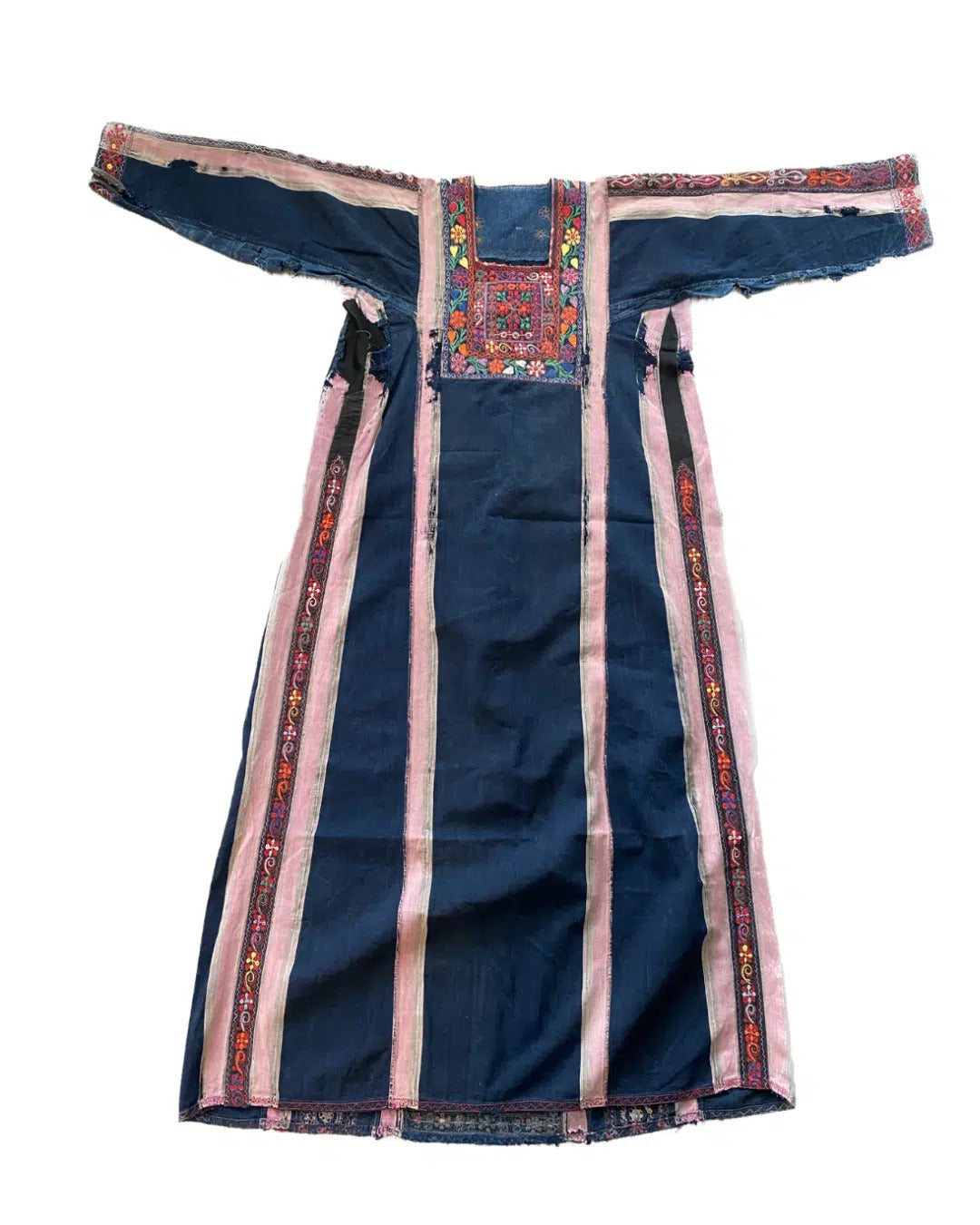
Before 1948, al-Majdal was one of the most important textile centers in the entire region, with looms operating across the city frequently installed directly within private residential homes. Al-Majdal supplied fabrics to all of Palestine: cotton and silk textiles, keffiyehs, thobe fabric, cloth for men's dress, carpets, and towels.
Weaving in al-Majdal was a family enterprise in the fullest sense. The father worked the loom. The mother wound threads and prepared spools. Children trimmed woven carpets, arranged colors, and prepared yarns. Each member of the household had a role.

The Fabric Itself
Majdalawi fabric is mostly made with a base of black or indigo cotton threads, accented by prominent bands of fuchsia and turquoise silk. The three major fabrics produced were "malak" (silk), "ikhdari" (bands of red and green), and "jiljileh" (dark red bands). These were used for festival dresses throughout Southern Palestine. Many other fabrics were produced, some with poetic names such as ji'nneh u nar ("heaven and hell"), nasheq rohoh ("breath of the soul") and abu mitayn ("father of two hundred").
These names are not mere marketing. They reflect a textile tradition rich enough in variety and craft to earn poetic description a culture that named its fabrics the way poets name feelings.
After the Nakba
In 1948, Israeli forces expelled al-Majdal's approximately 11,000 Palestinian residents from their city. Israeli soldiers entered homes and workshops. The looms fell silent. The Israeli state absorbed the city into what it renamed Ashkelon, erasing al-Majdal from the map and destroying the weaving tradition that Palestinian families had built across generations.
The expelled weavers were forced into the Gaza Strip. Israeli airstrikes later destroyed many of the weaving workshops and looms they had managed to rebuild there. Palestinian weavers were displaced again and again by the same forces that had expelled them from al-Majdal in the first place. Yet entire Majdalawi families the Zaqout, Maleiha, al-Madhoun, Saalha, al-Hennawi, and Abu Sharikh carried their weaving knowledge with them through every displacement, passing it from one generation to the next as an act of refusal.
Today, only one Palestinian artisan keeps this endangered weaving tradition alive. Most of the Majdalawi fabric on the market today is hand-woven in Syria. Hussam Zaqout, whose father Rafiq was displaced from al-Majdal in 1948 and who insisted on teaching his son the craft so it would not be lost, has continued to weave Majdalawi fabric through decades of displacement, first in Gaza and later in Cairo after being forced to flee Gaza following October 2023.
The fabric that bears al-Majdal's name continues to exist because of people like Hussam Zaqout, who have refused across generations, through multiple displacements, against extraordinary odds, to let it disappear.
Gaza Gauze: The Fabric That Named a Word
Here is a fact that most people in the world do not know: every time a nurse wraps gauze around a wound, every time a surgeon reaches for a gauze pad, they are using a word that comes from Palestine.
Gaza was famous as a centre for fine silk production known as gazzatum. This fabric later gave its name to the loose-weave fabric known today as "gauze".
According to the online etymology dictionary, the English form of the word "gauze" is derived from the French "gaze," or possibly from Spanish "gasa." It is attributed to the Arabic word "qazz," meaning "silk," and the Persian word "kaz," which means "raw silk." These words come from their place of origin, the Gaza city on the lower coastline. The first usages are cited in the medieval Latin forms: "garza" in Bologna in 1250 and "gazzatum" in Budapest in 1279.
Despite the prohibition of trade with non-Christians from religious authorities in medieval Europe, a fine type of silk known as "gazzatum" was imported from Gaza as early as the 13th century. Though members of religious orders in Europe were forbidden to wear it, the fabric won a place for itself and emerged into modern life as gauze.
Gaza's geographical position as a Mediterranean port city at the crossroads of trade routes between Asia, Africa, and Europe made it a natural hub for the export of its finest textile production. The silk that Palestinian weavers in Gaza produced was fine enough and desirable enough to cross religious prohibitions and geographic distance, reaching the courts and workshops of medieval Europe and leaving its name permanently embedded in the English language.
The city is known for its weaving and textile industry, as it is the second-largest source of employment for those living in Gaza and the West Bank. The people who gave the world the word "gauze" are the same people whose access to materials, markets, and livelihoods has been systematically restricted for decades.
What These Fabrics Share
These two textiles, Majdalawi and Gaza gauze, are different in origin, material, and use. But they share something essential: they are both evidence of a Palestinian textile heritage that is far older, broader, and more sophisticated than most of the world knows.
Palestine was not a land without craft before the keffiyeh became an international symbol or before tatreez appeared on gallery walls. It was a land of weavers whose products reached medieval Europe, whose fabrics were prized across the Arab world, and whose names persist in languages they never spoke.
Israeli colonization did not erase this heritage, though it tried. The weavers of al-Majdal continued in Gaza, in Cairo, in diaspora. The word "gauze" persists in every hospital in the world, whether or not the people using it know where it came from.
At Handmade Palestine, we work with the living continuation of this textile heritage with artisans whose craft is the direct descendant of the weaving traditions of historic Palestine. Every piece we offer carries this history in its threads.
Meet the artisans behind Handmade Palestine → Shop Palestinian crafts →
Conclusion
Palestinian textile heritage is one of the world's great unrecognized contributions to craft and culture. From the looms of al-Majdal to the silk of Gaza that gave the world the word "gauze," these fabrics carry a history worth knowing, and Palestinian artisans who continue these traditions today deserve to be supported for the extraordinary craft they represent.
Frequently Asked Questions
Q: What is Majdalawi fabric?
A: Majdalawi fabric is a traditional Palestinian woven textile that originated in the city of al-Majdal, on the southern Palestinian coastal plain. It is characterized by a base of black or indigo cotton accented by bold bands of fuchsia and turquoise silk. Before the Nakba of 1948, al-Majdal was one of the most important weaving centers in the region, with thousands of looms operating in family homes across the city. Today, only a handful of Palestinian artisans still practice Majdalawi weaving.
Q: Did the word "gauze" really come from Gaza?
A: According to the Encyclopedia Britannica, most linguists, and the Journal of the American College of Surgeons, yes, the word "gauze" is most likely derived from Gaza, where a fine silk known as "gazzatum" was produced and exported to Europe as early as the 13th century. The earliest uses of words related to "gauze" appear in medieval Latin sources from the 13th century, when Gazan silk was being traded into Europe.
Q: How can I support Palestinian textile heritage today?
A: By buying Palestinian handcrafted products from Palestinian-run sources like Handmade Palestine. Every tatreez piece, every shawl, every embroidered item you purchase supports the artisans who are the living continuation of Palestinian textile tradition and pays them fairly, directly, for their work. Shop Palestinian crafts →
Written by Morgan Totah
Visit author's website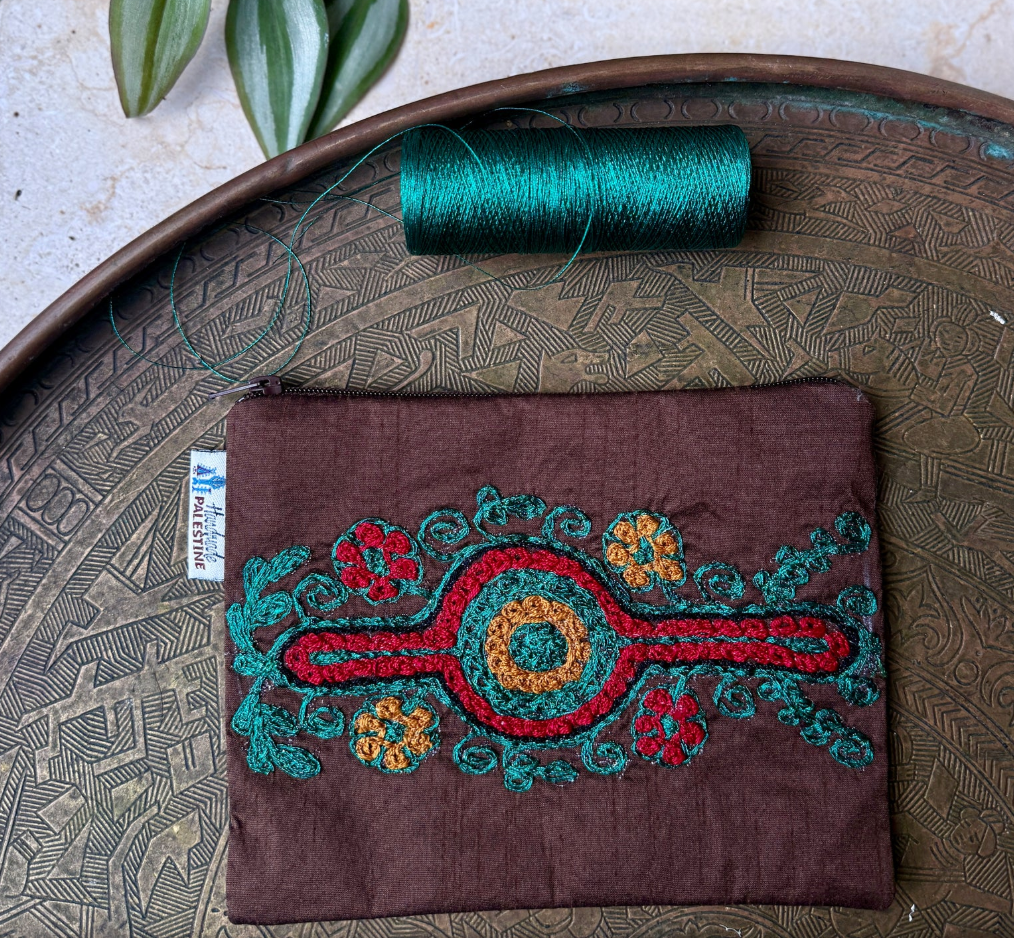


Leave a comment
This site is protected by hCaptcha and the hCaptcha Privacy Policy and Terms of Service apply.