
Come Home: What We Found On The Road This Summer
Come Home!
This summer, as we traveled across the United States, we found ourselves in all kinds of spaces—small churches, large congregations, community halls, restaurants, and living rooms.
Every place was different, but everywhere we went, we met two kinds of people.
The first were allies—people who have chosen to stand with Palestine because they believe silence is not an option. Some have been advocating for years, while others are only beginning to learn. It has been deeply encouraging to meet people who are committed to supporting Palestinians in tangible ways and who want to be part of something hopeful.
The second group touched us in an unexpected way. Palestinians from the diaspora. At every stop, they came with stories of loss, longing, and rediscovery.
One woman we met in Denver had recently started a tatreez circle, bringing together Palestinians and allies in her community. She told us she had only recently discovered she was Palestinian. Raised in a family carrying the generational trauma of the Nakba, she had always believed they were Lebanese.
Her grandfather would only speak of "the old country." Only recently did her family discover that they were from Haifa. She shared that her journey of rediscovery began through Handmade Palestine's Instagram.
From there, she kept learning, uncovering more of her family's story, feeling something awaken within her. "It feels like it's in my DNA," she said.
Meeting her was a gift. It reminded us that our work is about more than handmade crafts or planting trees. Sometimes it's about helping someone find their way back to themselves.
Again and again throughout this tour, we found ourselves extending the same invitation.
Come home.
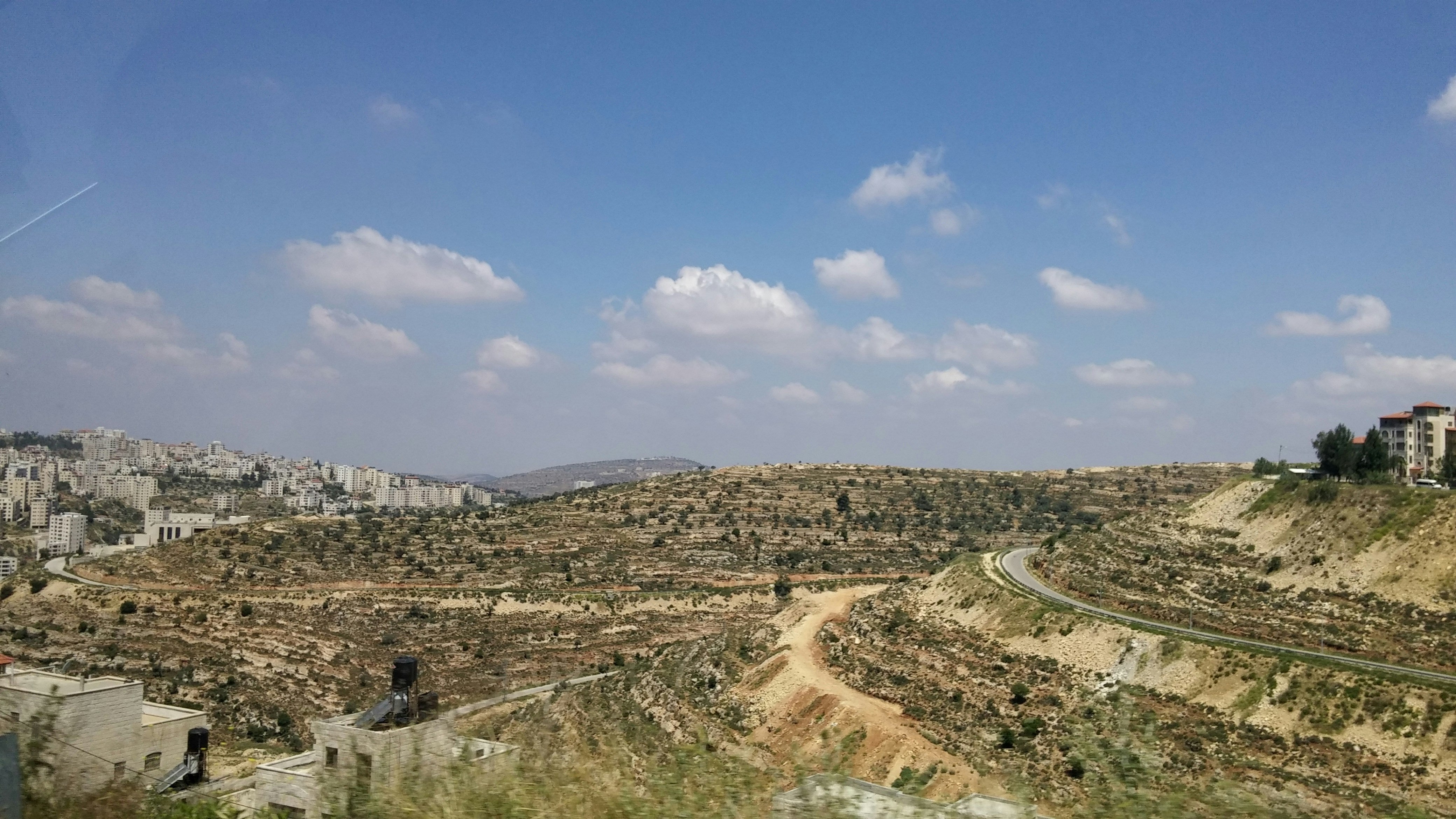
Come have breakfast and tea on the mountain.
Come plant trees.
Come harvest olives.
Come walk the land your family once knew.

Many of the Palestinians we met described themselves as "only half Palestinian." But displacement has a way of making people question their own belonging.
Ethnic cleansing didn't only force families from their homes—it severed generations from their land, their language, and often even the knowledge of where they came from. Many had never imagined they could return. Some don't speak Arabic. Some don't know anyone still living in Palestine. Others were discouraged by parents who wanted to protect them from pain. Yet beneath it all was a quiet longing to reconnect.
One of the greatest privileges of this tour has been listening to these stories and offering something simple but powerful: the invitation to visit Mashjar Juthour. Not just to come back to Palestine, but to reconnect with it. To experience the beauty, resilience, and warmth that still lives there.

That is the heart of Mashjar Juthour. We are planting trees, but we are also welcoming people to plant roots again. Creating a space where Palestinians, wherever they live, can reconnect with their ancestral home—Ben if only virtually.
Everywhere we went, we met people searching for home. That home is still waiting for them.
Written by Morgan Totah
Visit author's website


Leave a comment
This site is protected by hCaptcha and the hCaptcha Privacy Policy and Terms of Service apply.